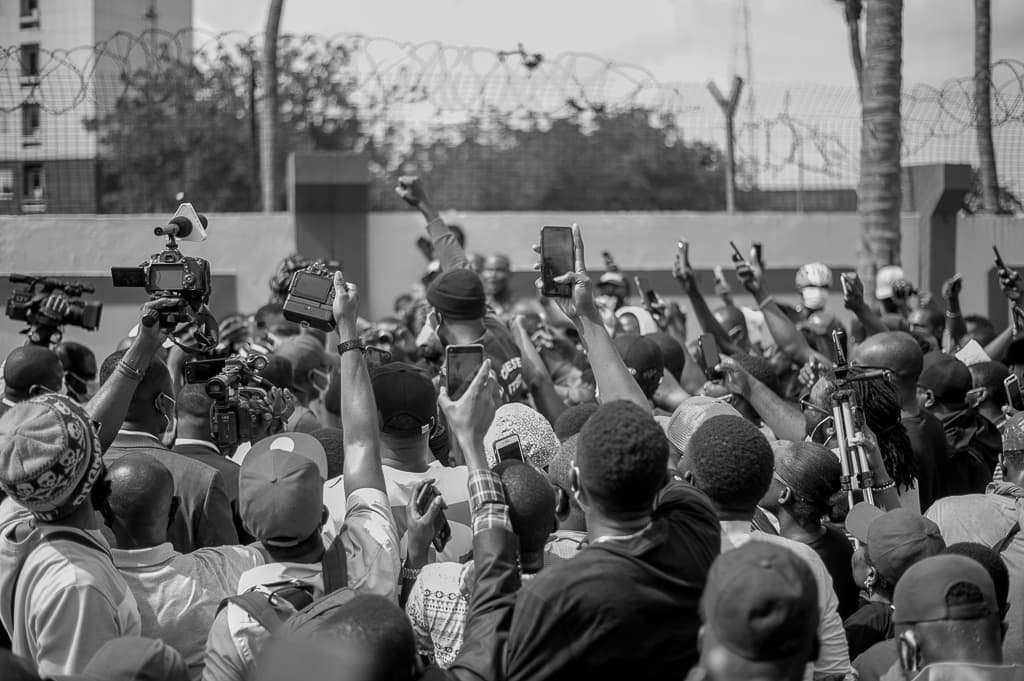
Civil war and revival under Oba Akenzua I of Benin
In the last decade of the 17th century a split between the Iyase and town chiefs and the palace chiefs led to a lengthy civil war in which Benin City was aga…
Read story →Nigeria · 9000 BCE to 2026
1,814 moments across seven chapters. Swipe the landmarks below.
37000 BCE to 1959 · 527 entries
Nigeria existed before its borders did. From the ironworking Nok culture two thousand years ago, through the bronze-casting courts of Ife and Benin, the trans-Saharan trade of Kanem-Bornu, and the Sokoto Caliphate that ran a literate northern state by the early 1800s, the territory now called Nigeria was already a constellation of working societies. Then came the Atlantic slave trade, the Royal Niger Company, the Lagos protectorate, and in 1914 a colonial bureaucrat named Frederick Lugard amalgamated the north and south for British convenience. Independence in 1960 inherited that map. These are the events that built the country before the country had a name.
In the last decade of the 17th century a split between the Iyase and town chiefs and the palace chiefs led to a lengthy civil war in which Benin City was aga…
Read story →Earliest Palaeolithic tool industry in the Nok valley
Gravels in the oldest infill of a buried channel in the Nok valley yielded large numbers of bifaces and cleavers of a…
Microlithic Late Stone Age occupation at Iwo Eleru
The rock shelter at Iwo Eleru in present Ondo State produced a microlithic (small stone tool) industry without potter…
Early human occupation near Iwo Eleru
Archaeological remains near Iwo Eleru, close to Akure, point to deep human presence in what is now Nigeria thousands…
Charcoal spreads at Igbo-Ukwu indicate post-glacial savanna conditions
At Igbo-Ukwu, at present on the northern limit of the rain-forest zone, there were old land surfaces with spreads of…
Saharan lakes begin permanent decline; climate fluctuations intensify
From about 5500 BC the climate fluctuated, but the lakes in the southern Sahara became progressively more saline and…
Earliest occupation phase at Dutsen Kongba rock shelter, Jos Plateau
Excavation at Dutsen Kongba, about 11 km west of Jos, conducted by the Antiquities Department in 1973, identified thr…
Ground stone axes begin to be used at Iwo Eleru forest shelter
In the upper layers of Iwo Eleru rock shelter there occur pieces of sillimanite and ground stone axes made from it; s…
Oldest pottery in Nigeria appears at Dutsen Kongba
Pottery makes its appearance in Phase B at Dutsen Kongba early in the fourth millennium BC, making it the oldest pott…
Pottery-making develops in the greater Nigerian area
Following the introduction of microlithic stone tools in the early Late Stone Age, communities in most parts of the g…
Late Stone Age occupation begins at Afikpo rock-shelter
A stratified deposit excavated from a rock-shelter at Afikpo on the forest edge of south-eastern Nigeria contained po…
Pottery appears at Iwo Eleru; Late Stone Age forest occupation confirmed
The appearance of pottery after about 3000 BC at Iwo Eleru may be connected with a movement of people or ideas southw…
Sahara enters final desiccation phase
After 3000 BC the Sahara entered its final phase of desiccation, bringing it to its present desert state.
African cereal domestication underway across sahel zone
Cultivated bulrush and finger millet had reached India by the middle of the second millennium BC, allowing inference…
Early human occupation at Nsukka (Ugwuele/UNN farm)
D.D.
Domesticated livestock present in the Lake Chad region
Archaeological evidence from Daima and Kursakata in the Lake Chad region shows the presence of domesticated sheep, go…
Cattle-keeping and pottery at Kursakata, south of Lake Chad
Cattle pastoralists with pottery and ground stone tools occupied mounds in the sahel; a similar situation obtained at…
Sahel mound ('Bornu 38') occupied near Lake Chad maximum shoreline
A mound nearly 3 m high ('Bornu 38'), situated just to the northwest of Bama on the ridge marking the maximum shoreli…
Domestication of guinea corn (sorghum) in the Sudan belt
Suitable indigenous wild grasses were domesticated to produce African cultivated millets; the most important, guinea…
Dotted wavy-line pottery and bone harpoon tradition in Nigerian sahel
A particular kind of pottery known as 'wavy-line' and 'dotted wavy-line', together with barbed bone harpoons, is part…
Rock paintings of humpless cattle at Birnin Kudu, Kano State
Rock paintings at Birnin Kudu depict humpless cattle; some are long-horned, like the 'Hamitic longhorn' no longer ext…
Rock gongs at Dutsen Kongba in use by second millennium BCE
In a corridor at Dutsen Kongba a flat slab of granite wedged upright in a cleft between boulders bears the marks of u…
Agriculture emerges across the Nigerian region
Between roughly 4000 and 1000 BCE, depending on the specific area, communities transitioned from hunting and gatherin…
Food production widely adopted across Nigeria
From the evidence at present available, it seems likely that by about 1000 BC people in many parts of Nigeria had ado…
Bottom layer of Kursakata mound dated by radiocarbon
A large mound at Kursakata, situated about 110 km northwest of Bama and about 24 km south of Lake Chad, had a depth o…
The Nok culture flourishes in the middle belt
Sites including Taruga, Tadun Wada, Kuchamfa, Jemaa Maitumbi, Kawu, and Kagara were smelting iron between 900 BCE and…
Iron smelting begins at Taruga (Nok culture)
Evidence of iron-working and iron tools dates from roughly the seventh century BCE at Taruga, near Abuja, in the midd…
Daima mound occupation begins; earliest iron-free levels
Daima is a large mound in Bornu on the firki lands south of Lake Chad, in which the lower levels represent the accumu…
Domesticated cattle, sheep and goats attested at Daima
At Daima there were bones of cattle, sheep and goats, as well as little clay models of them, from 600 BC onwards.
Nok culture
The Nok culture, known for terracotta sculpture and evidence of early ironworking, is one of the oldest identifiable…
Nok Culture iron-smelting and terracotta production, Jos Plateau region
The Nok Culture, named after a village in Kaduna State, produced a distinctive tradition of terracotta figurines asso…
Earliest iron smelting at Opi in the southeast
At Opi, in the southeastern part of the greater Nigerian area, the earliest dates for iron smelting may be as early a…
Earliest dated iron at Taruga near Abuja
The earliest evidence for the introduction of iron into Nigeria has been found at Taruga near Abuja, carbon-dated to…
Nok culture iron-working and terracotta art flourishes
The Nok culture is best placed in the last half of the last millennium BCE, with iron-smelting evidence and terracott…
Human skeleton buried at Rop rock shelter dated by radiocarbon
At Rop rock shelter, nearly 50 km south of Jos, the remains of a human skeleton were found buried at a shallow depth…
Lake Chad high-water stand marked by Bama Ridge
Before the great dry period of 20,000 BCE, Lake Chad had been far more extensive and its level higher, probably aroun…
Peak dry period: forest retreat and desert dune advance in Nigeria
Approximately coincident with the last maximum of the last glaciation in northern Europe, beginning around 20,000 BC,…
Arid period documented in southern Nigeria at Odo Ogun
At Odo Ogun a Middle Stone Age industry was found associated with an angular pediment gravel regarded as resulting fr…
Lake Chad refills; Iwo Eleru rock shelter first occupied
Following the dry period of 20,000 years ago, conditions began to get wetter again around 10,000 BC: the Mali Niger j…
Acheulian implements in Nok valley gravels radiocarbon-dated
Carbonised wood from the gravels which produced Acheulian implements in the Nok valley yielded a radiocarbon date of…
Nri ritual hegemony spreads across Igboland
According to traditions reported by Onwuejeogwu, the influence of the Nri-centred culture was already spreading throu…
Mud-walled circular huts and farming at Daima, Borno
Soon after the first appearance of iron in the middle of the first millennium CE, people at the Daima settlement moun…
Asian food crops reach Nigeria via Madagascar/East African coast
It is generally believed that Asian food crops, including plantains, bananas, one type of cocoyam and citrus fruits,…
Iron first appears in Daima mound sequence
Iron occurred for the first time some 2–4 m above the bottom of the Daima mound, but the radiocarbon analyses are dif…
Eastward Bantu / Benue-Cross migration tradition (Kisra legend)
The legend of Kisra, a magician-king said to have come to Nigeria from Persia or Arabia, has been interpreted as indi…
Oduduwa's migration from the East and settlement at Ile Ife
Johnson records the tradition that the Yorubas descended from Lamurudu, a king "a considerable time after Mahomet," w…
Foundation of the Kanem state near Lake Chad
According to the Kanem origin tradition, Saharan migrants known as the Zaghawa united the peoples of the Lake Chad re…
Oyo Ile inhabited as an urban settlement
Archaeological testing indicates the town of Oyo Ile, capital of the later Oyo empire, was inhabited as early as the…
Igbo-Ukwu bronzes and long-distance trade
The Igbo-Ukwu archaeological finds show sophisticated bronze work and trade-linked material culture in southeastern N…
Daura legend anchors Hausa origin memory
Hausa traditions place Daura at the center of origin stories linking Bayajidda, queenship, and the Hausa bakwai city…
Traditional dating of the dispersal of Oduduwa's children from Ife
Yoruba traditions hold that Oduduwa, when old and blind, gathered his sons at Ita Ijero in Ife and dispersed them to…
Emergence of the Benin kingdom under the ogiso dynasty
The kingdom of Benin probably first emerged in the tenth century CE in Edoland, ruled by a monarchical dynasty known…
Iron-working Yoruba settlement at Orun Oba Ado, Ife
Five radiocarbon dates covering the sixth to tenth centuries CE were obtained for charcoal from humanly-dug pits at O…
Cowrie currency reaches the Middle Niger
Arabic records attest the use of Indian Ocean / Persian Gulf cowrie shells on the Middle Niger from the tenth century…
Copper exported south from Islamic North Africa
Arab writers from the tenth century CE onward record a southward export of copper from Islamic North Africa.
Humped zebu cattle first appear in Daima sequence
At Daima all the cattle figurines throughout the occupation are humpless until the end of the sequence, around AD 1000.
King Humai of Kanem converts to Islam
Islam's first appearance in the societies of modern-day Nigeria came in the late eleventh century, when Humai, King o…
Potsherd pavements laid at Ife under Queen Luwo
At Ita Yemoo in Ife a potsherd pavement was overlain by charcoal radiocarbon-dated to c. 1060 CE and c. 1150 CE, indi…
Kano grows as a Hausa commercial city
Kano became one of the major Hausa cities linked to craft production, markets, and trans-Saharan exchange.
Mai Dunama bin Humai makes the hajj twice
Mai Dunama bin Humai of Kanem is recorded to have made the pilgrimage to Mecca twice during his reign in the first ha…
Ife emerges as a regional power under the ooni
Although Ife had been settled since at least the ninth century CE, it was not until around the twelfth century that I…
Ife naturalistic art (brass heads and terracottas) flourishes
Radiocarbon dates in the twelfth century CE were obtained for levels at Ife in which terracottas occurred, and for a…
Kingship develops in the eastern Niger Delta states
Comparison of the kinglists of the eastern delta states (Nembe, Elem Kalabari, Bonny, Okrika) suggests the kingship i…
Traditional founding of the Alago (Doma) kingdom from Igala
The foundation of the Alago (Arago) kingdom of Doma on the right bank of the Benue, above Igala territory, is attribu…
Ife emerges as a Yoruba sacred and artistic center
Ife became a major Yoruba religious and artistic center, associated with origin traditions and naturalistic sculpture.
Katsina develops as a center of learning and trade
Katsina emerged among the Hausa states as a city associated with commerce, Islamic scholarship, and wider Sahelian co…
Kanuri students establish a hostel in Cairo
Evidence dates to at least 1250 CE for Hausa or Kanuri students traveling abroad to study Islamic theology, when Kanu…
Kanem becomes a full-scale empire
By the thirteenth century CE Kanem had become a full-scale empire, incorporating lands south and southeast of Lake Ch…
Origin of the Benin (Eweka) dynasty
Benin's monarchy traces its overthrown dynasty (deposed 1897) to an origin around the 13th century, some thirty ruler…
Mass burial with bronzes at Benin
The only archaeologically dated bronzes of account from Benin are 49 manillas and bracelets associated with the skele…
Oba Ewedo's political revolution and renaming of the state
Oba Ewedo, the fourth ruler of the new dynasty, carried out a coup d'état freeing the ruler from subordination to the…
Oba Oguola introduces brass casting in Benin
Oba Oguola, Ewedo's successor, is reputed to have obtained the services of a brass-worker from the Oghene, the spirit…
Overthrow of the Benin ogiso dynasty and the Oranmiyan succession
Around 1300 the ogiso dynasty of Benin was overthrown after years of misrule and replaced by a short-lived republican…
Innermost Benin city wall (Ewuare's rampart) constructed
Oral tradition attributes the innermost Benin "city wall" — a dump rampart with an outer ditch some twenty metres dee…
Islam deepens in Hausa city-states
Hausa states such as Kano, Katsina, Zaria, Gobir, Daura, and Rano developed as commercial and urban centers shaped by…
Foundation of Kororofa, largest of the Jukun states
Kororofa, the largest Jukun state, was founded sometime before the fourteenth century with its capital at Beipi.
Obalara's Land shrine pavements at Ife
Excavation at Obalara's Land, Ife, uncovered potsherd pavements dated to the early fourteenth century, yielding terra…
Oba Ewedo curbs the Uzama kingmakers
Tradition holds that Ewedo, the fourth Oba, after a battle deprived the hereditary Uzama chiefs of their quasi-regali…
Yaji of Kano becomes the first Hausa ruler to adopt Islam
The first Hausa ruler to convert to Islam was Yaji of Kano, who adopted the religion in 1370.
Oba Ewuare reorganizes Benin and begins imperial expansion
From about 1440, Oba Ewuare mystified the office of oba with the annual Igue festival, walled the palace, and split g…
Kanem-Bornu connects the Lake Chad basin to trans-Saharan Islam
Kanem-Bornu linked northeastern Nigeria to Saharan commerce, Islamic scholarship, and wider Sahelian politics.
Nupe power grows along the Niger-Benue corridor
Nupe polities occupied a strategic middle-belt position along riverine trade and routes between northern emirates and…
Ijebu becomes a Yoruba commercial gateway
Ijebu towns controlled routes between the coast and interior Yorubaland, gaining importance as toll collectors and co…
Borno establishes at least two madrasas
By the fifteenth century Borno had at least two madrasas, more advanced Islamic schools beyond basic Quranic instruct…
King Umaru of Kano abdicates to pursue Islamic theology
In the fifteenth century a King of Kano named Umaru abdicated his throne in order to pursue the study of Islamic theo…
Nupe sack Oyo Ile, forcing the monarchy into exile
The neighboring Nupe sacked Oyo Ile in the fifteenth century, when it was already a well-established urban center.
Oba Ewuare transforms Benin into a city and empire
In the 15th century a man of violence named Ogun took the royal name Ewuare after burning much of old Benin and killi…
Origin of the Idah (Igala) kingdom
The origin of the Idah (Igala) kingdom has been traced to about the 15th century, and by the 17th century it had beco…
Oba Olua sends son Iginua to found Itsekiri kingdom
Tradition relates that Oba Olua, one of Ewuare's sons and his predecessor on the throne, determined to establish his…
Maize introduced to Nigeria after European arrival on coast
Maize is a New World crop and was only introduced after the arrival of the European voyagers on the coast at the end…
Portuguese ships first reconnoitre the Nigerian coast
Between 1469 and 1475 a Lisbon merchant, Fernão Gomes, held the lease of the Guinea trade from King Afonso V of Portu…
Mai Ali Gaja founds Borno with a new capital at Gazargamu
After the Saifawa abandoned Kanem under Bulala pressure, Mai Ali Gaja around 1470 stabilized the new state of Borno a…
Portuguese ships reach the coast
Portuguese Atlantic contact brought the Niger Delta and Bight of Benin into wider commerce.
Iginuwa migration founds the Itsekiri (Warri) kingship
Itsekiri tradition dates the migration of Iginuwa from Benin — with seventy sons of Benin nobles — to the reign of Ob…
John II of Portugal takes throne and launches African expansion
John II ascended the throne of Portugal in 1481 and immediately embarked upon measures to exploit his monopoly of Eur…
Portuguese advent to West African trade
The Portuguese opened direct maritime trade with West Africa from 1481, exporting gold from the Guinea coast.
São Tomé settlers granted privilege to trade in the "slave rivers"
The pioneer settlers of São Tomé were granted in 1485 a privilege permitting them to trade in the "five slave rivers"…
Portuguese trade contact established at Benin
European trade with Benin began with the arrival of the Portuguese in 1486 (probably in the reign of Ozolua).
Trade of the "slave rivers" leased to Florentine merchant Bartolomeo Marchione
In 1486 the trade of the "slave rivers" of the Niger Delta was leased to a Florentine merchant named Bartolomeo March…
Portuguese establish trading post (feitoria) at Ughoton
When the chief of Ughoton returned to Benin from his visit to Portugal, he was accompanied by d'Aveiro and officials…
Bartolomeu Dias despatched to seek Prester John and India via the Cape
Ill-founded calculations derived partly from d'Aveiro's report about the Benin Oghene inspired John II to despatch Ba…
São Tomé settlers granted fresh trading privileges in the slave rivers
Settlers who occupied the island of São Tomé in 1493 received a new privilege permitting them to trade in the "slave…
John II licences 1,080 slaves to be imported to São Tomé from the slave rivers
To meet the initial needs of the colony of young Jews, Portuguese settlers and exiles sent to São Tomé in 1493, and t…
Portuguese trading post at Ughoton abandoned then reactivated
João Afonso d'Aveiro died at Ughoton shortly after arriving in 1487.
Oba of Benin sends royal present of slaves to São Tomé trading partners
When the Casa da Mina in Lisbon was receiving trading privileges in São Tomé around 1500, the Oba of Benin sent slave…
São Tomé captain Fernão de Mello signs contract for Benin river slave trade
The new captain of São Tomé, Fernão de Mello, who took up his office in 1500, signed with the king of Portugal a cont…
Portuguese royal factor's post at Ughoton finally closed (1506–7)
Duarte Lopes died at Ughoton in 1504; his successor Bastiam Fernandez was probably the last factor, for the post was…
King Manuel of Portugal sends royal gift to Oba of Benin
A present delivered in the name of King Manuel of Portugal in 1505 to the Oba of Benin consisted of a caparisoned hor…
First large-scale export of African slaves to the West Indies
From 1510 Africans ceased to be mere curiosities in Portugal.
Portuguese crown grants four-year lease of Benin trade to Antonio Carneiro
In August 1513 the captain of São Jorge da Mina wrote to King Manuel explaining that he lacked goods to buy gold and…
Oba of Benin sends embassy to Portugal requesting missionaries and firearms
The Oba of Benin (probably Ozolua) despatched to Portugal in 1514 an embassy of two envoys — Dom Jorge and Dom Antoni…
Oba of Benin institutes separate markets for male and female slaves
By 1516 the Oba had established separate "markets" for male and female slaves, requiring merchants to negotiate separ…
King Manuel's letter to Oba of Benin promising missionaries
In a letter dated 20 November 1514, King Manuel of Portugal told the Oba of Benin that he was sending the clergy requ…
Contract for introduction of Maldive cowries into West African trade
A contract for the trade of São Tomé signed between King Manuel and Fernão Jorge on 26 March 1515 stipulated that in…
Portuguese missionary priests arrive in Benin City
When the missionary priests reached Benin in August 1515 they found the Oba engaged in war at a distance from the cap…
Oba Ozolua resumes campaign; orders church to be built in Benin City
In August 1516 the Oba returned to Benin City and gave orders that a church should be built there.
Death of Oba Ozolua in the Uromi war
A letter from the captain of Príncipe to Carneiro implies that the Oba died late in 1516 or early in 1517, during the…
Vicar of São Tomé arrives in Príncipe seeking ship to convert new Oba
On 30 May 1517 the vicar of São Tomé, Father Diogo Bello, with three other priests arrived in Príncipe looking for a…
Portuguese ivory trade with Benin grows sharply; prices rise
In August 1517 the master of Carneiro's ship Oliveira reached Príncipe from Benin with 187 tusks which had cost 1,623…
Antonio Carneiro's lease of the Benin trade expires
Carneiro's four-year lease of the Benin trade expired in 1518, his profits squeezed between rising prices, the demand…
Voyage of the São Miguel: documentary record of Benin trade
The royal ship São Miguel under master Machim Fernandes left São Tomé in April 1522, reaching Ughoton on 16 May.
Voyage of the São Joāo introduces "cloth" as new standard trade unit in Benin
When the royal ship São João reached Ughoton in August 1526, the pilot was met by three officials sent by the Oba, ea…
Benin Kingdom develops court art, diplomacy, and regional power
The Edo kingdom of Benin became one of West Africa's most famous court states, known for palace institutions, bronze…
Oyo Empire expands Yoruba imperial power
Oyo grew into a major Yoruba empire with cavalry power, tributary relations, and institutions that balanced the Alaaf…
Sukur's iron, terraces, and highland authority
Sukur, in present-day Adamawa, preserves evidence of iron smelting, terraced agriculture, ritual life, and political…
Borno reaches a northern high point
Borno asserted influence westward toward Hausa areas and remained tied to trans-Saharan systems.
Igala kingdom controls routes around Idah
The Igala kingdom around Idah held a strategic position near the Niger and Benue confluence, mediating trade and infl…
Ekiti hill polities consolidate local authority
Ekiti communities developed clustered towns and hill-country defenses within northeastern Yorubaland.
Oyo relocates its capital to Igboho
By the early sixteenth century Oyo had moved its capital roughly forty miles west of Oyo Ile to Igboho, while in exil…
Kano subjects Katsina and Zaria to tributary status
Around 1500 Kano was the most powerful Hausa state, having forced both Katsina and Zaria into tributary positions in…
Oba of Benin restricts the sale of male slaves
With rising European demand for slaves in the first half of the sixteenth century, the oba of Benin severely restrict…
King Ibrahim Maje of Katsina institutes elements of shari'a
By the sixteenth century the King of Katsina, Ibrahim Maje, had instituted elements of the Islamic shari'a law code i…
Palace slave bureaucracy established at reconquered Oyo Ile
From the reconquest of Oyo Ile in the late sixteenth century, slaves performed integral duties in the palace administ…
Tsoede (Edegi) founds the Nupe kingdom
The establishment of the Nupe kingdom is associated with Tsoede (Edegi), said to have been fathered by an Igala king…
Oba Esigie destroys Udo and consolidates the dynasty
After Ewuare's death a succession crisis and provincial revolts brought Ozolua "the Conqueror" and then his son Esigi…
Sango establishes Oyo as an independent kingdom
After Oranyan founded Oyo near the Niger (on land granted by the king of Borgu after Nupe opposition), early Alafins…
Oyo flees Nupe, founds Igboho, then reoccupies its capital
Late in Onigbogi's reign the Tapa (Nupe) sacked Oyo, driving the people into Bariba (Borgu) country.
Atlantic slave trade reaches the Igbo interior
Portuguese adventurers entered the Bight of Biafra in the second half of the 15th century, and by the latter part of…
Cross River monoliths (Akwanshi) carved
About 295 carved stone figures (akwanshi/atal) stand over a 350-square-mile area of the middle Cross River, apparentl…
Oba Esigie improves brass-casting in Benin
Tradition credits Oba Esigie, son of Ozolua and one of the rulers in the early sixteenth century, with the improvemen…
Oba Esigie defeats invasion from Idah (Igala)
Oba Esigie, son of Ozolua, is remembered for his defeat of the invading forces of Idah — a powerful state whose syste…
Orhogbua conquers Mahin and reaches Lagos (Eko)
Orhogbua, son and successor of Esigie, consolidated Benin's coastal sphere of influence by conquering Mahin and penet…
Nupe invasion and sack of Oyo Ile under Alafin Onigbogi
Under Alafin Onigbogi, son and successor of Oluaso, the Nupe invaded the Oyo kingdom and destroyed the capital at Oyo…
Nupe expansion under Etsu Edegi (Tsoede) into Yoruba territory
Around the same period as the sack of Oyo Ile, the Nupe were united into a single kingdom by Etsu Edegi (Tsoede), dat…
Oyo exile period: Alafin Ofinran settles at Kusu, introduces Ifa cult
After Onigbogi died in exile in Borgu, his successor Ofinran withdrew from Bariba territory into Yorubaland and settl…
Oyo adopts cavalry under Alafin Orompoto; repulses Bariba invasion at Ilayi
Under Alafin Orompoto, reigning from Igboho, a Bariba army invaded the kingdom but was repulsed at Ilayi.
Alafin Ajiboyede defeats Nupe army, ends Nupe threat to Oyo
Under Alafin Ajiboyede, successor to Orompoto, a Nupe army again invaded the Oyo kingdom from Igboho.
Egungun ancestral masquerade cult introduced to Oyo from Nupe
Oyo tradition attributes the introduction of the Egungun cult—masqueraders representing the spirits of deceased ances…
Mai Dunama of Borno establishes trade with the Ottoman Turks in Tripoli
Mai Dunama, predecessor of Idris Aloma, established contact with the Ottoman Turks in Tripoli as early as 1555 and se…
Reign of Mai Idris Aloma, Borno's military and commercial peak
Mai Idris Aloma reigned from 1569/70 to 1619, considered the greatest of Borno's leaders.
Bishop of São Thomé describes the Itsekiri kingdom as very poor
Portuguese missionary work, concentrated on the Itsekiri after failing to gain a foothold in Benin, generated reports…
Oyo begins rapid expansion into the forest zone
From about 1600 Oyo underwent rapid expansion southward and southeastward into the forest zone, becoming one of the l…
Death of Oba Ehengbuda ends Benin's warrior-king line
Oba Ehengbuda, whose reign saw Benin repel a major attack from the direction of Oyo (possibly Nupe), drowned about 16…
Alafin Abipa reoccupies Oyo Ile, beginning of the imperial period
Abipa, successor to Ajiboyede and the last Alafin to reign at Igboho, reoccupied the old capital at Oyo Ile, probably…
Itsekiri prince sent to Portugal for sacerdotal training
Portuguese missionary contact gave the Itsekiri rulers familiarity with the kings of Portugal and Spain, with letters…
Portuguese trade with Warri dwindles to vanishing point
Between 1620 and about 1650 Portuguese trade with "Warri" had dwindled to vanishing point, leaving Warri the one coas…
A documented Borno slave caravan trades at Tripoli
A caravan reaching Tripoli from Borno in 1638 traded thirty eunuchs, a hundred young captives, fifty maidens, and a g…
Sugar plantation system transforms demand for African labour
The plantation method of sugar cultivation in the West Indies developed in the years 1640–50.
Niger Delta city-states grow through Atlantic commerce
Bonny, Nembe, Elem Kalabari, Okrika, and other Niger Delta states became commercial intermediaries in Atlantic trade.
Afenmai and Esan communities mediate Edo hinterland politics
Communities north and northeast of Benin occupied the zone between Edo court influence, northern routes, and local au…
Bonny rises as a Niger Delta brokerage state
Bonny became a major delta entrepot in Atlantic commerce, first in enslaved people and later in palm oil.
Kalabari merchant houses shape eastern delta trade
Elem Kalabari and related Ijo-speaking communities built canoe-house institutions and Atlantic trading relationships.
Collapse of Kororofa under droughts and internal pressure
By the end of the seventeenth century Kororofa had fallen prey to internal political pressures and droughts that unde…
Kano and Katsina conclude peace after a century of conflict
After over a century of prolonged antagonism, Kano and Katsina proclaimed peace by the mid-seventeenth century, partl…
Katsina establishes a well-developed madrasa
By 1650 the Hausa state of Katsina had a well-established madrasa, an advanced school of Islamic learning.
Canoe house system emerges in Bonny and Elem Kalabari
By the end of the seventeenth century the canoe house system had emerged in both Bonny and Elem Kalabari.
Ekpe secret society becomes the legal backbone of Calabar
In Calabar, the Efik secret society Ekpe, composed of elite men enriched by the slave trade, became the legal backbon…
Oyo begins imperial expansion under Alafin Obalokun
After consolidating in the late 16th century, Oyo embarked on imperial expansion about the beginning of the 17th cent…
Alafin Ajagbo creates the Are-Ona-Kakanfo and four-army system
Alafin Ajagbo (acceding around the mid-17th century) created the Are-Ona-Kakanfo title, bestowing it on his warrior f…
Calabar (Efik) enters the overseas slave trade
Calabar seems to have entered the overseas trade only in the 17th century.
Onitsha and other western Igbo communities trace migration from Benin
From the 15th century the expansion of the Benin and Igala kingdoms reshaped western Igbo society.
Igala influence becomes dominant in north-western Igboland
By the 17th century the Idah (Igala) kingdom was a major influence on the north-western Igbo area, with traditions of…
Nsibidi ideographic sign system in use across the Cross River
Nsibidi, a system of over five hundred recorded ideographic signs, was used by societies such as Ekpe among the Ekoi,…
Reign of Ehengbuda, last of the warrior Obas
The end of the sixteenth and beginning of the seventeenth centuries saw the reign of Ehengbuda, the last of the warri…
Reign of Alafin Abipa and early imperial consolidation
Law places the reigns of Alafin Abipa and his successor Obalokun in the first half of the seventeenth century.
Long reign of Alafin Ajagbo; war with Ogboro coalition
Alafin Ajagbo, second in the king-list after Obalokun, is credited by tradition with a reign of 140 years—clearly exa…
About 1690 the Oba of Benin began to take drastic action against powerful chiefs both within Benin City and in the provinces, striking particularly at the we…
Read story →Oyo's first invasion of the Aja country (Allada)
The first invasion of the Aja country by Oyo came in 1698 when the coastal kingdom of Allada was conquered, giving Oy…
Kings of Hueda and Allada tighten monopolies over the coastal slave trade
Around 1717–18 the King of Hueda, controlling Whydah, forbade hinterland traders from selling slaves on the coast, fo…
King Agaja of Dahomey conquers Allada
Infuriated at being cut off from slave-trade profits by the coastal monopolies, King Agaja of Dahomey sent troops to…
Oyo campaigns make Dahomey a tributary
Between 1726 and 1730 Oyo launched numerous expeditions against Dahomey, which restricted other hinterland states' ac…
Dahomey destroys Jakin, shifting Oyo's trade east
Dahomey destroyed the port of Jakin in 1732, after which Oyo's trade moved further east to Badagry and Porto Novo.
Second Oyo–Dahomey war
Contemporary sources record a second protracted Oyo war against Dahomey in 1739–48.
Nembe-Brass becomes a delta trading power
Nembe and Brass developed as important Ijo-speaking commercial centers in the Niger Delta.
Aro networks link shrine, credit, and trade
The Aro network connected the Ibini Ukpabi oracle, trade, migration, and brokerage across parts of southeastern Nigeria.
Onitsha monarchy develops on the Niger
Onitsha developed as a riverine monarchy and trading community on the lower Niger.
Ibadan begins as a war-camp society
Ibadan developed from a military settlement into a powerful Yoruba city-state during the era of Oyo decline and regio…
Ilorin shifts from Oyo frontier to emirate
Ilorin's transformation from an Oyo-linked frontier power into an emirate tied to the Sokoto jihad reshaped northern…
Dynastic changes in the eastern Niger Delta trading states
The wealth of the Atlantic trade drove dynastic changes in the eastern delta city-states before 1800: at Bonny, King…
In 1754 Basorun Gaha moved to deprive the Alafin of economic power by substituting his own relations for the Alafin's Ajele in tributary towns, becoming as d…
Read story →Succession crisis: reigns and depositions of Alafin Labisi and Awonbioju
A contemporary source (a British trading company despatch dated October 1754) reports: "The King of Io is dead, and t…
Duke Town's decisive victory over Old Town at Calabar
Duke Town is said to have won its final victory over Old Town in the contest for the Cross River overseas trade in 17…
Alafin Abiodun defeats and kills Basorun Gaha; restores royal authority
A contemporary French source (Dalzel's History of Dahomy, citing an earlier account) records a civil war at Oyo betwe…
Reign of Alafin Abiodun; last period of Oyo imperial prosperity
Following his defeat of Basorun Gaha in 1774, Alafin Abiodun enjoyed what tradition describes as 'a long and prospero…
Oyo's tributaries break away
With the army weakened after Abiodun's purge, outlying provinces declared independence: the Bariba part under Oyo in…
Itsekiri prince received at the French court
When a French company run by Captain Landolphe established itself in the Itsekiri kingdom in the 18th century, an Its…
Death of Alafin Abiodun; beginning of Oyo's imperial decline
A French archival source (AN, C.6/26, letter of 8 June 1789) reports that 'le Roy des Ailliots' [the King of Oyo] die…
Reign of Alafin Awole; first phase of collapse
Awole succeeded Abiodun and is said to have reigned for seven years, placing his death in c. 1796.
Alafin Awole's order to attack Apomu triggers Oyo's collapse
In 1793 Awole, who acceded in 1789, ordered the invasion of Apomu, a market town within Ife territory used by Oyo, Eg…
Afonja's forces take Oyo Ile and force Alafin Awole's suicide
Afonja, the are ona kakanfo (provincial army commander) and ruler of Ilorin, conspired with other chiefs and took Oyo…
The Egba, located west of Ife and north of Lagos, revolted and gained independence from Oyo by around 1796 as Oyo's power weakened.
Read story →Powerful chiefs inherit a collapsed Oyo empire
After Awole's suicide his successors held no real power; following an interregnum (said by Bishop Crowther to be five…
Very brief reigns of Alafin Adebo and Alafin Maku
After Awole's death c. 1796, Adebo reigned for approximately 130 days and Maku for approximately three months, both h…
Interregnum of five years at Oyo after Maku's death
Following the brief reigns and deaths of Adebo and Maku (c. 1796–7), Oyo experienced an interregnum of approximately…
Palm oil expands as "legitimate commerce"
As British suppression of the Atlantic slave trade intensified, palm oil exports from the Niger Delta and hinterland…
Sultan Bunu of Gobir restricts Muslim identity and dress
In 1801 Sultan Bunu of Gobir claimed that only subjects whose fathers had been Muslim could themselves claim to be Mu…
Efik subdue Salt Town, completing control of the lower Cross River
The last remaining rival to Efik dominance, Salt Town (an Ibibio fishing village near Tom Shott Point), was overcome…
Long reign of Alafin Majotu; Clapperton and Landers visit
Majotu was installed as Alafin c. 1802 following the five-year interregnum.
Usman dan Fodio launches the Sokoto jihad
Usman dan Fodio and his followers launched a jihad that transformed much of the Hausa states and created the Sokoto C…
Mungo Park discovers the Niger flows eastward
Mungo Park, journeying from Timbuktu to the Niger in 1805, was the first European to discover that the river flowed t…
British abolition shifts imperial pressure
Britain's abolition of its slave trade did not end slavery in the region, but it redirected British pressure toward p…
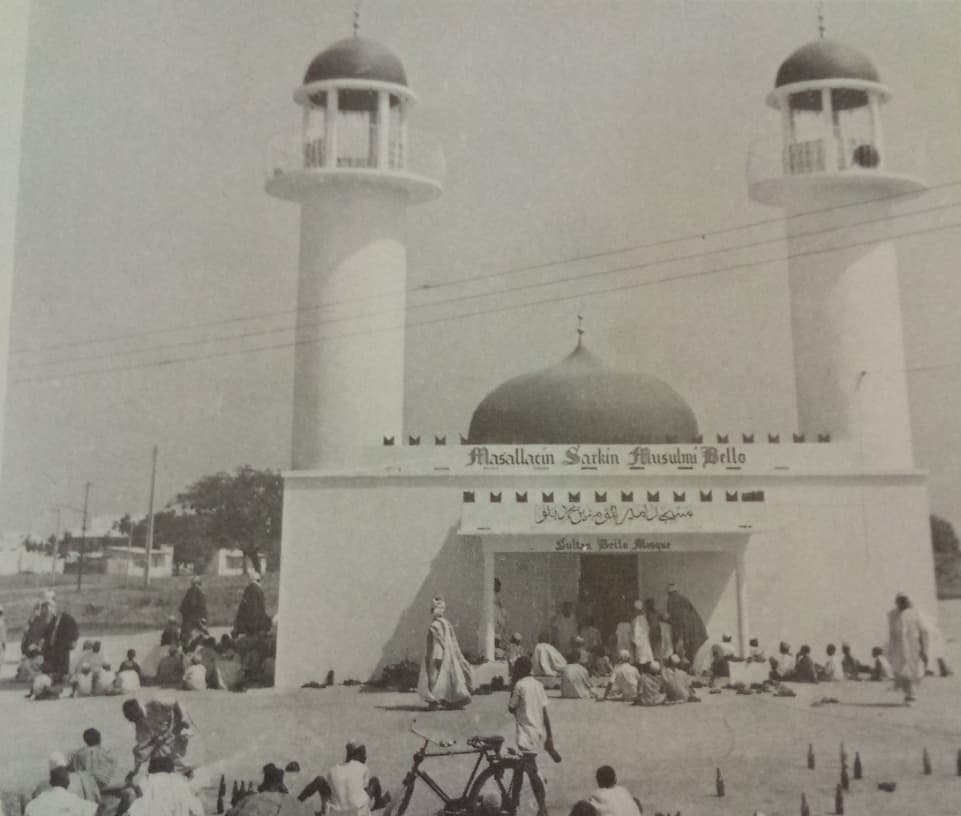
After the jihad, the Sokoto Caliphate organized a network of emirates under religious and political authority.
Read story →British slave-trade treaty programme inaugurated; West Africa Naval Squadron established
The slave-trade treaties were initiated by Britain in 1810 and invariably embodied coercive clauses designed to bring…
Sokoto-Borno war reaches a stalemate
The Sokoto jihadists' war with Borno, where al-Kanemi mobilized forces to repel the Fulani, reached a stalemate by 1812.
Tradition of Yoruba kingly inheritance re-enacted; death of Eyo Honesty I noted
The book records that Efik genealogies place Eyo Honesty I (died 1820) only one to three generations from the foundin…
Death of Usman dan Fodio and succession in Sokoto
Usman dan Fodio's death left leadership to successors including Muhammad Bello and Abdullahi dan Fodio.
Soon after Usman dan Fodio's death, Abd al-Salam, the follower whose emigration from Gobir had helped instigate the jihad, rebelled against the caliphate in…
Read story →Slave-trade treaties with Madagascar and establishment of Mixed Commission Courts
In 1817 Radama, king of eastern Madagascar, concluded a slave-trade treaty with Britain; Britain promised a subsidy o…
Rebellion of Ilorin's Muslim ruler against Oyo
In 1817 the ruler of Ilorin incited a rebellion of the Muslim elements in the Oyo kingdom.
Owu razed in the Yoruba wars
Around 1817 Oyo's main ally Owu was besieged by Ife and Ijebu forces, and was ultimately razed around 1822.
Denham and Clapperton expedition through Hausaland
The Denham and Clapperton expedition of 1822 travelled through Hausaland and reached the southern shores of Lake Chad…
Clapperton and Lander accounts publicize interior routes
British explorers such as Hugh Clapperton and later Richard and John Lander reported on routes through the Niger basi…
Abd al-Salam kills Afonja and founds the Emirate of Ilorin
After Afonja called on Muslim allies to support his revolt against Oyo, he grew wary of the Fulani and ordered them o…
Dahomey revolts and ends its tributary tie to Oyo
A full-scale revolt by Dahomey occurred in 1823, terminating its tributary relationship with Oyo.
Around 1823, six years after the initial rebellion, Muslims seized full control of Ilorin, which became an emirate of the Sokoto Caliphate under the immediat…
Read story →Owen's survey party arrives at Bonny
Commander Owen's survey party arrived at Bonny in 1824 as part of a Royal Navy hydrographic mission to chart the West…
Samuel Ajayi Crowther baptized in Freetown, Sierra Leone
Captured as a slave during the Yoruba wars accompanying the fall of Oyo, Crowther was freed when the Royal Navy inter…
British naval base established at Fernando Po
In 1827 Britain established a naval base at Fernando Po to serve as a staging point for the West Africa Squadron's op…
Warlord Kurumi takes over Ijaye
The warlord Kurumi took over Ijaye in 1829 and built enormous personal wealth; by 1859 he is reported to have had ove…
Lander brothers identify the Niger's outlet
Richard and John Lander followed the Niger to its delta outlet, clarifying for British interests how the river connec…
Death of King Opubu (Pepple) of Bonny; his son succeeds
Around 1830 the powerful King Opubu of Bonny died.
Reign of Alafin Amodo; campaigns preceding fall of Oyo
After the death or abdication of Alafin Majotu c. 1830/1, Amodo reigned briefly.
First commercial Niger expedition using iron steamers
In 1832 Macgregor Laird and Richard Lander led the first commercial Niger expedition, deploying two iron steamers—the…
Reign of Alafin Oluewu; battle of Igbodo; fall of Oyo Ile
Alafin Oluewu came to the throne c. 1833–4 and died in the campaign against Ilorin.
Bonny palm-oil trade valued at nearly £500,000
By 1834 the Bonny palm-oil trade was worth nearly £500,000 per annum, making it one of Britain's most valuable tradin…
Lieutenant Tryon seizes Spanish slave ships at Bonny; Regent Alali imprisons British officers
In 1836 Lieutenant Tryon of the Royal Navy seized Spanish slave vessels in Bonny River, acting under the slave-trade…
Death of Caliph Muhammadu Bello
Caliph Muhammadu Bello, who built the Sokoto Caliphate's administrative machinery through the kofa system and the net…
Regent Alali deposed by Commander Craigie; Britain recognises King Pepple
In 1837 Commander Craigie of the Royal Navy used naval force to depose Regent Alali of Bonny following the imprisonme…
Articles of Convention concluded between King Pepple and Commander Castle
On 19 November 1838 King Pepple of Bonny and Commander Castle of HMS Rylades concluded formal Articles of Convention,…
First slave-trade abolition treaty concluded with Bonny
The first slave-trade treaty with a Niger Delta state was concluded with Bonny on 11 March 1839. "After a long palave…
Ibadan halts the Sokoto jihad's southward advance at Ogbomosho
In 1840 Ibadan successfully confronted the forces of Ilorin at Ogbomosho, ending the southward push of the Sokoto jih…
CMS organises first missionary expedition to the Yoruba country
Johnson states that "the earliest attempt to reduce this language into writing was in the early forties of the last c…
Niger Expedition and Samuel Ajayi Crowther
Samuel Ajayi Crowther joined the Niger expedition and later became central to Christian missionary work, translation,…
New Bonny slave-trade treaty with annual subsidy of 10,000 dollars
In 1841 a new slave-trade treaty was negotiated with Bonny, increasing the annual subsidy to 10,000 dollars per year.
Wesleyan mission opens work at Badagry
Methodist missionary work at Badagry helped establish one of the early Christian mission footholds on the Nigerian co…
Slave-trade abolition treaty signed with Old Calabar
In 1842 a slave-trade abolition treaty was concluded with Old Calabar (Cross River area), committing the Efik rulers…
King Pepple imprisons British supercargoes at Bonny
In 1844 King Pepple of Bonny, faced with systematic evasion of treaty obligations by British traders and with mountin…
CMS mission establishes a Yoruba mission at Abeokuta
The Church Missionary Society worked at Abeokuta among Egba communities and returnee Christians.
Hope Waddell mission begins at Calabar
Presbyterian missionary Hope Waddell arrived in Old Calabar, where mission education and Christian institutions devel…
Bonny-Andoni war
In 1846 Bonny went to war against the Andoni people, a conflict rooted in competition for trade routes and markets in…
On 30 June 1849 John Beecroft was appointed British Consul for the Bights of Benin and Biafra—the first such appointment, marking the formal establishment of…
Read story →Beecroft's treaty bans human sacrifice and twin-killing in Calabar
Consul John Beecroft negotiated a treaty in 1850 with King Eyo II of Creek Town and Archibong I of Duke Town banning…
Beecroft establishes a Court of Equity at Bonny
Beecroft established a court of equity at Bonny in 1850 to settle disputes; a similar court followed at Calabar in 1856.
American Southern Baptist Mission established at Abeokuta
In 1850 the American Southern Baptist Mission set up a mission at Abeokuta, joining the CMS and Wesleyan missionaries…
Benin reconquers Akure and extends control over Ekiti
At the beginning of the nineteenth century Benin made a major military effort that led to the reconquest of Akure and…
British bombardment of Lagos
British intervention in Lagos politics culminated in military action that shifted power toward rulers more compatible…
Emir Buhari's uprising in Hadeija against the caliphate
Deposed by Caliph Aliyu Baba for misdeeds, Emir Buhari of Hadeija renounced caliphal authority and, with Borno's supp…
"Blood Men" slave revolt at Old Calabar
In 1851 a major revolt of enslaved people broke out at Old Calabar.
Lagos treaty follows British intervention
After the 1851 bombardment, British officials made treaty arrangements with Lagos rulers tied to suppression of the s…
African Steamship Company founded
The African Steamship Company was founded in 1852, providing regular scheduled steamship services between Britain and…
Beecroft deposes King Pepple of Bonny
At a meeting of the Bonny Court of Equity in 1853, Consul Beecroft deposed King Pepple, who had long resisted British…
Baikie's Niger expedition proves quinine enables European interior travel
In 1854 Dr.
Crowther records the 20th Atta of Igala at Idah
Samuel Ajayi Crowther was informed in 1854 at Idah that the reigning Atta was the twentieth in line, implying (the bo…
Consul Beecroft exiles King Pepple of Bonny to Fernando Po
In 1854 Consul John Beecroft, acting on complaints from British supercargoes and in alliance with the anti-monarchist…
In 1855 full-scale civil war broke out in Bonny between the royalist (pro-Pepple) and anti-monarchist (pro-Alali) factions.
Read story →Consul Lynslager destroys Old Town, Old Calabar
In 1856 Consul Lynslager ordered the destruction of Old Town (one of the constituent settlements of Old Calabar) in r…
CMS adopts Lepsius Standard Alphabet for the Yoruba language
Johnson records that Professor Lepsius of Berlin was entrusted with establishing "a complete form of alphabetic syste…
CMS Niger Mission begins at Onitsha
The Niger Mission became a major Christian and educational project in the lower Niger, with African clergy and teache…
Macgregor Laird launches the first steamer business on the Niger
In 1857 Macgregor Laird established the first steamer business on the Niger.
Igbo-Ukwu bronze "Roped Pot" and related finds documented by archaeology
The Igbo-Ukwu bronzes — including the celebrated roped pot and altar stands decorated with conventionalised spiders —…
British supercargoes petition for King Pepple's restoration
By 1858 the British supercargoes who had conspired to exile King Pepple in 1854 petitioned Consul Hutchinson to reque…
Iwe Irohin begins Yoruba-language newspaper publishing
Henry Townsend founded Iwe Irohin at Abeokuta, widely cited as Nigeria's first newspaper.
Lagos is annexed by Britain
Britain annexed Lagos, making it a formal colony.
King William Dappa Pepple arrives in Bonny waters; lands 15 October 1861
On 18 August 1861 King William Dappa Pepple arrived in Bonny waters aboard a privately chartered vessel, the Bewley,…
Samuel Ajayi Crowther named Bishop of the Niger
For his evangelical work running the CMS mission at Onitsha from 1857, the formerly enslaved Yoruba convert Samuel Aj…
Ja Ja becomes head of Anna Pepple House in Bonny
Born a slave in 1821, Ja Ja became an excellent trader, bought his freedom, and in 1863 was named head of Anna Pepple…
Samuel Ajayi Crowther becomes Anglican bishop
Crowther was consecrated as bishop for the Niger mission, becoming the first African Anglican bishop.
Colonel Ord appointed Special Commissioner to West Africa
In 1864 Colonel Ord was appointed Special Commissioner to West Africa with instructions to recommend how expenditure…
Parliamentary Select Committee report on West Africa recommends partial withdrawal
The Parliamentary Select Committee of 1865, chaired by Charles B.
Lagos is administered from Sierra Leone
Lagos was for a period grouped administratively with other British West African possessions before later becoming a s…
Death of King William Dappa Pepple of Bonny
King William Dappa Pepple died in 1866 at Ju Ju Town, where he had been living in diminished circumstances since his…
In 1869 a second civil war broke out in Bonny between the rival trading houses led by Oko Jumbo and Jaja (Anna Pepple House).
Read story →Jaja founds Opobo
In 1870 Jaja of Bonny—a former enslaved man who had risen to become head of the Anna Pepple trading house—left Bonny…
Courts of Equity Brought Under Consular Legal Control
The measure of 1872 brought the Courts of Equity in the Oil Rivers under the legal control of the British consul, ves…
Lagos becomes part of the Gold Coast Colony
Britain attached Lagos administratively to the Gold Coast in 1874.
Bishop Crowther reports European merchants joining Bonny Ju-Ju clubs
In 1875 Bishop Samuel Ajayi Crowther wrote that "some three months ago an intelligent, well-educated Englishman degra…
St. Gregory's College opens in Lagos
Catholic education in Lagos expanded through institutions such as St.
The Ekitiparapo War among the Yoruba states
All-out war broke out in Yorubaland in 1877 when Egba, Ijebu, Ekiti, Ijesa, and Ife forces allied against Ibadan domi…
CMS Grammar School becomes a Lagos elite school
CMS Grammar School, founded in Lagos in the 1850s, developed into a key producer of clerks, teachers, clergy, and pro…
Lagos legislative council gains limited nominated African voices
Late nineteenth-century Lagos politics included appointed African members and elite petitioning within colonial counc…
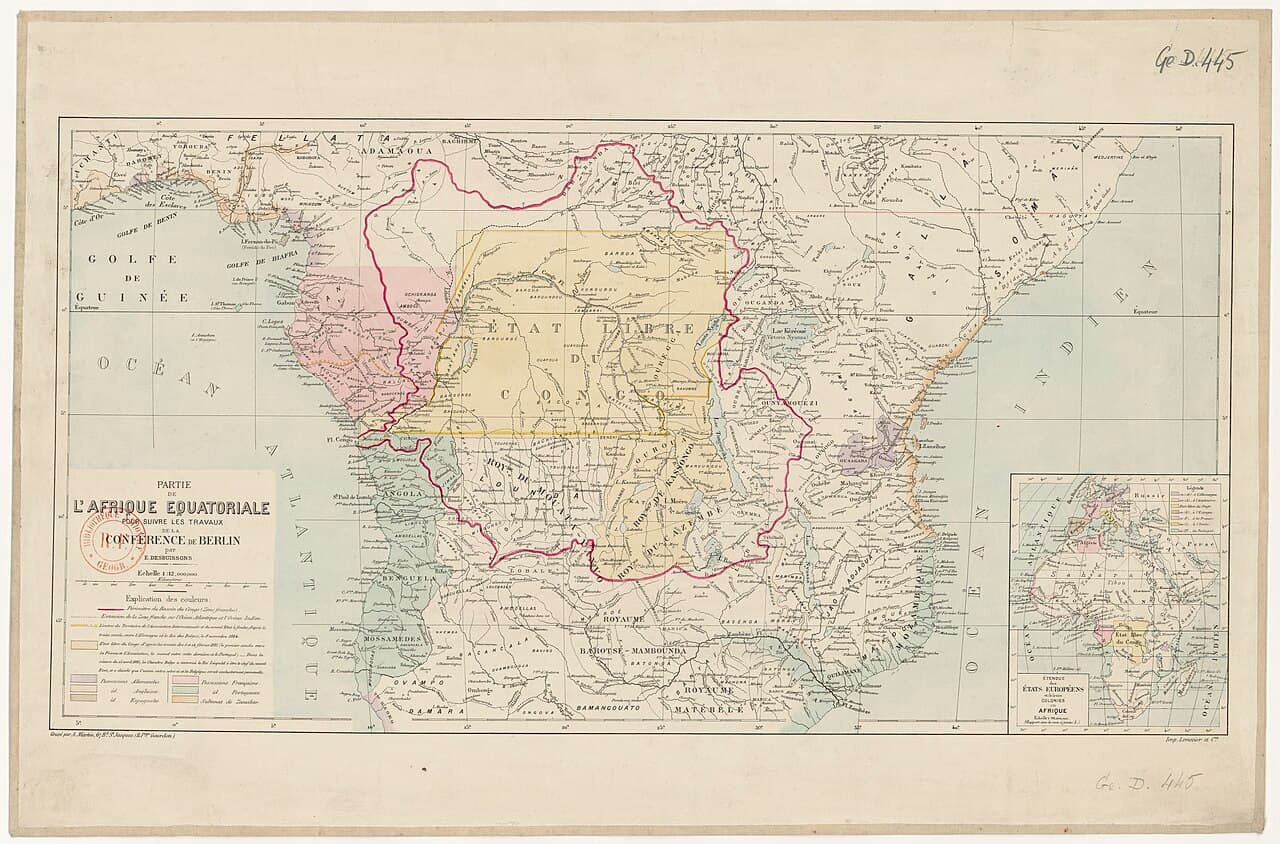
European powers formalized rules of imperial competition in Africa, accelerating claims over territory including the Niger basin.
Read story →Oil Rivers Protectorate marks coastal consolidation
British claims over the Niger Delta tightened through the Oil Rivers Protectorate before later reorganization as the…
Germany annexes the Cameroons, pressuring Calabar and the Benue
By 1884 Germany had annexed the Cameroons, whose western border lay dangerously near Calabar and whose northern borde…
Consul Hewett's Treaty with King Jaja of Opobo
When King Jaja of Opobo asked Consul Hewett for a definition of the word 'protection' before signing the proposed tre…
Proclamation of the Niger Districts Protectorate
By a notification published in the London Gazette of 5 June 1885, the Ibo, Ibibio, Ijo and Ogoja peoples were include…
Britain's grant of a charter to Goldie's Royal Niger Company was described as 'the cheapest and most effective way' of meeting the obligations imposed on her…
Read story →Royal Niger Company receives charter
George Goldie's Royal Niger Company received a British charter, giving it administrative and commercial power over la…
Lagos is separated from the Gold Coast
Lagos became a separate colony again in 1886, the same year the Royal Niger Company received its charter.
Ja Ja deposed and exiled to the West Indies
After Ja Ja violated his treaty of protection by continuing to deny British traders access to his hinterland markets,…
Oil Rivers Protectorate is proclaimed
Britain proclaimed the Oil Rivers Protectorate over delta and southeastern coastal trading zones.
Oil Rivers Protectorate Named and Macdonald's Special Commission
In 1889, the territory proclaimed in 1885 as the 'Niger Districts' was formally named the Oil Rivers Protectorate.
Lagos Weekly Record begins publication
John Payne Jackson's Lagos Weekly Record became an influential critical newspaper in colonial Lagos.
Britain Establishes Effective Rule in the Oil Rivers Protectorate; Macdonald Appointed
In 1891 Britain decided to establish effective rule in the Oil Rivers Protectorate and appointed Sir Claude Macdonald…
Report on the Niger Coast Protectorate: Health and Continuity of Administration
In 1894, Sir Claude Macdonald noted in his Report on the Niger Coast Protectorate (August 1891–August 1894) that the…
British expedition breaks Ijebu control of trade routes
British forces attacked Ijebu after disputes over access between Lagos and the Yoruba interior.
'High Court of the Native Council of Old Calabar' Already in Existence
By 13 February 1892 the 'High Court of the Native Council of Old Calabar' was already in existence, with the consul-g…
Niger Coast Protectorate formed
British authority over the Oil Rivers / Niger Delta region was reorganized as the Niger Coast Protectorate.
Yoruba wars end under British-backed settlement
Prolonged wars among Yoruba states, including Ibadan, Ijebu, Egba, Ekiti, and others, ended through treaties and Brit…
After the Emir of Kano died in 1893, Caliph Abdurrahman bypassed the popular Yusuf bin Abdullahi for the late emir's son Tukur, prompting Yusuf to set up a r…
Read story →Niger Coast Protectorate replaces Oil Rivers administration
British administration in the delta and southeastern coast was reorganized as the Niger Coast Protectorate.
King Koko's Brass attack on the Royal Niger Company at Akassa
Excluded from trading on the Niger and facing starvation under company monopoly, Brass forces under King Koko attacke…
British bombardment of New Oyo
After most Yoruba leaders signed treaties of protection in 1893, only the reconstituted New Oyo offered significant r…
Brass-Nembe attack on Akassa challenges company rule
Nembe forces attacked the Royal Niger Company's Akassa station after conflict over trade restrictions.
Bida and Ilorin become targets of British advance
British and company forces pushed against Nupe and Ilorin power in the middle Niger area during the late 1890s.
Sir Ralph Moor Succeeds Macdonald as Commissioner and Consul-General
Sir Ralph Moor succeeded Sir Claude Macdonald as Commissioner and Consul-General of the Niger Coast Protectorate in 1…
Oba Ovonramwen loses control of the kingdom
The hapless Oba Ovonramwen lost control altogether in 1896.
British punitive expedition destroys Benin City
British forces invaded Benin, removed the Oba, looted palace art, and broke the kingdom's independent power.
Benin exile government question follows Oba Ovonramwen's removal
After the British expedition, Oba Ovonramwen was deposed and exiled, and Benin's palace system was brought under colo…
French occupation of Bussa threatens the Niger
In 1897 the French occupied Bussa on the Niger, very near the Royal Niger Company's treaty zone, after earlier occupy…
Benin kingdom annexed to the Niger Coast Protectorate
The kingdom of Benin ceased to exist as an independent state in 1897 when it was annexed to the Niger Coast Protector…
Hut tax and revenue experiments spread in protectorate rule
British administrators experimented with taxation as they moved from coastal influence to territorial rule.
The Ekumeku resistance movement against British and company rule
The Ekumeku was an underground resistance movement that fought against the Royal Niger Company and British colonial r…
Twenty-Three Native Courts in the Niger Coast Protectorate
In the period 1898–9 there were already about twenty-three Native Courts in the Niger Coast Protectorate.
Court Clerk Ansa Ansa Ani Selects Warrant Chiefs for Odot Community
For want of their own Native Court, the Odot people (between Ikoneto and Okoyon in the Cross River basin) took all ca…
Colonial Office decides to end Royal Niger Company sovereignty
Britain moved to revoke the Royal Niger Company's charter and assume direct responsibility for northern and Niger-bas…
Royal Niger Company charter revoked; Northern and Southern protectorates consolidated
The Royal Niger Company's charter was revoked, and Britain moved toward direct imperial administration through the No…
Lugard becomes high commissioner of Northern Nigeria
Frederick Lugard took charge of the newly declared Protectorate of Northern Nigeria.
Southern Nigeria Protectorate begins separate administration
Britain created the Southern Nigeria Protectorate from the Niger Coast Protectorate and other territories.
Aro Expedition
British forces attacked Arochukwu and the Aro network in southeastern Nigeria.
West African Frontier Force becomes conquest instrument
British colonial forces used the West African Frontier Force in campaigns across northern and central Nigeria.
Aro Expedition and Establishment of Native Councils Throughout the Interior
In 1901–2 the British launched the first serious military expedition into the interior of the Eastern Provinces, spec…
Seizure of Aro Leaders by Lt-Col. Montanaro During the Aro Field Force Operation
Lt-Col.
Njemanze of Owerri Assists Aro Expedition and Is Rewarded with Warrant Chief Status
Njemanze of Owerri was a powerful and influential slave-dealer in pre-British days, known to the Royal Niger Company…
British occupation of Arochukwu disrupts oracle authority
The Aro Expedition targeted Arochukwu's religious and commercial authority, including the Ibini Ukpabi oracle.
British forces conquer Zaria
Moving north after securing Bida, Kontagora, and Yola, then Bauchi and Gombe, Lugard's forces conquered Zaria by 1902.
Establishment of Native Court at Obosi, Onitsha Division
In 1902 the village of Obosi in Onitsha Division was on the verge of civil war due to a conflict between missionary-i…
Obong Eyo Honesty VIII of Creek Town Appoints Warrant Chiefs Unilaterally
In 1902 Obong Eyo Honesty VIII of Creek Town sent in the names of four people whom he said he had appointed to replac…
British conquest of Sokoto and Kano
British forces defeated the Sokoto Caliphate's central political authority and incorporated the emirates into Norther…
Kano is occupied and emirate authority restructured
British forces took Kano in 1903 and subordinated emirate authority to protectorate rule.
Sokoto is incorporated after British military advance
British victory over Sokoto ended the caliphate's independent sovereignty while retaining the Sultanate within coloni…
Caliph Attahiru killed at the Second Battle of Burmi
After Sokoto fell on March 15, 1903, Caliph Attahiru fled, but Lugard's forces pursued him and killed him on July 27…
Native Courts of Southern Nigeria Protectorate Number About Sixty
By 1903 the Native Courts of the Southern Nigeria Protectorate numbered about sixty.
Lugard's land and native rights policy takes shape in the North
Northern administration treated land as held under colonial authority and administered through native institutions.
Borno occupied and incorporated into Northern Nigeria
Borno, which had always retained its independence from Sokoto, was occupied by British forces and brought into the Pr…
Mahdist-linked Satiru revolt is crushed
The Satiru uprising near Sokoto challenged early British rule and was violently suppressed.
Ezza Military Patrol: Chiefs Seized as Hostages
During the Ezza military patrol of 1905, 'important Assaga chiefs' were called to negotiate with the commanding offic…
Lagos Colony and Southern Nigeria Protectorate are merged
The British merged Lagos with the Southern Nigeria Protectorate.
Lagos and Southern Nigeria merger creates larger southern unit
Lagos Colony and the Southern Nigeria Protectorate were merged administratively in 1906.
Railway reaches Ibadan from Lagos
The Lagos railway reached Ibadan in the first decade of the twentieth century, tying the Yoruba interior more tightly…
Government Opens Etche Court; Etche Rising of 17 July 1907
In December 1906 the government decided to open a court at Okomoko to serve the Etche people; in March 1907 Mr Isaiah…
Minna becomes a northern railway junction
Railway construction northward made Minna an important junction in the colonial transport grid.
Enugu coal deposits draw colonial attention
Coal deposits around Enugu became important to colonial railway and industrial planning.
Kano-Lagos railway planning links north and coast
Colonial planners pushed railway lines to connect northern produce zones with Lagos.
Government school expansion remains uneven by region
Colonial and mission schooling expanded faster in parts of the south than in the Muslim north, where authorities limi…
Niger-Benue navigation supports administrative penetration
River transport on the Niger and Benue remained vital for moving goods, officials, and soldiers before rail coverage…
In 1912, Frederick Lugard was sent back to Nigeria as Governor-General with the specific commission to merge the Colony and Protectorate of Southern Nigeria…
Read story →Native courts expand under indirect rule
Colonial administrators used native courts to govern through chiefs, emirs, and warrant officers.
Lugard's tenure as Governor-General of the Colony and Protectorate of Nigeria
Frederick Lugard served as the first British Governor-General of the Colony and Protectorate of Nigeria from December…
Northern and Southern Nigeria are amalgamated
Lord Frederick Lugard amalgamated Northern and Southern Nigeria into the Colony and Protectorate of Nigeria.
Nigeria is folded into the First World War
Nigeria's colonial administration and troops were drawn into Britain's war effort, including the campaign against Ger…
Lagos remains capital of the amalgamated colony
Amalgamation kept Lagos as the administrative capital while joining it to territories with very different histories.
Northern deficit and southern revenue shape the merger
One motive for amalgamation was financial: southern customs revenue could support the more expensive northern adminis…
Northern and Southern protectorates amalgamated
British officials merged the Northern and Southern Protectorates with Lagos into one administrative Nigeria.
Frederick Lugard, as Governor-General (December 1913 – November 1918), forced the various tribal national groups and the two Protectorates to amalgamate in 1…
Read story →British colonial divide-and-rule policy in Nigeria
Following the 1914 amalgamation, British colonial policy systematically exploited ethnicity through a divide-and-rule…
Lugard's indirect-rule doctrine is codified in practice
Lugard's model relied on ruling through native authorities supervised by British residents.
Lugard's Political Memoranda guide colonial administration
Lugard's administrative memoranda helped standardize how officials understood native authorities, taxation, courts, a…
Eweka II installed as Oba of Benin with Ife sanction re-enacted
The tradition of seeking Ife's sanction for Benin succession was re-enacted in 1916 when Aguobasimi became Oba of Ben…
Nigerian troops fight in the Kamerun campaign aftermath
Nigerian soldiers and carriers were used in Britain's First World War campaigns in West Africa, especially against Ge…
Influenza pandemic reaches colonial Nigeria
The 1918 influenza pandemic spread through West Africa, including Nigeria, disrupting households, labor, and colonial…
British Cameroons placed under Nigerian administration
After World War I, former German Kamerun was divided between Britain and France; Britain administered its portion thr…
Adubi War erupts in Egba territory
Egba resistance in 1918-1919 challenged taxation, forced labor, and the erosion of Abeokuta's autonomy.
National Congress of British West Africa petitions for reform
Educated elites across British West Africa formed the NCBWA and demanded greater African representation, higher educa…
Lagos Town Council politics expands elite participation
Municipal politics in Lagos gave educated elites a local arena for campaigns, petitions, and public finance debates.
Clifford Constitution introduces elective principle in Lagos and Calabar
The Clifford Constitution created limited elected representation in Lagos and Calabar.
British Cameroons is linked to Nigerian administration
After World War I, part of former German Kamerun became a British mandate administered with Nigeria.
British Cameroons mandate is administered from Nigeria
The League of Nations mandate for British Cameroons was governed through Nigeria after Germany's defeat.
Clifford Constitution and elective Lagos seats
The Clifford Constitution created a Legislative Council for Southern Nigeria and introduced limited elections in Lago…
Nigerian National Democratic Party emerges
Herbert Macaulay's Nigerian National Democratic Party became an early vehicle for electoral politics in Lagos.
First Lagos legislative elections are held
The Clifford Constitution's elective principle produced elections in Lagos and Calabar, although the franchise was na…
Herbert Macaulay campaigns through NNDP municipal power
Macaulay's NNDP used Lagos elections, newspapers, and public meetings to challenge colonial policy.
Lagos Daily News supports Macaulay's politics
The Lagos Daily News became associated with Herbert Macaulay's political campaigns and criticism of colonial administ…
Nigerian civil-service Africanization remains slow
Educated Nigerians pushed for more senior appointments, but colonial administration kept higher posts largely European.
Direct taxation expands in Eastern Nigeria planning
Colonial revenue policy moved toward direct taxation in southeastern provinces, where warrant chiefs and native court…
Women's market networks challenge warrant-chief authority
Before the full Women's War, southeastern women's networks already monitored prices, courts, and male-appointed chiefs.
Introduction of Direct Taxation into the Eastern Provinces
The introduction of direct taxation in 1928 was described by Afigbo as 'the last and most fateful' of the reforms att…
Women's War / Aba Women's War
Women in southeastern Nigeria mounted mass protests against colonial warrant chiefs, taxation fears, and administrati…
Oloko incident triggers the Women's War
The confrontation between women and warrant chief Okugo's tax-related counting at Oloko helped trigger mass mobilizat…
Women's Riot (Aba Riots / Women's War) Ends the Era of the Warrant Chiefs
Direct taxation introduced in 1928 not only failed to improve the Warrant Chief System but 'brought it to ruin in the…
Aba Commission inquiries examine colonial failures
Commissions of inquiry investigated the Women's War and the causes of unrest in southeastern Nigeria.
Native Authority reforms follow southeastern unrest
After the Women's War, British administrators adjusted indirect rule in parts of the southeast and reduced reliance o…
Census and enumeration remain politically sensitive
Colonial population counts were administratively useful but locally sensitive because enumeration was linked to tax,…
Lagos market women organize around taxation and municipal policy
Lagos women traders used petitions, associations, and market networks to resist policies that threatened livelihoods.
Major General David Akpode Ejoor
Major General David Akpode Ejoor (Rtd) (10 January 1932 – 10 February 2019) was a pioneer officer of the Nigerian Arm…
John Ebiye
Group Captain John Ebiye (b. 1932) was the last transitional Military Administrator of Akwa Ibom State under General…
Nigerian Youth Movement roots emerge from Lagos educated circles
The Lagos Youth Movement, later the Nigerian Youth Movement, began among educated Lagos activists concerned with educ…
Yaba Higher College opens
Yaba Higher College offered higher technical and professional training under colonial limits.
Nigerian Youth Movement adopts a broader name
The movement moved beyond its Lagos Youth Movement origins and presented itself as Nigerian rather than merely local.
Bamanga Muhammad Tukur
Alhaji Bamanga Muhammad Tukur (b. 15 September 1935, Adamawa State; holder of the traditional title **Tafidan Adamawa…
Felix Ovudoroye Ibru
Olorogun Felix Ovudoroye Ibru (7 December 1935 – 12 March 2016) was an architect, politician, and businessman from Ag…
Nnamdi Azikiwe returns to West African journalism
Azikiwe's journalism in the Gold Coast and Nigeria brought a more populist and Pan-African tone to West African polit…
West African Pilot launches in Lagos
Azikiwe founded the West African Pilot, which became a major nationalist newspaper.
Nigerian Produce Marketing arrangements expand state control
Colonial regulation of export produce grew through boards, inspection, and price control mechanisms before and during…
Aper Aku
Aper Aku (1938–1988) was a Nigerian educator and politician from Ikyobo, Ushongo LGA, Benue State.
Victor Bassey Attah
Obong Victor Bassey Attah (b. 20 November 1938, Okop Ndua Erong, Akwa Ibom) is a Nigerian architect and politician; f…
Southern Nigeria is divided into Eastern and Western provinces
Colonial administrative reorganization separated the south into Eastern and Western provinces.
World War II intensifies produce controls and labor demand
Britain's war needs increased pressure on Nigerian production, transport, and manpower.
Abdullahi Mohammed
Major General Abdullahi Mohammed Adangba (rtd.) (1939 – 5 November 2025) was a Nigerian Army officer and statesman fr…
Akpan Isemin
Obong Akpan Isemin (c. 1939 – 23 June 2009) was the first civilian Governor of Akwa Ibom State, serving January 1992…
Nigerian troops serve in East African campaign
Nigerian soldiers in British service fought in East Africa during World War II.
Coal and rail labor become strategic wartime sectors
Coal from Enugu and railway labor were essential to colonial wartime logistics.
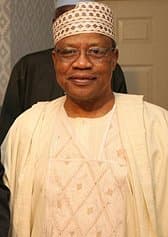
General Ibrahim Badamasi Babangida, GCFR
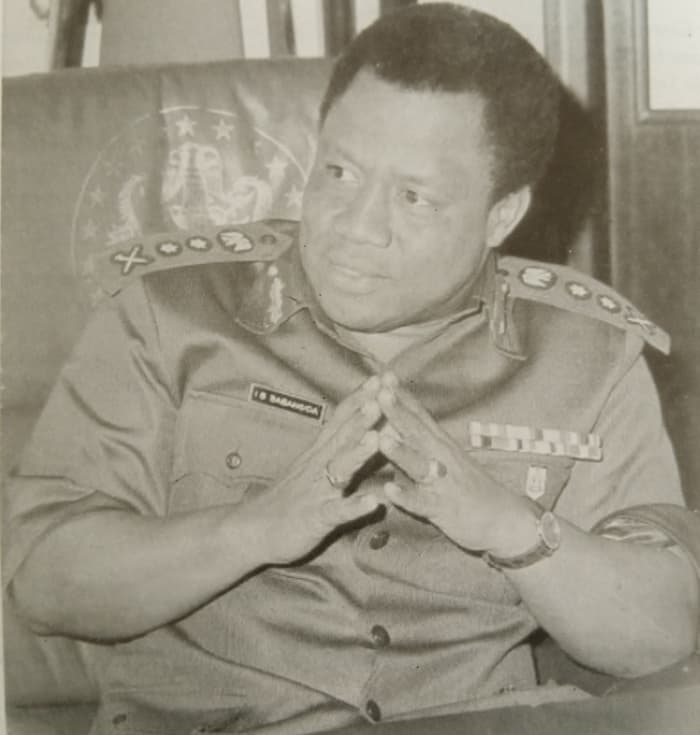
General Ibrahim Badamasi Babangida (IBB), born 17 August 1941 in Minna, Niger State, is one of the most consequential…
John Kpera
Brigadier General John Atom Kpera (b. 3 January 1941) was a Nigerian Army officer who served as first Military Govern…
Nigerian students and intellectuals debate postwar self-government
Educated Nigerians used newspapers, associations, and overseas networks to connect wartime rhetoric about freedom to…
Abdullahi Shelleng
Major General (rtd.) Abdullahi Shelleng (b. 20 January 1942, Shelleng, Numan LGA, Adamawa State) was the inaugural Mi…
Trade Union Ordinance legalizes unions
Colonial legislation formally recognized trade unions, creating a legal framework for worker organization.
Nigerian Antiquities Service inaugurated; Kenneth Murray appointed Surveyor of Antiquities
After the inauguration of the Nigerian Antiquities Service in July 1943, Murray was appointed Surveyor of Antiquities.
Asheik Jarma
Alhaji Asheik Jarma (b. 1943, Kirenowa, Marte LGA, Borno State; Shuwa Arab) is a Nigerian businessman and politician…
National Council of Nigeria and the Cameroons is founded
The NCNC became a major nationalist party and organization, associated with Nnamdi Azikiwe and broader anti-colonial…
NCNC links nationalism with the Cameroons question
The National Council of Nigeria and the Cameroons used a name that reflected Nigeria's administrative connection to B…
Abubakar Habu Hashidu
Alhaji Abubakar Habu Hashidu (10 April 1944 – 27 July 2018) was a Nigerian politician and technocrat who served as th…
General strike shuts down key colonial services
Nigerian workers launched a major general strike over wages and wartime cost-of-living pressures.
Michael Imoudu becomes symbol of railway labor militancy
Railway union leader Michael Imoudu was associated with wartime labor militancy and worker organization.
Esie Museum established for stone heads
A museum for the stone heads of Esie was established there in 1945, following the inauguration of the Nigerian Antiqu…
Richards Constitution regionalizes Nigerian politics
The Richards Constitution strengthened regional structures, dividing political development around Northern, Western,…
Richards Constitution creates regional councils
The Richards Constitution introduced regional councils for North, West, and East while maintaining strong central col…
Zikist Movement emerges around militant nationalism
Younger radicals associated with Azikiwe's politics pushed more militant anti-colonial rhetoric and mobilization.
Richards Constitution formalizes regionalism
The Richards Constitution divided Nigeria into Northern, Western, and Eastern regions for legislative purposes.
University College Ibadan is approved in the postwar education settlement
The British colonial university policy led to University College Ibadan, opened in 1948 as an affiliate of the Univer…
Idris Garba
Major General Idris Garba (b. July 1947, Gulu, Lapai LGA, Niger State) is a retired Nigerian Army officer who served…
Ishaya Bakut
Major General Ishaya Bakut (16 August 1947 – 21 March 2015) was a Nigerian Army officer and engineer who served as Mi…
University College Ibadan opens
University College Ibadan began teaching as Nigeria's first university institution.
Egbe Omo Oduduwa organizes Yoruba cultural nationalism
Egbe Omo Oduduwa, associated with Obafemi Awolowo and other Yoruba elites, promoted Yoruba cultural and political int…
Ibadan People's Party forms around local politics
The Ibadan People's Party represented a local political current in the Western Region before Action Group dominance.
Dominic Oneya
Brigadier General Dominic Obukadata Oneya (26 May 1948 – 4 August 2021) was a Nigerian Army officer and administrator…
Enugu colliery shooting kills striking miners
Police fired on striking coal miners at Enugu, killing workers and inflaming nationalist anger.
Daily Service amplifies Action Group-linked public debate
Newspapers associated with emerging regional politicians helped contest NCNC influence and shape Yoruba public opinion.
Ibadan constitutional conference
Nigerian leaders debated how a diverse country should be governed and moved toward a federal answer.
Ibadan constitutional conference debates regionalism
Nigerian leaders and colonial officials met in Ibadan to debate constitutional change after criticism of the Richards…
Northern political association organizes around regional interests
Northern elite organization developed through the Northern People's Congress, rooted in regional interests and emirat…
Theodore Orji
Senator Theodore Ahamefule Orji (born 9 November 1950), traditionally titled 'Ochendo Global', is a former two-term G…
Macpherson Constitution expands representation but deepens regional bargaining
The Macpherson Constitution followed wider consultation and expanded Nigerian participation.
Action Group emerges in Western politics
Obafemi Awolowo founded the Action Group around a Yoruba western base and federalist program.
Action Group is launched
The Action Group emerged under Obafemi Awolowo's leadership, drawing heavily on Yoruba organizational networks and We…
Northern People's Congress becomes electoral force
The NPC translated northern elite and regional networks into party politics under leaders including Ahmadu Bello.
Macpherson Constitution creates a House of Representatives
The Macpherson Constitution expanded legislative representation through regional and central institutions.
Eastern Region politics consolidates around NCNC strength
The NCNC built a strong eastern base even while claiming national reach.
Macpherson Constitution expands regional legislatures
The Macpherson Constitution broadened Nigerian participation after consultations and strengthened regional houses of…
Umaru Musa Yar'Adua
Umaru Musa Yar'Adua — office-holder linked to Katsina State; promoted from per-state audit for network legibility.
Census and representation tensions sharpen
Population counts and seat allocation reinforced the question of who would dominate the federation.
Awolowo becomes Western Region leader of government business
After Western Region elections, Awolowo and the Action Group became central to regional government.
Azikiwe shifts toward Eastern Region leadership
Azikiwe's national profile increasingly rested on Eastern Region and NCNC organization after western political setbacks.
Lagos remains a special political arena outside regional capitals
Lagos was both colonial capital and a politically distinct urban community with its own press and electoral traditions.
Jos Museum opened
Bernard Fagg was responsible for building the museum at Jos, which was opened in 1952.
Bala James Ngilari
Bala James Ngilari (b. 4 December 1952, Lassa, Borno State; sometimes spelled "Nggilari") is a Nigerian lawyer (Ahmad…
Bola Ahmed Adekunle Tinubu
Asiwaju Bola Ahmed Adekunle Tinubu (b. 29 March 1952) is the 16th and incumbent President of the Federal Republic of…
Clement David Ebri
Clement David Ebri (b. 11 December 1952, Mkpani, Yakurr LGA) was the civilian Governor of Cross River State during th…
Idongesit Nkanga
Air Commodore Otuekong Idongesit Nkanga (27 January 1952 – 24 December 2020) was a Nigerian Air Force officer who ser…
Kano riot after self-government crisis
Debates over the timetable for self-government escalated into regional and ethnic tension, including violence in Kano.
Enahoro self-government motion
Anthony Enahoro moved that Nigeria should attain self-government in 1956.
Anthony Enahoro moves self-government motion
Action Group politician Anthony Enahoro moved a motion calling for self-government in 1956.
Northern delegates walk out after self-government dispute
Northern representatives withdrew from federal legislative proceedings after southern pressure for a fixed self-gover…
Kano violence follows southern politicians' northern tour
The Kano riot followed a tense visit by southern politicians amid the self-government controversy.
Colonial government appoints fiscal commission on revenue allocation
Revenue allocation became a constitutional issue as regions demanded resources to match responsibilities.
George Akume
Senator George Akume (b. 27 December 1953, Gboko) is a Nigerian civil servant and politician.
Lyttleton Constitution establishes a clearer federation
The 1954 constitutional settlement strengthened federalism and gave regions greater autonomy.
Lagos constitutional conference leads to Lyttleton settlement
Constitutional talks after the 1953 crisis produced the Lyttleton Constitution.
Federal Supreme Court structure develops under constitutional reform
The 1954 federal settlement strengthened legal distinctions between federal and regional authority, requiring courts…
Cameroons becomes a separate federal territory within Nigerian administration
Constitutional reforms treated Southern Cameroons with a distinct status while still linked to Nigerian administration.
Federal capital territory status of Lagos is sharpened
The federal settlement reinforced Lagos's role as capital in a federation of regions.
Lyttleton Constitution establishes a federation
The Lyttleton Constitution made Nigeria a federation with stronger regional governments.
Ife Museum opened
In 1954 the Ife Museum was opened, followed by the Nigerian Museum in Lagos in 1957.
Darius Dickson Ishaku
Darius Dickson Ishaku (b. 30 July 1954, Lupwe, Ussa LGA, Taraba State) is a Nigerian architect, urban planner, and po…
Western Region launches free primary education
Awolowo's Western Region government introduced free primary education, expanding school access dramatically.
Western Region expands television and mass communication planning
Western Region leaders invested in modern mass communication and later launched Africa's first television service in…
Northern Region debates pace of educational expansion
Northern leaders faced pressure to expand Western education while protecting Islamic and emirate institutions.
Eastern Region development politics focuses on industry and education
Eastern Region leaders promoted development schemes, education, and industrial ambition under NCNC influence.
Oil discovered at Oloibiri
Commercial petroleum discovery at Oloibiri in the Niger Delta introduced a new economic future just before independence.
London constitutional conference agrees on regional self-government path
Nigerian leaders and British officials negotiated the next stage of self-government in London.
Movement for the Creation of Calabar-Ogoja-Rivers State gains prominence
Minority activists in the Eastern Region pressed for a Calabar-Ogoja-Rivers State to reduce domination by larger groups.
Benin-Delta minority demands sharpen in the West
Edo and Delta minority activists challenged Western Region dominance and argued for separate political safeguards.
Middle Belt activists challenge Northern Region dominance
Middle Belt political groups argued that Northern Region politics was dominated by emirate-linked Hausa-Fulani leader…
Oil discovery at Oloibiri enters Shell-BP development planning
Commercial oil discovery at Oloibiri in the Niger Delta was followed by planning for production and export infrastruc…
Otunba Olugbenga Daniel
Otunba Olugbenga Justus Daniel (born 6 April 1956 in Ibadan, Oyo State, to the Most Rev.
Isa Yuguda
Mallam Isa Yuguda (b. 15 June 1956) is a Nigerian banker, economist, and politician who served as Governor of Bauchi…
Nnamdi Azikiwe
President of First Republic and Premier of Eastern Region; is alleged to have failed to sever links to African Contin…
Eastern and Western Regions gain self-government
The Eastern and Western Regions gained internal self-government before the North.
Balewa becomes federal prime minister
Tafawa Balewa's leadership bridged late colonial transition and independence government.
Eastern Region gains internal self-government
The Eastern Region achieved internal self-government as part of the phased constitutional process.
Western Region gains internal self-government
The Western Region entered internal self-government under Action Group leadership.
Tafawa Balewa becomes federal prime minister
Abubakar Tafawa Balewa became prime minister under late-colonial self-government arrangements.
Federal Council of Ministers includes Nigerian party leaders
Late-colonial ministerial government brought Nigerian leaders into federal executive roles before independence.
London talks leave minority-state demands unresolved
Minority representatives continued to demand new states or safeguards during constitutional negotiations.
Henry Willink Commission established
The Henry Willink Commission was set up on 26 September 1957 to inquire into the fears of minority ethnic groups in N…
Nigerian Museum opened in Lagos
The Nigerian Museum in Lagos was opened in 1957.
Boniface "Boni" Haruna
Boni Haruna (b. 12 June 1957 or 1958, Kubi, Michika LGA, Adamawa State) is a Nigerian politician who served as Govern…
Dr. Goodluck Ebele Azikiwe Jonathan
Dr. Goodluck Ebele Jonathan (born 20 November 1957) is a Nigerian politician and zoologist who served as Nigeria's 14…
Dr. Ikedi Godson Ohakim
Dr. Ikedi Godson Ohakim is a Nigerian politician and former Governor of Imo State (29 May 2007 - 29 May 2011), electe…
Joshua Chibi Dariye
Joshua Chibi Dariye (born 27 July 1957, Mushere, Bokkos LGA, Plateau State) is a Nigerian politician who served as th…
Willink Commission reports on minority fears
The Willink Commission examined fears of minority groups in the regions.
Willink Commission hears minority fears across regions
The Willink Commission investigated fears among minority communities in the North, West, and East.
Henry Willink report rejects immediate COR State creation
The commission acknowledged Eastern Region minority fears but did not recommend creating the Calabar-Ogoja-Rivers Sta…
Niger Delta special development idea emerges from minority inquiry
The Willink process drew attention to the difficult terrain and development neglect of the Niger Delta.
First Nigerian oil exports begin
Commercial production and export followed the Oloibiri discovery, placing petroleum inside Nigeria's late-colonial ec…
Northern Region postpones self-government until 1959
Northern leaders chose a slower path to internal self-government than the Eastern and Western Regions.
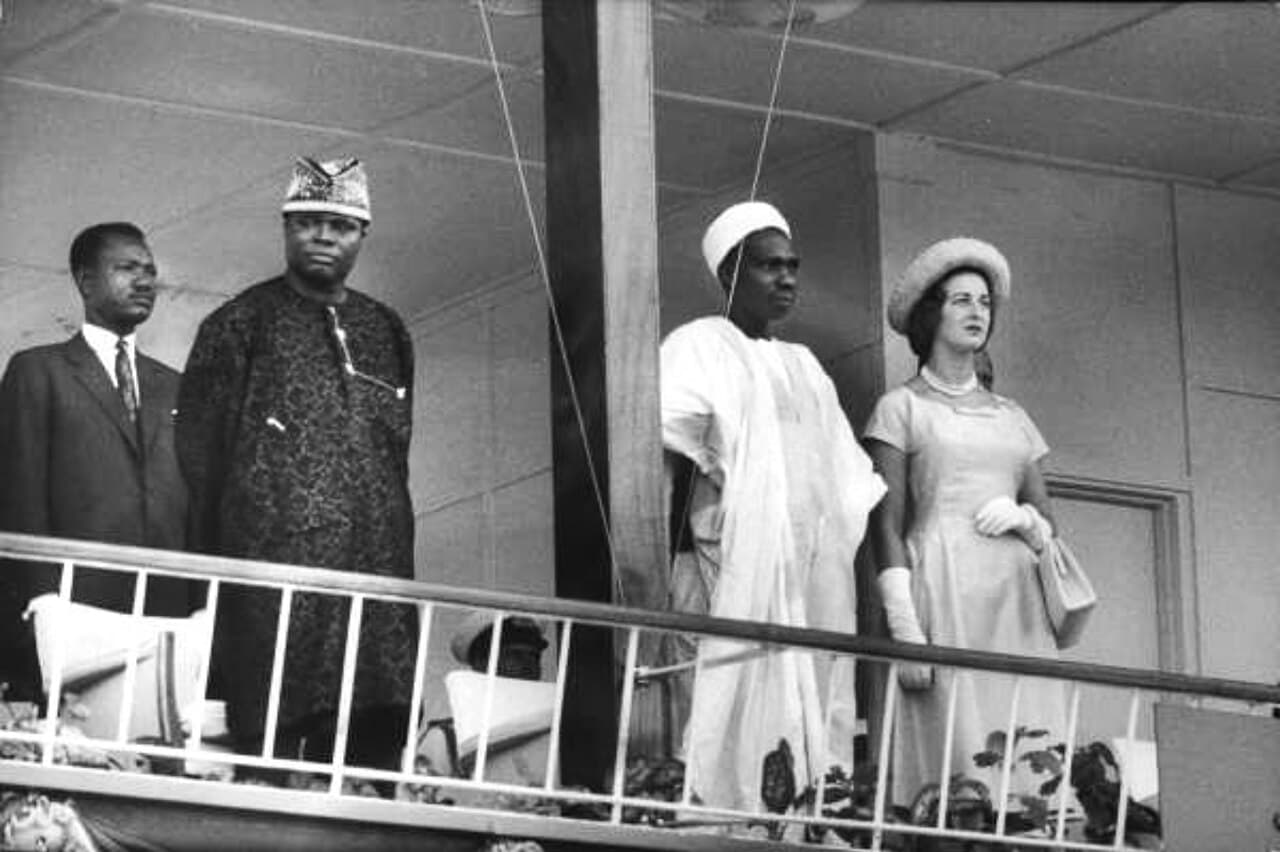
British and Nigerian leaders moved toward a 1960 independence date after constitutional talks and regional self-government arrangements.
Read story →Willink Commission reports on minority fears
The Willink Commission investigated minority fears before independence and recommended rights protections rather than…
Bala Abdulkadir Mohammed
Bala Abdulkadir Mohammed, CON (b. 5 October 1958, Duguri Town, Alkaleri LGA, Bauchi State) is a Nigerian journalist-t…
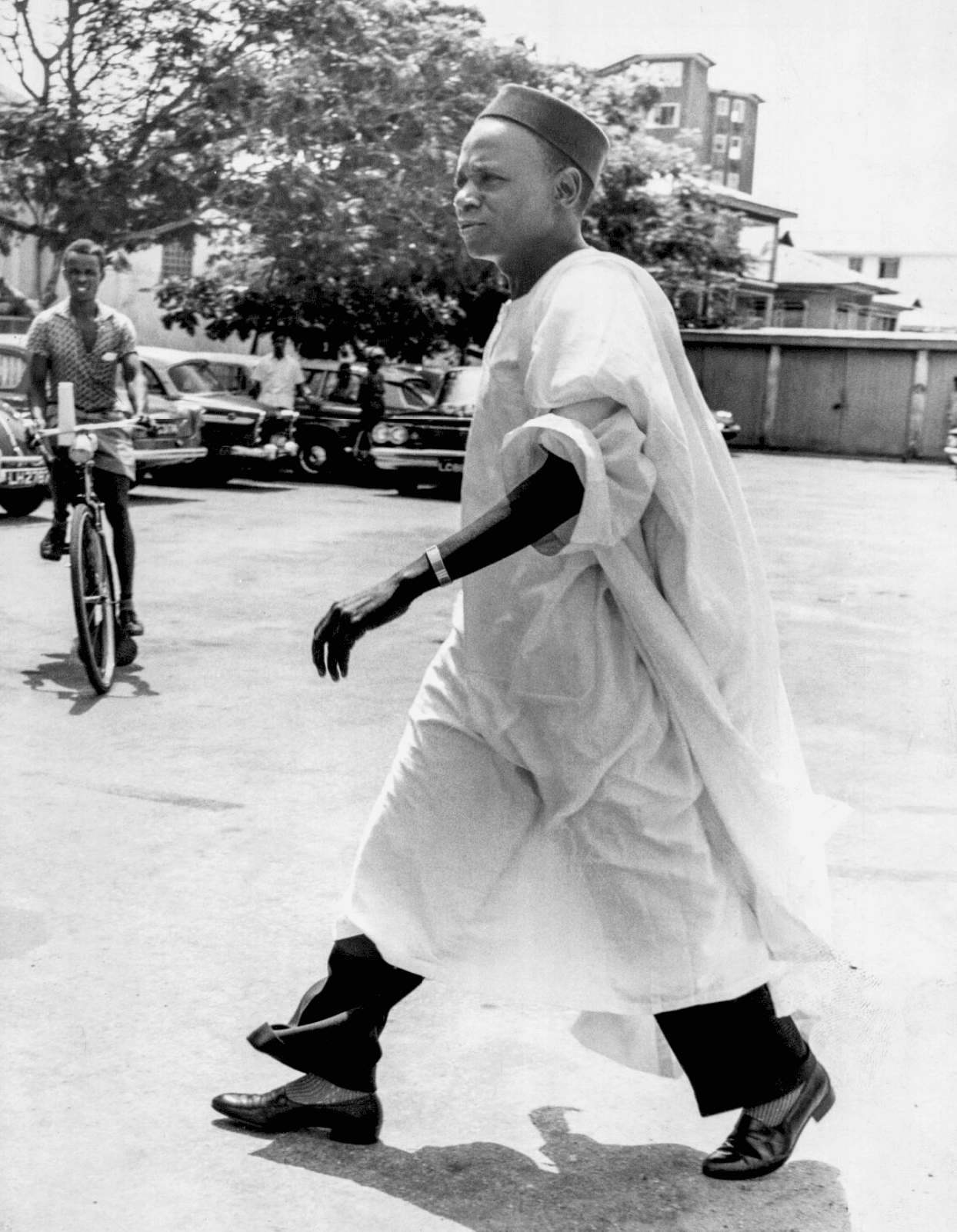
The 1959 federal election produced the coalition arrangement that took Nigeria into independence, with the Northern People's Congress and allies central to f…
Read story →Northern Region gains internal self-government
The North's later self-government reflected regional caution about southern domination and administrative readiness.
Northern Region gains internal self-government
The Northern Region achieved internal self-government under NPC leadership, completing the regional sequence before i…
Western Nigeria Television launches
Western Nigeria Television began broadcasting from Ibadan, often described as the first television service in Africa.
Federal election campaign tests national party reach
The final pre-independence federal election forced NPC, NCNC, and AG to seek alliances beyond their core regions.
NPC-NCNC coalition logic emerges
After the election, federal power depended on coalition arrangements, with NPC and NCNC cooperation central.
Minority safeguards enter final constitutional drafting
The final independence constitution incorporated rights and protections shaped partly by minority fears and the Willi…
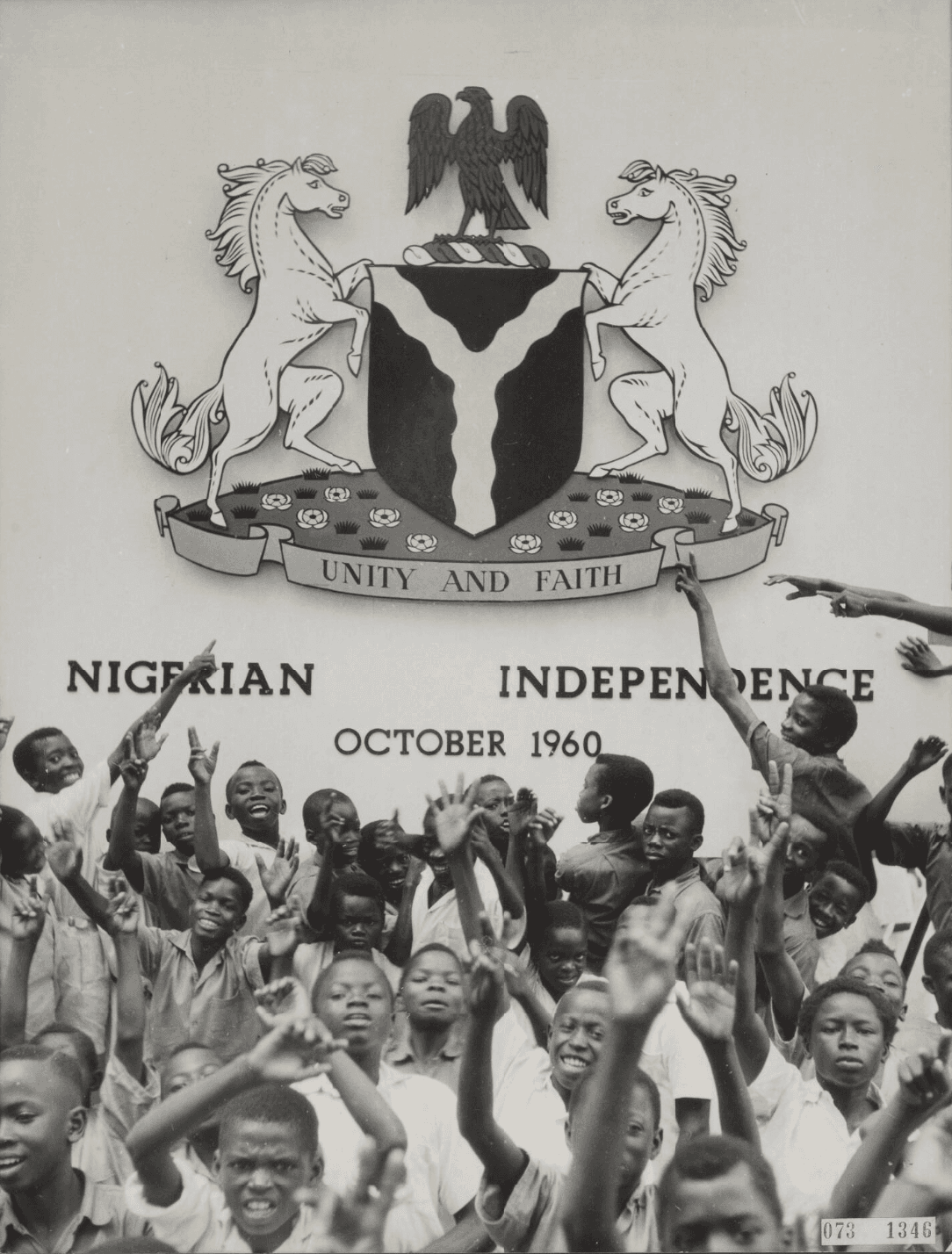
As independence approached, Nigerian leaders pushed to replace expatriate officials and expand local administrative capacity.
Read story →Census, seats, and representation dominate federal anxieties
Population estimates shaped legislative seats and expectations of federal power, making demography politically explos…
Trade unions prepare for postcolonial wage politics
Organized labor entered the independence era with experience from wartime strikes, railway organizing, and legal reco…
Next chapter
First Republic
1960 – 1966
1960 to 1966 · 53 entries
Six years of civilian government. Tafawa Balewa as prime minister, Nnamdi Azikiwe as ceremonial president, the regions running themselves under a parliamentary constitution. The Western Region split, the Action Group fractured, and in 1962 federal emergency rule fell on the West. The 1963 census was disputed by everyone, the 1964 election was boycotted in places, and the 1965 Western election was so brazenly rigged that the country erupted. On 15 January 1966, a handful of young majors ended the republic before sunrise. Most of them were Igbo. The counter-coup six months later left Yakubu Gowon in charge and Nigeria on the road to civil war.
Nigeria achieved colonial independence in October 1960 as a Federation of three regions — the Northern, Western, and Eastern Regions — with a weak centre, un…
Read story →Cameroons plebiscites reshape Nigeria's borders
UN-supervised plebiscites determined the future of the former British Trust Territory of the Cameroons.
Southern Cameroons plebiscite narrows Nigeria's eastern border
The UN-supervised plebiscite sent Southern Cameroons into union with Cameroon while Northern Cameroons joined Nigeria.
Census politics becomes a constitutional flashpoint
Early post-independence census exercises became entangled with seat allocation, federal revenue, and claims of region…
Danbaba Danfulani Suntai
Danbaba Danfulani Suntai (30 June 1961 – 28 June 2017) was a Nigerian pharmacist and politician who served as Governo…
Donald Etim Duke
Chief Donald Etim Duke (b. 30 September 1961, Calabar) was Governor of Cross River State (1999–2007, PDP, two terms)…
Liyel Imoke
Senator Liyel Imoke (b. 5 December 1961) served as Governor of Cross River State (29 May 2007 – 29 May 2015, PDP, two…
Melford Okilo
Melford Okilo was the first elected Governor of Rivers State (1979–1983) and a pioneer of Niger Delta development (Ni…
Census controversy shakes federal legitimacy
Nigeria's early post-independence census became intensely disputed because population figures affected parliamentary…
Western Region crisis and emergency rule
The Action Group split around Obafemi Awolowo and Samuel Ladoke Akintola, producing disorder in the Western House of…
Awolowo-Akintola split hardens western politics
The Action Group split was not only personal; it reflected different strategies over regional autonomy, federal coali…
Western Region emergency rule
The federal government declared a state of emergency in the Western Region after the Action Group split and violence…
Awolowo-Akintola split hardens Western Region alignments
The leadership struggle between Obafemi Awolowo and Samuel Akintola fractured the Action Group and redrew alliances i…
Treasonable-felony trial of Awolowo and allies
Awolowo and several Action Group figures were prosecuted after the Western crisis, deepening opposition claims that f…
Ibrahim Hassan Dankwambo
Alhaji Ibrahim Hassan Dankwambo, OON (b. 4 April 1962, Herwagana Ward, Gombe City) is a Nigerian accountant, technocr…
Obafemi Awolowo
First Premier of Western Region; found culpable by Coker Commission 1962 for Western Region Marketing Board mismanage…
Nigeria becomes a republic
Nigeria adopted a republican constitution, replacing the British monarch with a Nigerian president as ceremonial head…
Mid-Western Region is created
The Mid-Western Region was carved out of the Western Region, becoming Nigeria's fourth region.
Awolowo is convicted and imprisoned
Obafemi Awolowo, leader of the opposition Action Group, was convicted of conspiracy to overthrow the federal governme…
Census results deepen regional mistrust
Disputed census results reinforced the Northern Region's demographic advantage and parliamentary strength.
Mid-Western Region creation by referendum and act
The Mid-Western Region was carved out of the Western Region after a constitutionally authorized process.
Republican constitution passed
The federal parliament passed the republican constitution in September 1963, following constitutional negotiations in…
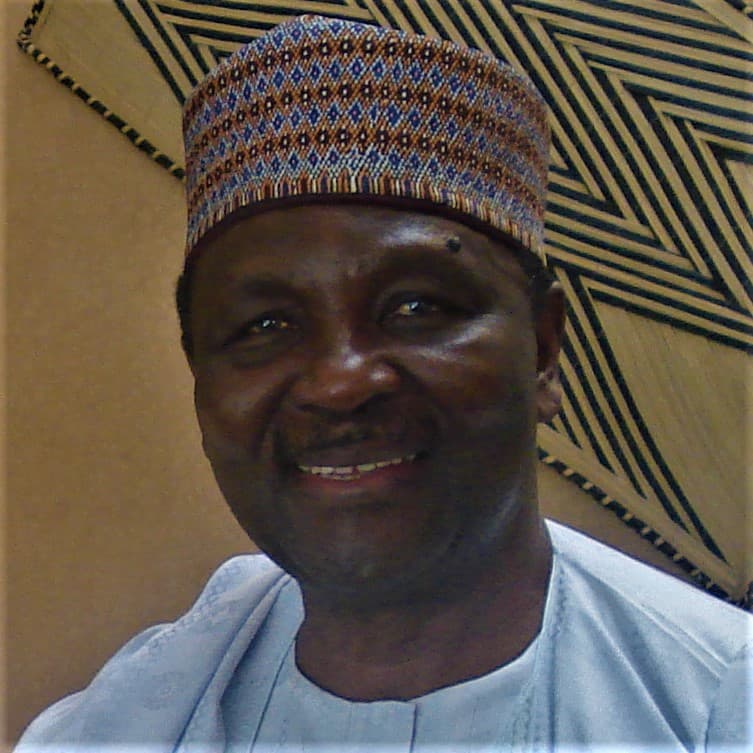
Nigeria became a republic on the third anniversary of independence, and Azikiwe became ceremonial president.
Read story →Supreme Court replaces Privy Council as final appellate court
The republican settlement made Nigerian courts, not the Judicial Committee of the Privy Council, the apex of the lega…
Federal census controversy continues
Rival regional reactions to census results reinforced disputes over representation and federal allocations.
Republican Constitution replaces monarchy
Nigeria adopted a republican constitution and replaced the governor-general with a president.
Mid-Western Region created
The Mid-Western Region was carved from the Western Region after a constitutionally authorized referendum and legislat…
Archaeology established as a university discipline in Nigeria
The year 1963 saw archaeology established as a recognised discipline in the universities of Ife, Ibadan and at Nsukka.
Bindo Umaru Jibrilla
Senator Bindo Umaru Jibrilla (also known as Muhammad Umar Jibrilla, "Bindow"; b. 16 June 1963, Adamawa State) is a Ni…
David Nweze Umahi
Engineer David Nweze Umahi (b. 25 July 1963, Uburu, Ohaozara LGA) is a Nigerian civil engineer and politician who has…
Alhaji Yahaya Adoza Bello
Alhaji Yahaya Adoza Bello, an accountant from Okene LGA, Kogi State, served as Governor of Kogi State for two consecu…
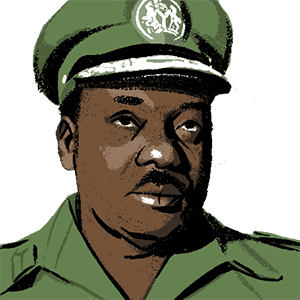
Federal and Western Region elections were marred by boycott, allegations of manipulation, violence, and legitimacy disputes.
Read story →Federal election boycott and delayed voting
The 1964 federal election was boycotted in parts of the country, and voting was postponed in some constituencies.
Nigerian National Alliance forms around NPC and allies
The NPC and aligned parties entered the federal election under the Nigerian National Alliance banner.
United Progressive Grand Alliance challenges the federal coalition
The UPGA brought together NCNC and Action Group-aligned forces to contest the federal election.
Federal election boycott and postponed polling
Parliamentary elections proceeded amid boycotts, intimidation claims, and postponed voting in several constituencies.
Samuel Jereton Mariere
Chief Samuel Jereton Mariere was the first Premier of the Mid-Western Region of Nigeria (9 February 1964 – 15 January…
Umo Eno
Umo Bassey Eno (b. 27 September 1964) has been Governor of Akwa Ibom State since 29 May 2023 (PDP), the third success…
Western Region election crisis and "Operation Wetie"
The Western Region election was widely denounced by opponents, and violence followed through arson, thuggery, and pol…
Eastern and Lagos delayed voting after the federal election crisis
Some constituencies voted only after the December 1964 contest because of the boycott and disruption.
Western Region election crisis
The Western Region election was widely disputed, and violence followed accusations of fraud and repression.
Balewa government faces army unrest
Political crises coincided with discontent inside the armed forces.
Hyacinth Alia
Rev.
Udom Gabriel Emmanuel
Udom Gabriel Emmanuel (b. 11 June 1966) was Governor of Akwa Ibom State from 29 May 2015 to 29 May 2023 (PDP, two ter…
Yakubu Gowon
Military ruler 1966–1975; 10 of 12 state governors found guilty of corruption by 1975 Assets Investigation Panel
Next chapter
Military I
1966 – 1979
1966 to 1979 · 220 entries
Thirteen years under the army. Aguiyi-Ironsi, Gowon, Murtala Mohammed, Olusegun Obasanjo. The Biafran civil war killed more than a million people and tested the limits of the federation. Oil money flooded in after 1973 and turned the federal government into the wealthiest customer in the economy. Lagos became the capital of a boom Nigeria did not know how to spend. Murtala’s assassination in 1976 was answered with a transition timetable, and on 1 October 1979 the soldiers handed power to a civilian president for the first time since 1966.
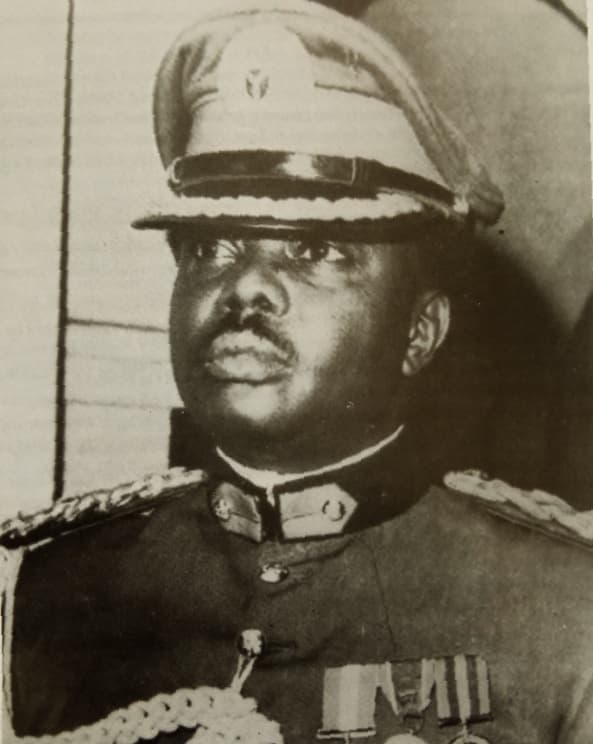
A group of military officers overthrew the civilian government and killed senior political and military figures, including Prime Minister Balewa and Northern…
Read story →Aguiyi-Ironsi becomes head of state
Major General Johnson Aguiyi-Ironsi became Nigeria's first military head of state after the coup.
Isaac Adaka Boro declares the Niger Delta Republic
Isaac Adaka Boro and the Niger Delta Volunteer Force declared a short-lived Niger Delta Republic before the revolt wa…
Unification Decree intensifies suspicion
Ironsi's regime issued Decree No. 34, replacing federal arrangements with a more unitary system.
Northern officers led a counter-coup in which Ironsi and others were killed; Yakubu Gowon emerged as head of state.
Read story →Anti-Igbo violence and displacement
Mass violence against Igbo civilians in parts of Northern Nigeria drove fear, displacement, and demands for security…
Pogroms and eastern exodus
Further mass killings of Igbo and other easterners in parts of Northern Nigeria produced a large movement of survivor…
Ad hoc constitutional conference
Gowon's government convened an ad hoc constitutional conference to discuss Nigeria's future structure after the coups…
First anti-Igbo riots in the north
Anti-Igbo violence broke out after the January coup and Ironsi's unification policy.
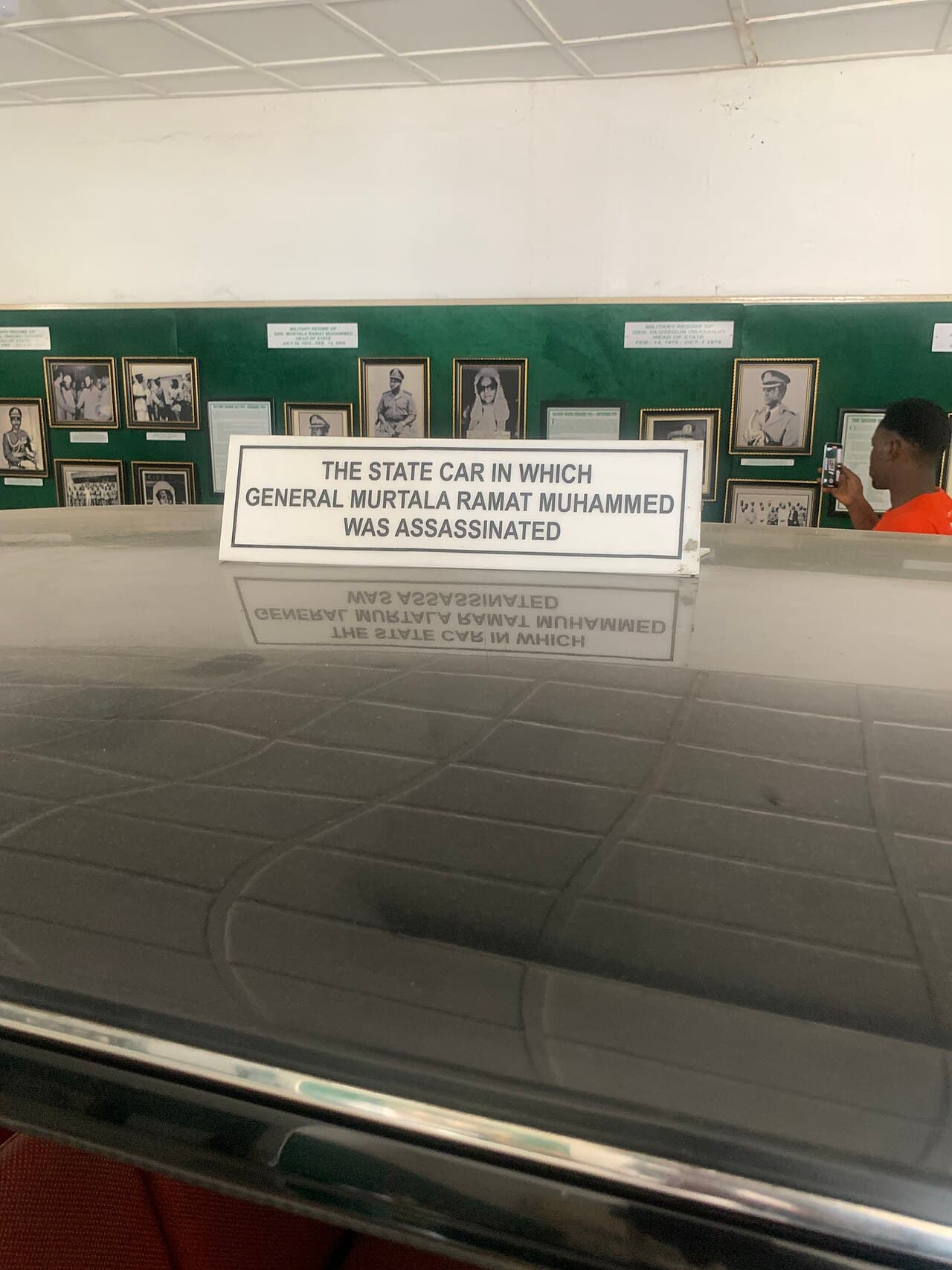
Army officers attempted to overthrow the federal government, killing Prime Minister Balewa and two regional premiers.
Read story →Ahmadu Bello assassinated in Kaduna
The Sardauna of Sokoto and Northern premier was killed during the coup.
Samuel Akintola assassinated in Ibadan
Western premier Samuel Akintola was killed during the January coup.
Michael Okpara survives as Eastern premier
Eastern premier Michael Okpara was not killed in the coup, unlike Balewa, Bello, and Akintola.
Ironsi assumes federal military authority
Major General Johnson Aguiyi-Ironsi took control after the coup collapsed into military rule.
Regional military governors replace premiers
Military governors assumed control in the regions under the new Supreme Military Council order.
Decree No. 34 abolishes the federal structure
Ironsi promulgated the Unification Decree, replacing the federal system with a unitary administrative structure.
Anti-Igbo violence in Northern Nigeria
Violence against Igbo and other Easterners followed the January coup and the Unification Decree.
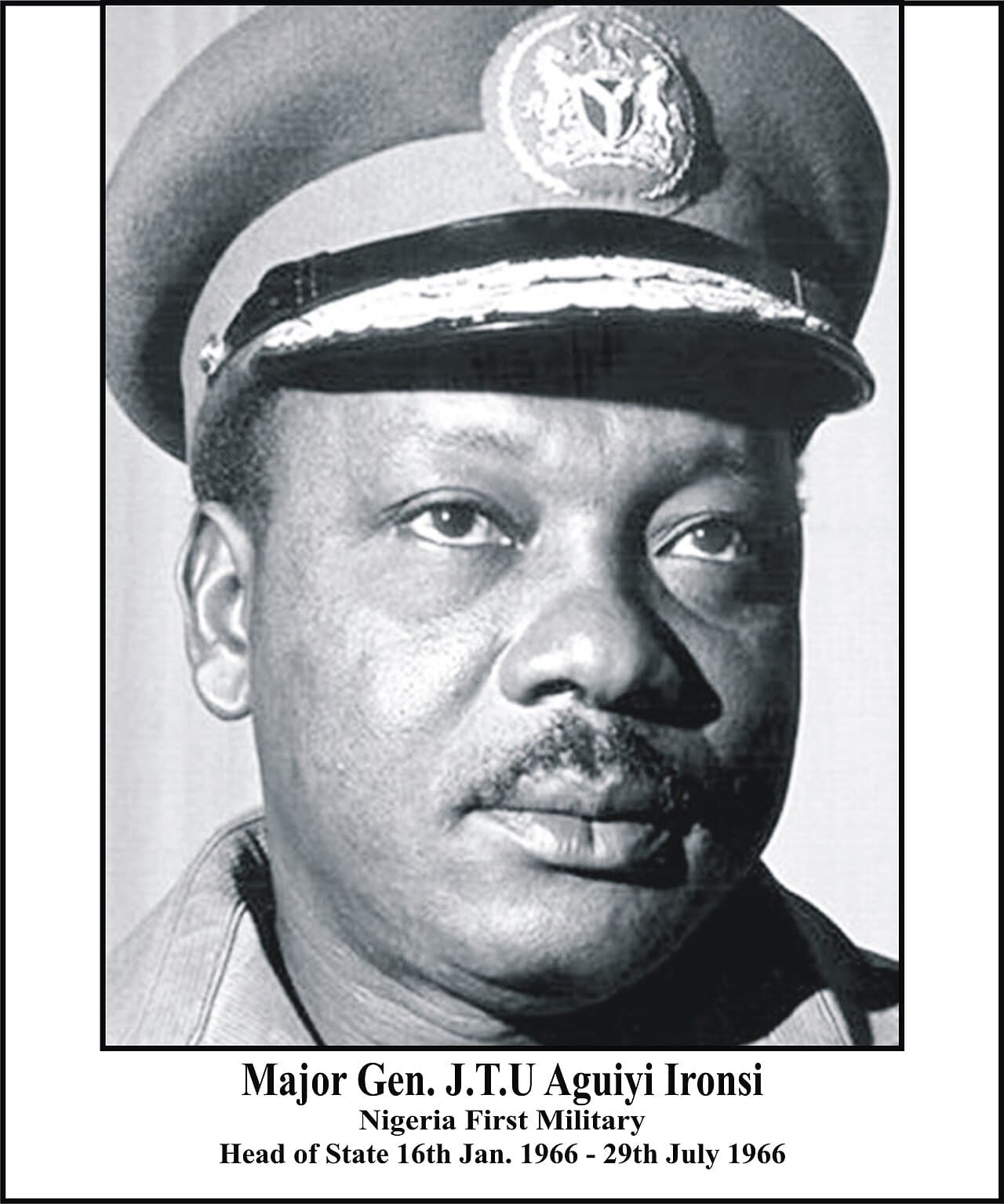
Northern officers and soldiers overthrew Ironsi in a violent counter-coup.
Read story →Adekunle Fajuyi killed with Ironsi
Fajuyi, the Western Region military governor, was killed while hosting Ironsi in Ibadan.
Gowon announces leadership
Lieutenant Colonel Yakubu Gowon emerged as head of state after the counter-coup.
Eastern refugees return from the North
Large numbers of Eastern Nigerians fled back to the East after massacres and insecurity in the North.
Renewed massacres of Easterners
Further killings of Easterners in Northern cities worsened the collapse of trust in federal protection.
Unification Decree No. 34
The military government issued Decree No. 34 to replace the federation with a unitary system.
Aburi meeting attempts to prevent war
Gowon, Ojukwu, and military leaders met in Aburi, Ghana, to negotiate a constitutional settlement.
Twelve states are created
Gowon's government replaced the four regions with twelve states, including states carved from the Eastern Region.
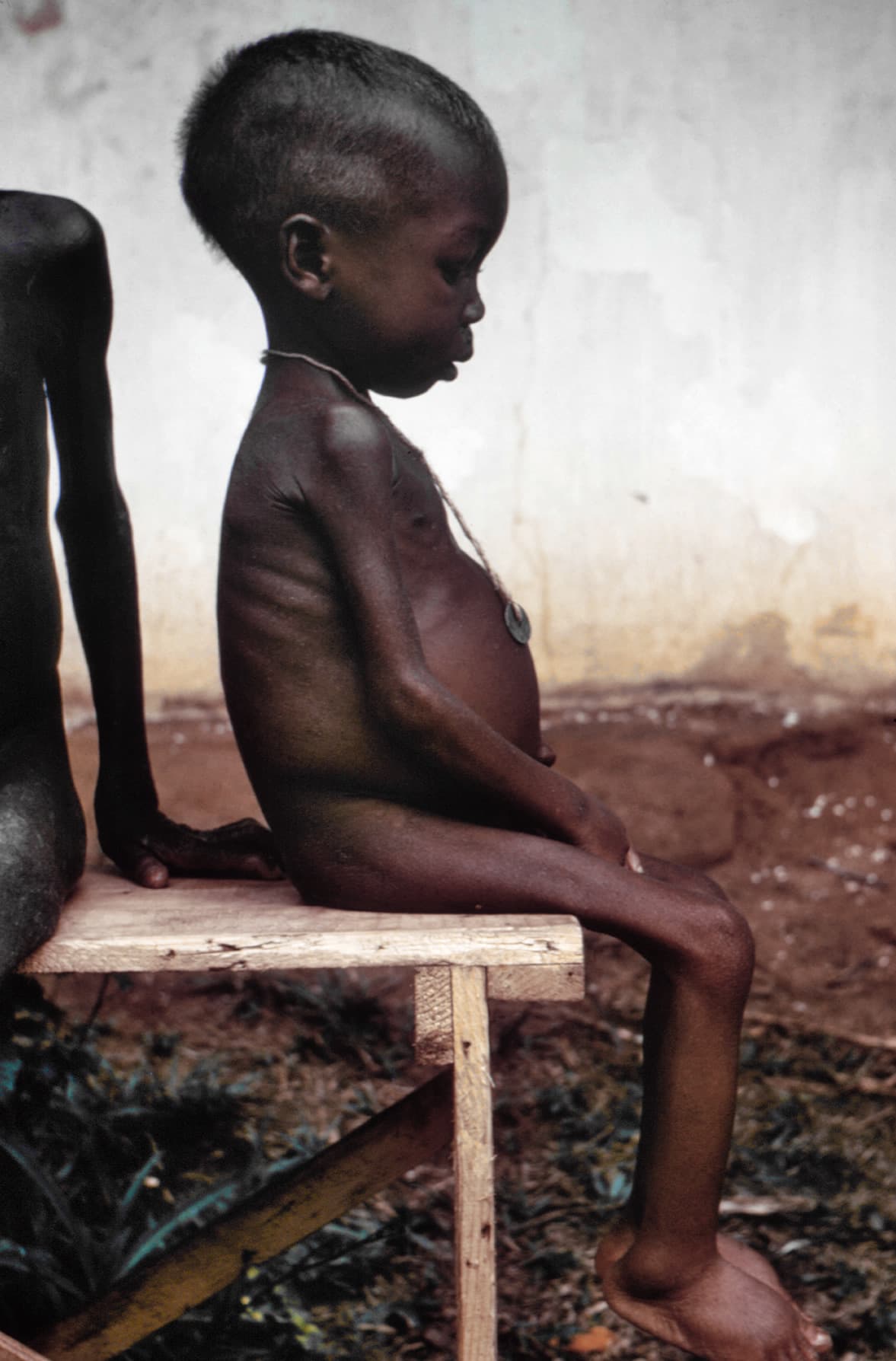
Biafran forces crossed the Niger, seized Benin City, and briefly threatened the route toward Lagos before federal forces pushed them back and later captured…
Read story →Asaba massacre
Federal troops entered Asaba after Biafran forces withdrew from the Midwest; scholars Elizabeth Bird and Fraser Ottan…
Aburi breaks down
The federal government and Eastern Region disagreed over implementation of Aburi.
Blockade and oil facilities become strategic targets
Oil facilities and coastal access became strategic from the first months of war.
Aburi meeting in Ghana
Gowon, Ojukwu, and senior military figures met at Aburi to negotiate a looser arrangement after the 1966 crises.
Aburi implementation dispute
Lagos and Enugu disagreed over whether Aburi created a confederation-like settlement or merely emergency military arr…
Federal blockade measures against the East begin
The federal government tightened economic and administrative pressure on the Eastern Region before formal secession.
Twelve-state decree announced
Gowon replaced the four regions with twelve states, including minority states in the old Eastern Region.
Rivers State created from Eastern minority areas
Rivers State was created out of the old Eastern Region, separating key Niger Delta oil and minority communities from…
South-Eastern State created
The South-Eastern State separated Calabar and surrounding minority areas from the old Eastern Region.
East-Central State defines Igbo core territory
The state-creation decree left the Igbo heartland largely in East-Central State.
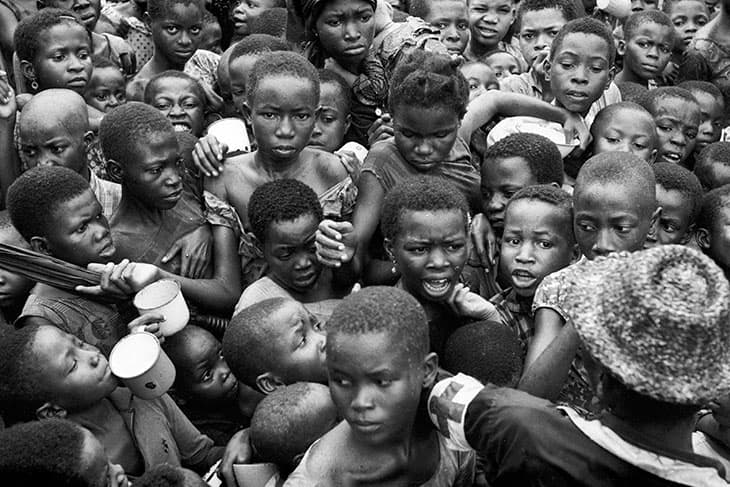
Federal forces opened operations against Biafra in July 1967.
Read story →Federal northern offensive toward Nsukka
Federal troops advanced from the north into Biafran-held territory, with Nsukka becoming an early objective.
Bonny and oil-terminal strategy emerges
Federal strategy quickly focused on coastal and Niger Delta oil facilities.
Biafran Midwest invasion
Biafran forces crossed the Niger and entered the Mid-Western State, briefly expanding the war westward.
Benin City under Biafran occupation
Biafran troops occupied Benin City during the Midwest campaign.
Federal recapture of the Midwest
Federal forces reversed the Biafran Midwest offensive and restored control over Benin and surrounding areas.
Enugu falls to federal forces
Federal troops captured Enugu, Biafra's first capital.
Biafran administration relocates after Enugu
After Enugu's fall, Biafra shifted administrative centers to keep the state functioning.
Biafra relied on the Uli airstrip for relief flights, diplomatic contacts, and some military supply.
Read story →Twelve-state structure announced
The federal military government replaced four regions with twelve states shortly before the civil war.
Ahmadu Umaru Fintiri
Ahmadu Umaru Fintiri (b. 27 October 1967, Gulak, Madagali LGA, Adamawa State) is the **current (sitting) Governor of…
Alfred Diete-Spiff
Vice Admiral Alfred Diete-Spiff was the first Military Governor of Rivers State (1967–1975), appointed at age 25 unde…
Cross River State Government
Cross River State — one of the 36 constituent states of the Federal Republic of Nigeria, created in 1967.
Joseph Dechi Gomwalk
Joseph Dechi Gomwalk was the first Military Governor of Benue-Plateau State (28 May 1967 – 29 July 1975) under Genera…
Kaduna State Government
Kaduna State — one of the 36 constituent states of the Federal Republic of Nigeria, created in 1967.
Kano State Government
Kano State — one of the 36 constituent states of the Federal Republic of Nigeria, created in 1967.
Kwara State Government
Kwara State — one of the 36 constituent states of the Federal Republic of Nigeria, created in 1967.
Lagos State Government
Lagos State — one of the 36 constituent states of the Federal Republic of Nigeria, created in 1967.
Mobolaji Johnson
Mobolaji Johnson — office-holder linked to Lagos State; promoted from per-state audit for network legibility.
Rivers State Government
Rivers State — one of the 36 constituent states of the Federal Republic of Nigeria, created in 1967.
Samuel Ogbemudia
Long-serving Military Governor of the Mid-Western Region / Bendel State (1967–1975) under the Gowon regime.
Biafran famine becomes a global humanitarian image
The blockade, collapse of agriculture, displacement, and war conditions produced mass hunger in Biafra.
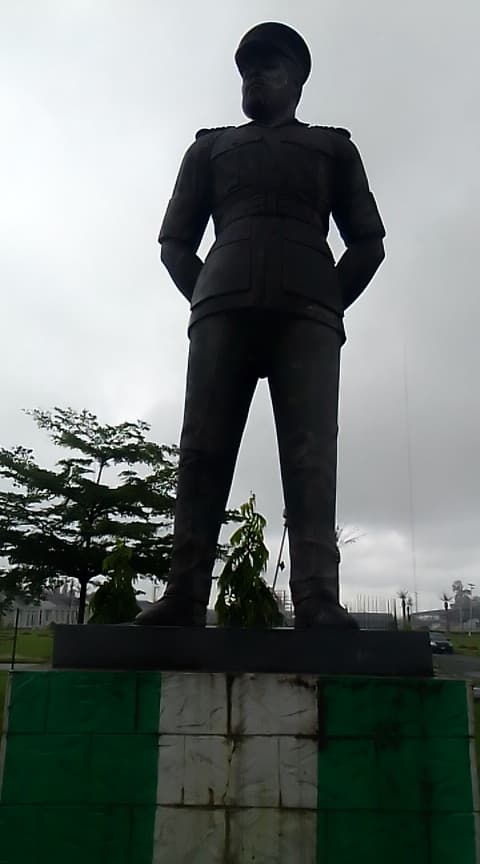
Tanzania, Gabon, Cote d'Ivoire, Zambia, and Haiti recognized Biafra across 1968-1969.
Read story →OAU mediation attempts
The Organization of African Unity tried to mediate while prioritizing Nigeria's territorial integrity.
Calabar captured by federal forces
Federal forces captured Calabar, consolidating control of southeastern coastal approaches.
Port Harcourt campaign begins
Federal troops moved against Port Harcourt, a major port and petroleum center.
Port Harcourt falls
Federal forces captured Port Harcourt in 1968.
OAU mediation keeps sovereignty question central
African diplomacy generally favored Nigerian territorial integrity while seeking a negotiated settlement.
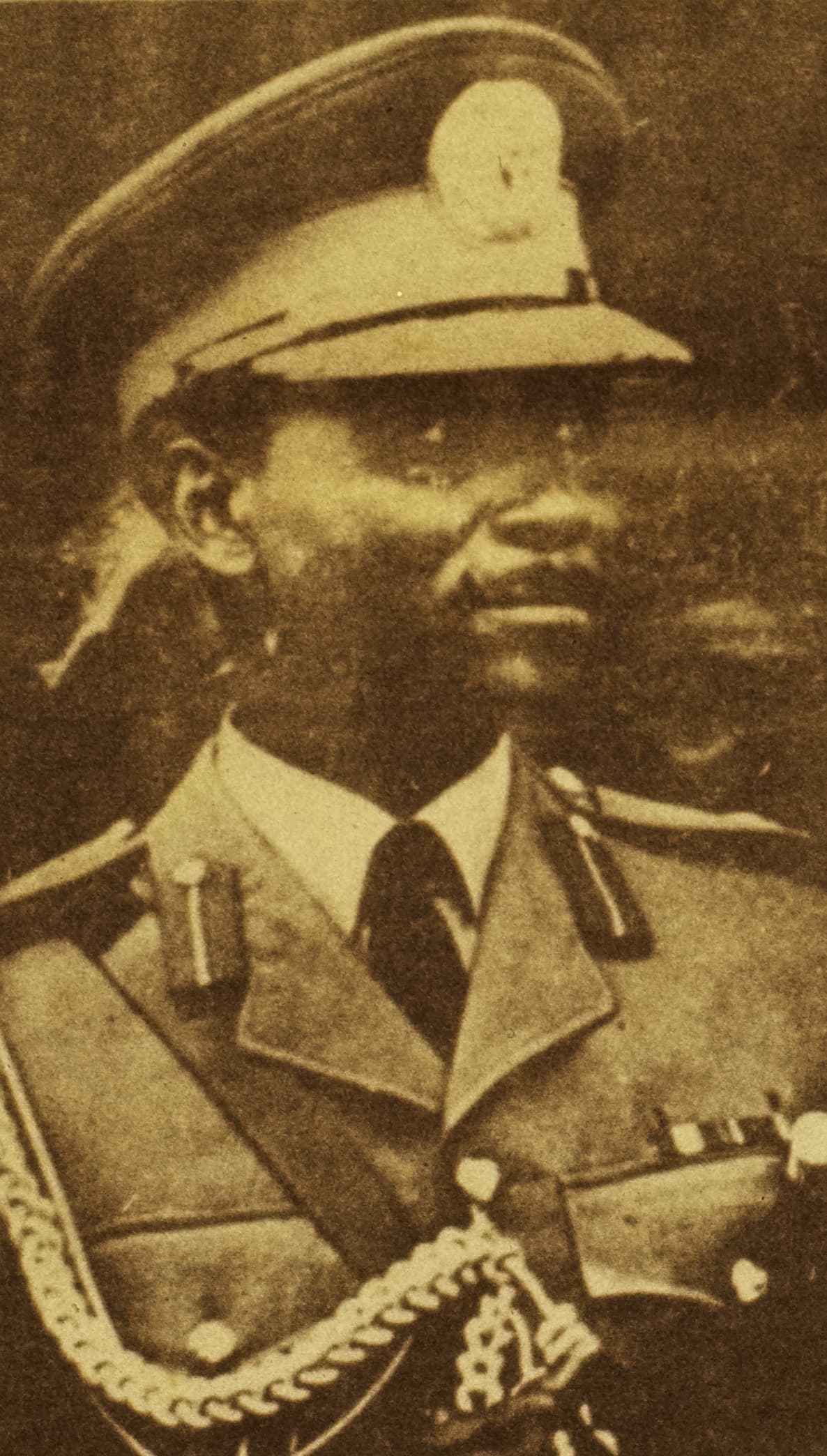
The ICRC says it established an airlift for Biafra in September 1968 as millions faced acute malnutrition.
Read story →Joint Church Aid expands relief flights
Church-linked relief networks flew supplies into Biafra, often at night and under contested legality.
Starvation images reshape international opinion
Photographs and television coverage of malnourished Biafran children circulated globally.
Federal "police action" framing persists
The federal government presented the campaign as a limited action to restore national authority.
Biafran propaganda and external missions intensify
Biafra used foreign offices, press campaigns, and humanitarian messaging to seek recognition and aid.
Petroleum Act centralizes oil control
The Petroleum Act vested ownership and control of petroleum in the federal state.
Benedict Bengioushuye Ayade
Professor Benedict Bengioushuye Ayade (b. 2 March 1968, Obudu) served as Governor of Cross River State (29 May 2015 –…
Ahiara Declaration
Ojukwu's Ahiara Declaration presented Biafra as a moral, revolutionary, and anti-imperial project, not only as a sece…
ICRC relief role is restricted
The federal government moved to end the ICRC's coordinating role for relief in federal-controlled territory and insis…
Final federal offensive begins
Federal forces launched a major final offensive as Biafra faced shortages of ammunition, territory, and food.
Petroleum Act consolidates federal petroleum control
The Petroleum Act provided a broad legal framework for petroleum exploration, licensing, production, safety, conserva…
Ahiara Declaration articulates Biafran ideology
Ojukwu's Ahiara Declaration framed Biafra as a liberation struggle and moral alternative to postcolonial corruption.
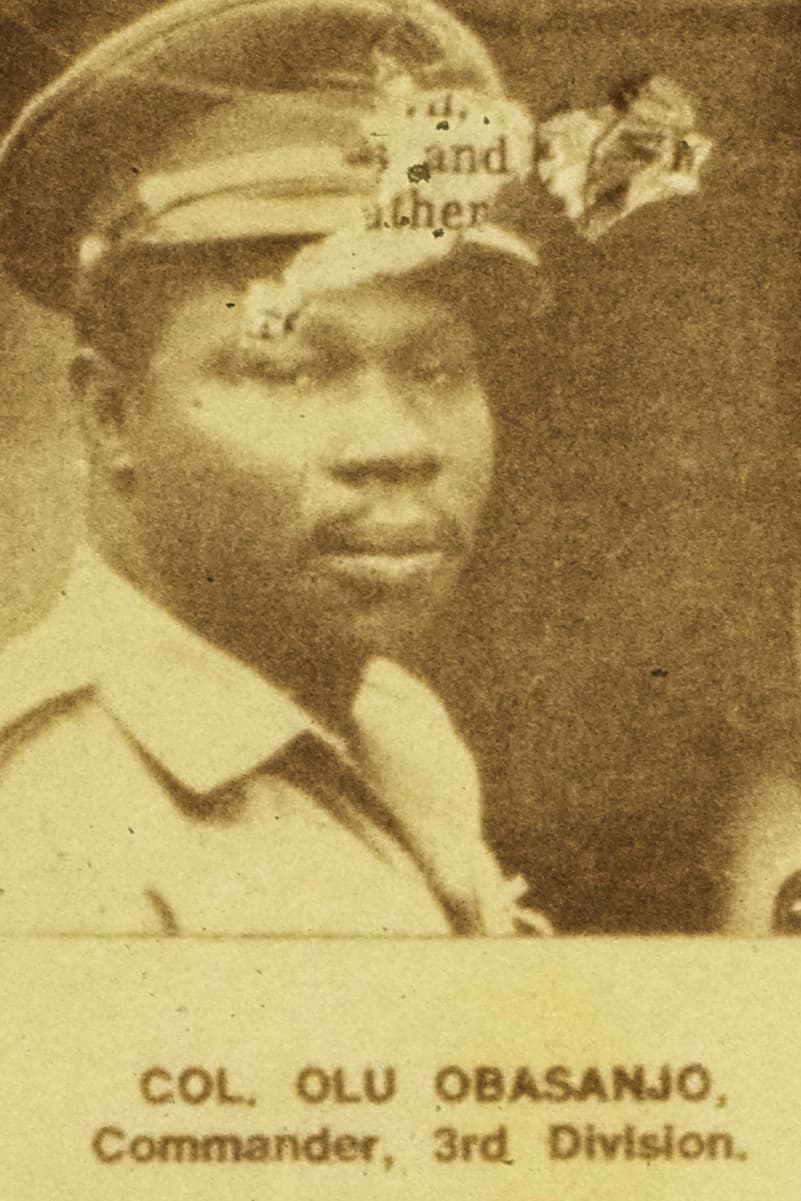
By 1969, federal forces had reduced Biafra to a shrinking inland enclave.
Read story →ICRC neutrality controversy deepens
The Nigeria-Biafra operation strained the ICRC's neutral posture and exposed disagreements among relief workers.
Relief flights face Nigerian security objections
Nigeria objected that night flights could mix relief with arms supply, while agencies argued that civilians were star…
Owerri changes hands in the war's final phase
Owerri became a major contested town as Biafra sought to preserve an administrative and military core.
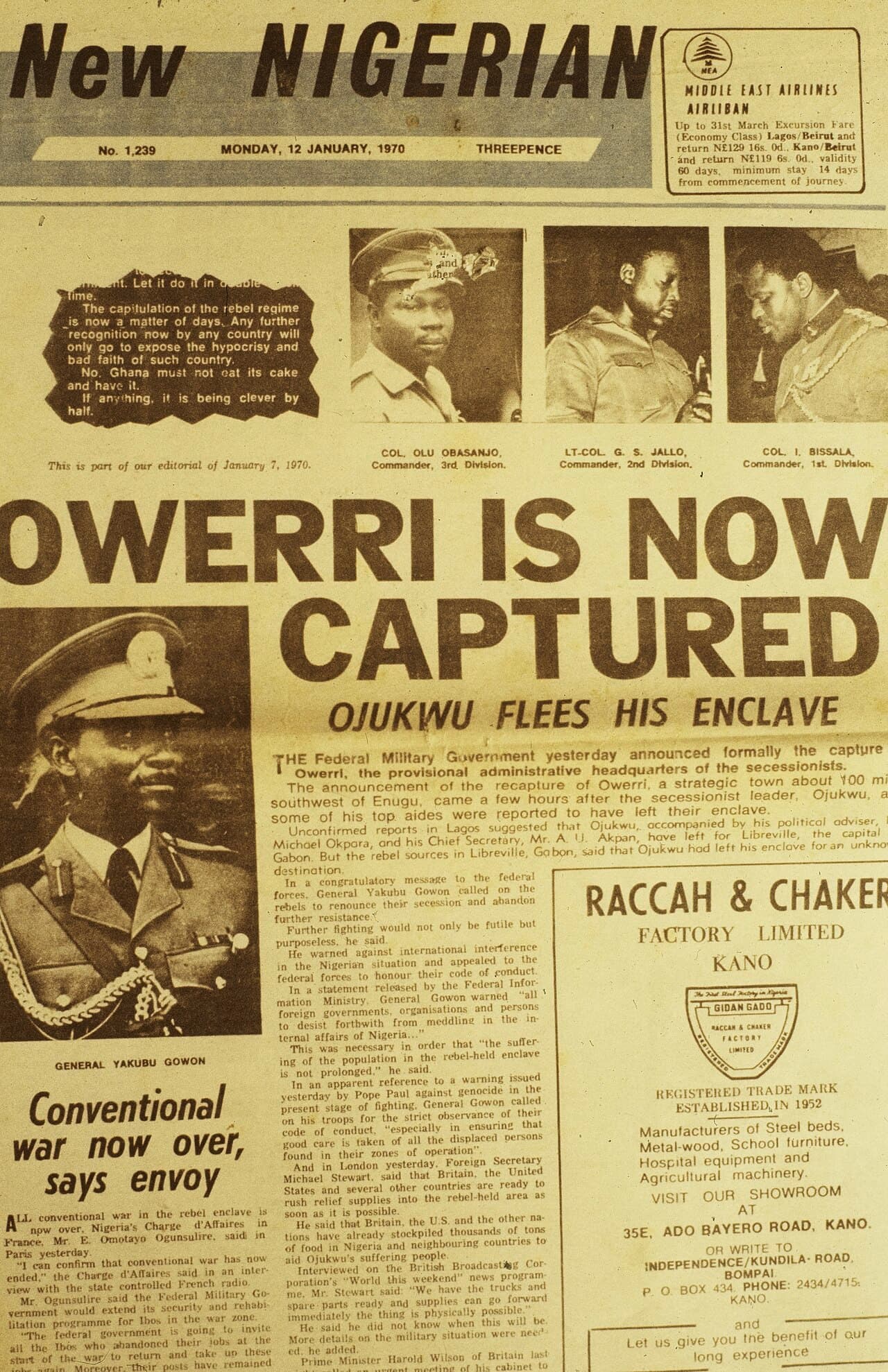
Biafran forces surrendered in January 1970.
Read story →Postwar reconstruction begins
The federal government faced the task of rebuilding the former war zone and reintegrating citizens and institutions.
Postwar currency and the "twenty pounds" controversy
Former Biafrans faced severe financial dislocation after the war, including the widely remembered policy that limited…
As Biafra collapsed, Ojukwu handed over to Philip Effiong and left for exile.
Read story →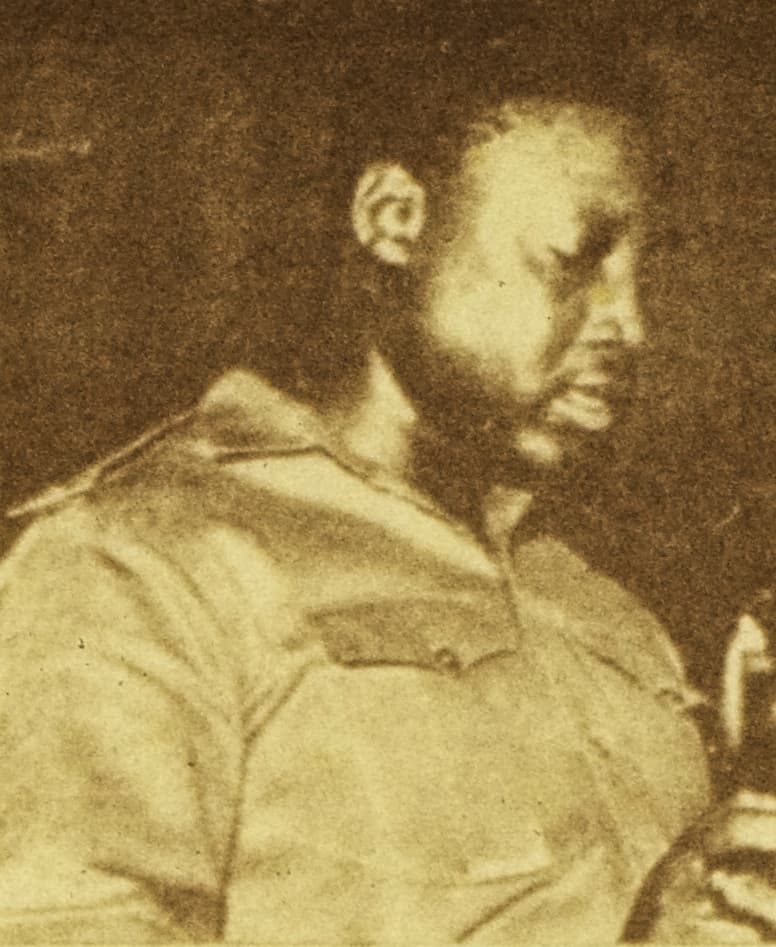
Nigeria accepted Biafra's surrender, ending the war after roughly thirty months.
Read story →"No victor, no vanquished" policy declared
Gowon framed the end of war around reconciliation, reconstruction, and reintegration.
Reconstruction, rehabilitation, and reconciliation program begins
The federal government launched postwar programs to rebuild infrastructure and reintegrate people in the former war z…
Ex-Biafran soldiers demobilized and screened
Former Biafran combatants were disarmed, screened, and in some cases reintegrated or excluded from service.
Bank-account and abandoned-property disputes emerge
Former Biafrans faced contested financial and property restitution after the war, especially outside the East.
Second National Development Plan launched
The 1970-1974 plan emphasized reconstruction, national integration, and development after the civil war.
Federal military rule postpones civilian return
Gowon's government retained power after the war rather than quickly restoring elected rule.
Reconstruction, Rehabilitation and Reconciliation policy
After the civil war, the federal government announced a policy of reconstruction, rehabilitation, and reconciliation.
Nigeria joins OPEC
Nigeria joined the Organization of Petroleum Exporting Countries as oil became central to state revenue.
Nigerian National Oil Corporation is created
The Nigerian National Oil Corporation was created as a state vehicle for commercial activity in the oil industry.
Nigeria joins OPEC
Nigeria became an OPEC member in 1971 as oil became central to state revenue.
Nigerian National Oil Corporation established
Nigeria created NNOC as its national oil company before the later NNPC merger.
Oil revenue begins to dominate fiscal federalism
Postwar oil production and prices increased federal revenue and reduced the old regional agricultural revenue base.
Nigerian Enterprises Promotion Decree
The indigenization decree sought to increase Nigerian ownership and control of parts of the economy by restricting fo…
Nigerian Enterprises Promotion Decree
The federal military government promulgated the indigenization decree to reserve or transfer selected enterprises to…
Nigerian Enterprises Promotion Board created
The indigenization framework created a board to classify and supervise affected enterprises.
Gowon and Eyadema revive West African economic community idea
Nigeria's Gowon and Togo's Gnassingbe Eyadema helped revive negotiations for a West African economic community.
Indigenization Decree
The Nigerian Enterprises Promotion Decree reserved many business categories for Nigerian ownership.
Oil boom expands federal ambition
The global oil price shock increased Nigerian revenues and expanded state-led projects, imports, and patronage.
National Youth Service Corps is established
The NYSC was established to promote national unity after the civil war by posting graduates outside their home states…
Naira and kobo introduced
Nigeria changed from pounds, shillings, and pence to decimal currency, with the naira as the major unit and kobo as t…
CBN issues new national note denominations
The Central Bank introduced decimal notes including 50 kobo, one naira, five naira, and ten naira denominations.
NYSC created by Decree No. 24
The National Youth Service Corps was established to promote common ties and national unity among graduates after the…
First NYSC service cohorts mobilized
The NYSC decree applied to graduates from the 1973-74 academic year and subsequent years.
Oil-price shock expands federal revenues
The global oil-price shock increased the value of Nigerian crude exports.
National Youth Service Corps created
The NYSC was established to post graduates outside their home areas after the civil war.
Gowon postpones civilian handover
Gowon postponed the expected transition timetable, damaging his legitimacy.
Udoji public-service review and wage awards
The Udoji Commission recommended public-service reforms and salary increases during the oil boom.
National Universities Commission becomes statutory
The NUC became a statutory body in 1974, moving beyond its earlier cabinet-office status.
University expansion pressures admissions coordination
The growing number of universities made separate entrance systems increasingly inefficient.
Cement-import scandal exposes oil-boom bottlenecks
Massive cement imports for construction and public projects overwhelmed ports and generated corruption allegations.
Gowon is overthrown
Gowon was removed while abroad, and Murtala Mohammed became head of state.
ECOWAS is founded in Lagos
The Treaty of Lagos established the Economic Community of West African States.
Murtala Mohammed launches purge and reform drive
Murtala Mohammed's government carried out a sweeping purge of public servants and officials accused of corruption, in…
Transition program to civilian rule announced
Murtala Mohammed initiated a transition agenda covering state creation, local government reform, constitution-making,…
Aguda Panel and Abuja decision
The Aguda Panel examined whether Lagos should remain federal capital and recommended a more central site.
Third National Development Plan begins
The 1975-1980 plan projected ambitious state-led development financed by oil revenues.
Treaty of Lagos establishes ECOWAS
Fifteen West African heads of state and government signed the ECOWAS treaty in Lagos.
ECOWAS treaty provisionally enters force among signatories
The 1975 treaty came into force provisionally for the states signing at Lagos.
Gowon overthrown while abroad
Officers removed Gowon after nine years in power, citing delay in returning to civilian rule and administrative failu…
Murtala Muhammed becomes head of state
Brigadier Murtala Muhammed took power after the coup against Gowon.
Olusegun Obasanjo appointed deputy to Murtala
Obasanjo became Chief of Staff, Supreme Headquarters, effectively deputy head of state.
Civil-service purge begins
Murtala's government dismissed or retired large numbers of public officers as part of an anti-corruption and efficien…
Corruption probes of former military governors
The new regime investigated officials from the Gowon period and publicized misconduct concerns.
Murtala announces transition to civilian rule
The regime set a program for constitutional drafting, party formation, elections, and handover.
Constitution Drafting Committee established
The military government appointed a committee to prepare a new constitutional framework.
Nigeria recognizes MPLA government in Angola
Murtala's government backed the MPLA in Angola, asserting a more activist anti-colonial and anti-apartheid foreign po…
Adekunle Lawal
Adekunle Lawal — office-holder linked to Lagos State; promoted from per-state audit for network legibility.
Francis Nwifuru
Francis Nwifuru (b. 1975) is the sitting Governor of Ebonyi State since May 2023 (APC), formerly two-term Speaker of…
Murtala Mohammed
Military ruler 1975–76; instituted anti-corruption probes and asset declarations; assassinated after six months in of…
Murtala Mohammed is assassinated
Murtala Mohammed was assassinated in a failed coup; Olusegun Obasanjo succeeded him and continued the transition prog…
Abuja selected as new federal capital
The military government chose Abuja as a planned capital, intended to be more central and less regionally identified…
Seven more states are created
Nigeria expanded from twelve to nineteen states.
Operation Feed the Nation begins
Obasanjo's government launched Operation Feed the Nation to encourage local food production and reduce dependence on…
Local government reform enters transition architecture
The Murtala-Obasanjo transition included local government reform as a step toward a more uniform federal structure.
Murtala's Addis Ababa speech strengthens anti-apartheid posture
Murtala Muhammed used continental diplomacy to defend Nigeria's Angola policy and criticize external interference in…
Nineteen-state structure announced
Murtala's regime created seven additional states, bringing Nigeria from twelve to nineteen states.
Imo State carved from East-Central State
Imo State was created in the southeast as part of the nineteen-state reorganization.
Ogun and Ondo States created in the southwest
The reorganization split parts of the old Western State into Ogun and Ondo.
Benue State created for Middle Belt demands
Benue State separated Middle Belt communities from older northern administrative structures.
Bauchi and Borno States replace North-Eastern State
North-Eastern State was divided into Bauchi, Borno, and Gongola-era arrangements during the reorganization.
Niger State created from North-Western areas
Niger State emerged from the former North-Western State area.
Federal Capital Territory Act
Decree No. 6 established the Federal Capital Territory after the Aguda panel recommended moving the capital from Lago…
Federal Capital Development Authority established
The FCT law created the FCDA to plan and develop the new capital territory.
Murtala Muhammed assassinated
Murtala was killed in Lagos during a failed coup attempt led by officers opposed to his regime.
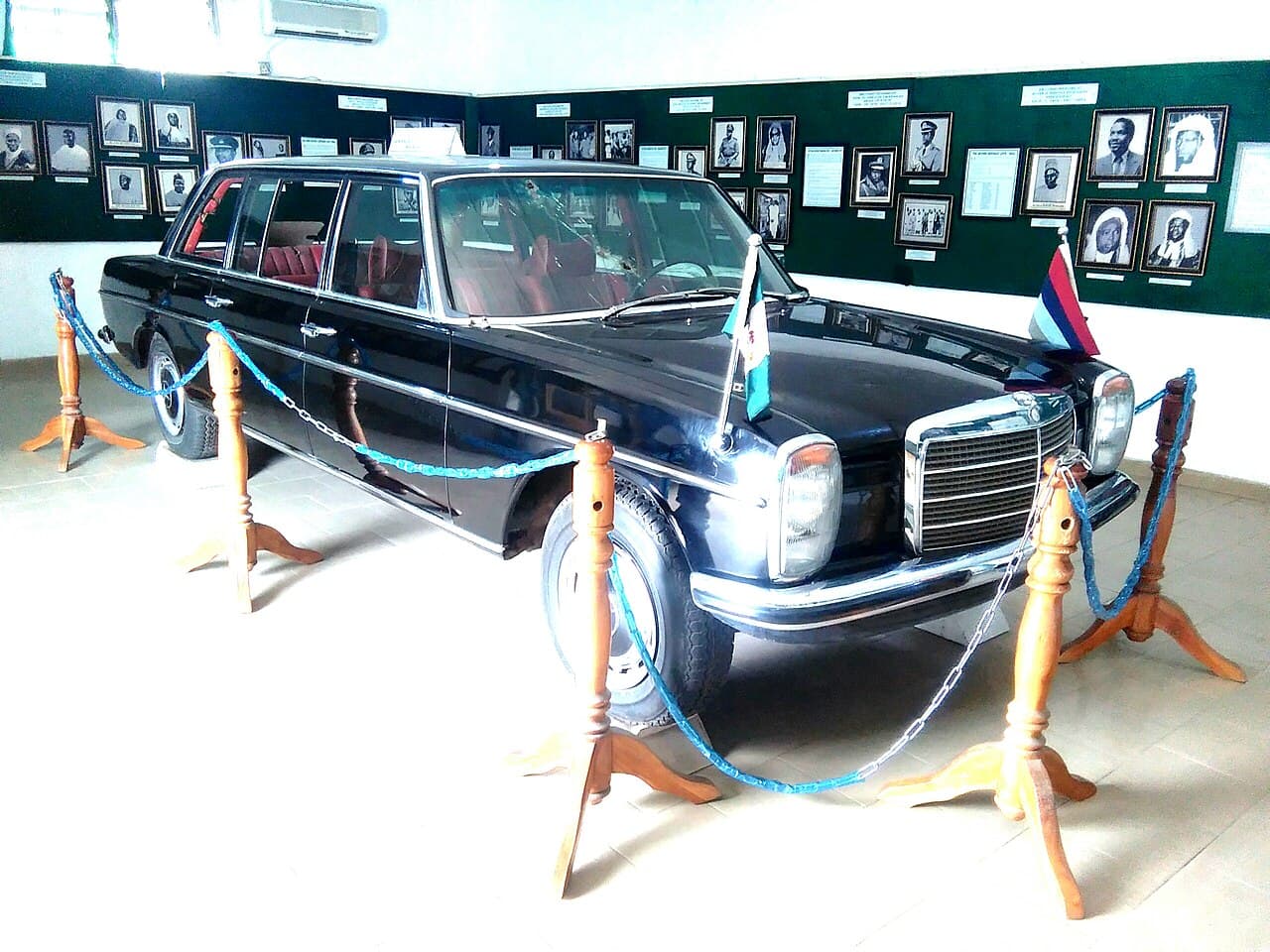
The coup attempt that killed Murtala did not gain lasting control.
Read story →Obasanjo succeeds as head of state
Olusegun Obasanjo became head of state after Murtala's assassination.
National Security Organization created by Decree No. 27
After the Dimka coup, Nigeria created a new security organization to detect and prevent threats to the state.
Universal Primary Education launched
Nigeria launched a nationwide Universal Primary Education scheme under the military government.
Local Government Reform Guidelines issued
The federal government issued guidelines to create a more uniform local-government system.
301 local governments framework
The reform era expanded and reorganized local councils into a nationwide framework commonly cited as 301 local govern…
Local governments assigned development functions
Reform guidelines emphasized defined powers, local services, and community development.
Nigeria joins African boycott of Montreal Olympics
Nigeria joined African countries boycotting the Montreal Olympics over New Zealand's sporting links with apartheid So…
Six additional federal universities created
JAMB's official history notes that the Obasanjo military government established six additional universities in 1976.
Nineteen-state structure introduced
The military government expanded Nigeria from twelve to nineteen states.
Abuja chosen as new Federal Capital Territory
The government accepted a plan to move the capital from Lagos to a more central Federal Capital Territory.
Universal Primary Education launched nationally
The federal government launched Universal Primary Education during the oil boom.
Bauchi State Government
Bauchi State — one of the 36 constituent states of the Federal Republic of Nigeria, created in 1976.
Benue State Government
Benue State — one of the 36 constituent states of the Federal Republic of Nigeria, created in 1976.
Borno State Government
Borno State — one of the 36 constituent states of the Federal Republic of Nigeria, created in 1976.
Federal Capital Territory Administration
Federal Capital Territory Administration (FCTA) — administrative authority over Abuja, Nigeria's capital territory es…
Imo State Government
Imo State — one of the 36 constituent states of the Federal Republic of Nigeria, created in 1976.
Niger State Government
Niger State — one of the 36 constituent states of the Federal Republic of Nigeria, created in 1976.
Ogun State Government
Ogun State — one of the 36 constituent states of the Federal Republic of Nigeria, created in 1976.
Ondo State Government
Ondo State — one of the 36 constituent states of the Federal Republic of Nigeria, created in 1976.
Oyo State Government
Oyo State — one of the 36 constituent states of the Federal Republic of Nigeria, created in 1976.
Plateau State Government
Plateau State — one of the 36 constituent states of the Federal Republic of Nigeria, created in 1976.
Sokoto State Government
Sokoto State — one of the 36 constituent states of the Federal Republic of Nigeria, created in 1976.
FESTAC '77 stages Nigeria's cultural ambition
The Second World Black and African Festival of Arts and Culture was held in Lagos.
Kalakuta Republic raid
Soldiers raided Fela Kuti's Kalakuta Republic compound in Lagos.
NNPC is created
Decree No. 33 merged NNOC with petroleum ministry functions to create the Nigerian National Petroleum Corporation.
Constitution drafting and Constituent Assembly
The transition produced a constitutional drafting process and Constituent Assembly.
Constituent Assembly debates new constitution
A Constituent Assembly reviewed and debated the draft constitution for civilian rule.
Nigerian Enterprises Promotion Decree amended
The 1977 decree strengthened and revised the indigenization framework, expanding Nigerian ownership requirements.
Nigerian Export Promotion Council framework implemented
The Nigerian Export Promotion Council decree was promulgated in 1976 and formally implemented in 1977.
NNPC established
The Nigerian National Petroleum Corporation was created by merging NNOC with the petroleum ministry's operational fun…
Petroleum Inspectorate placed within NNPC
The 1977 restructuring put the Petroleum Inspectorate inside NNPC until later reforms.
FEDECO prepares transition elections
The Federal Electoral Commission organized the electoral sequence for the return to civilian rule.
Electoral Decree No. 73 frames presidential threshold
The Electoral Decree, later amended, set rules for the 1979 presidential election, including national vote and state-…
FESTAC '77 held in Lagos
Nigeria hosted the Second World Black and African Festival of Arts and Culture.
Land Use Decree restructures land tenure
The Land Use Decree vested land in state governors to hold in trust.
Ebitu Ukiwe
Ebitu Ukiwe — office-holder linked to Lagos State; promoted from per-state audit for network legibility.
Land Use Decree centralizes land control
The Land Use Decree vested land in state governors, reshaping property, urban development, compensation, and resource…
Ban on political activity is lifted
The military government lifted the ban on political activity as part of the transition to civilian rule.
Land Use Act enacted
The Land Use Act vested land in each state in the governor to hold in trust for Nigerians, with local governments han…
Land certificates and governor consent become central
The Land Use Act introduced certificates of occupancy and required official consent for many land transactions.
JAMB established by Act No. 2
The Joint Admissions and Matriculation Board was established to coordinate university admissions.
Political parties licensed for transition
FEDECO registered parties to compete in the transition elections, creating a controlled multiparty field.
National Party of Nigeria emerges
The NPN became one of the registered national parties and later selected Shehu Shagari as presidential candidate.
UPN builds around Awolowo's program
The Unity Party of Nigeria formed around Obafemi Awolowo and a welfare-oriented platform.
NPP, PRP, and GNPP complete the five-party field
Nnamdi Azikiwe's NPP, Aminu Kano's PRP, and Ibrahim Waziri's GNPP joined NPN and UPN in the 1979 presidential race.
Federal character principle enters constitutional design
The 1979 constitutional framework used federal character ideas to manage representation across states and groups.
Local Government Reform becomes national template
Military-era local government reforms standardized councils as a third tier in the federation.
Alhaji Adamu Atta
Alhaji Adamu Atta, first civilian governor of Kwara State (NPN, 1 October 1979 – 31 December 1983), was tried by a Bu…
Ambrose Alli
First civilian Governor of Bendel State (1979–1983), Unity Party of Nigeria, professor of pathology.
Awwal Ibrahim
First civilian Governor of Niger State (NPN, October 1979 – October 1983).
Godwin Nogheghase Obaseki
Godwin Nogheghase Obaseki is a Nigerian investment banker turned politician who served two terms as Governor of Edo S…
Jim Nwobodo
First civilian Governor of (old) Anambra State (1 October 1979 – 31 December 1983, NPP, Second Republic).
Lateef Jakande
Lateef Jakande — office-holder linked to Lagos State; promoted from per-state audit for network legibility.
Chief Michael Adekunle Ajasin
Michael Adekunle Ajasin was the UPN governor of old Ondo State 1979–1983, removed (along with all Second Republic gov…
Muhammadu Abubakar Rimi
Civilian Governor of Kano (1979–1983) under the People's Redemption Party in the Second Republic.
Sam Mbakwe
First civilian Executive Governor of Imo State (1979–1983), NPP.
Shehu Shagari
President 1979–83; over $16B in oil revenues is alleged to have been lost during his tenure
Next chapter
Second Republic
1979 – 1983
1979 to 1983 · 53 entries
Four years and three months. Shehu Shagari and the National Party of Nigeria ran a US-style presidential system on a 1979 constitution drafted under the military. Oil revenues collapsed in 1981, and the borrowing began. The 1983 election extended Shagari’s mandate by such a wide margin that observers stopped pretending. On New Year’s Eve, Muhammadu Buhari and Tunde Idiagbon arrested the president and closed the republic. Decree 4 muzzled the press, War Against Indiscipline replaced civil debate, and the country waited to see who would remove Buhari.
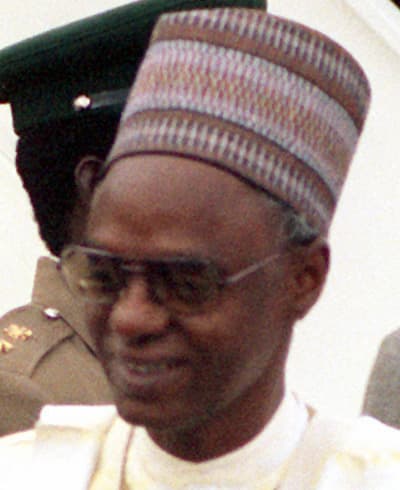
The 1979 Constitution replaced the Westminster model with a U.S.-style presidential system.
Read story →
The Shagari administration governed through a presidential system amid economic stress, corruption allegations, and party competition.
Read story →Five parties contest the transition elections
The NPN, UPN, NPP, GNPP, and PRP contested the elections.
Obasanjo hands over to Shagari
Obasanjo handed power to elected civilian president Shehu Shagari, formally beginning the Second Republic.
Civilian elections return after military rule
Elections under the new constitution brought five major parties into competition and made Shehu Shagari president-elect.
NPN governs without deep national cohesion
The NPN controlled the presidency but lacked a cohesive national base strong enough to dissolve regional opposition.
Comprehensive Import Supervision Scheme introduces Form M
CBN records that Form M was introduced in 1979 under the Comprehensive Import Supervision Scheme to guard against sha…
Constitution of the Federal Republic of Nigeria promulgated
The 1979 constitution created a presidential system with chapters on fundamental rights, citizenship, federal institu…
Senate elections held
Nigerians voted for the Senate as part of the staggered transition elections.
House of Representatives elections held
House elections followed the Senate vote in the transition calendar.
Governorship and state assembly elections held
State-level elections created elected governors and assemblies across the nineteen states.
Presidential election held
Five candidates contested Nigeria's first presidential election: Shagari, Awolowo, Azikiwe, Aminu Kano, and Waziri.
FEDECO declares Shagari elected
FEDECO declared Shehu Shagari winner, concluding that he satisfied the vote and state-distribution requirements.
Senate and House contests reopen federal party competition
Legislative elections under the 1979 Constitution forced the five registered parties to test strength beyond regional…
Five-party system replaces military transition committees
The NPN, UPN, NPP, GNPP, and PRP contested the return-to-civil-rule elections.
Presidential spread rule becomes a legitimacy test
The presidential election required both a plurality and geographic spread across the federation.
Supreme Court decides Awolowo v. Shagari
The Supreme Court upheld Shagari's election after Awolowo challenged the two-thirds-state calculation.
Civilian governors take office under new federal rules
State governments resumed civilian administration as the Second Republic opened.
NPN-NPP accord gives Shagari legislative working room
The NPN relied on cooperation with the NPP after failing to dominate every federal institution.
PRP governments become northern radical alternatives
The People's Redemption Party won important northern governorships and carried Aminu Kano's talakawa politics into th…
UPN states pursue free-education politics
UPN-led states, especially in the southwest, emphasized social programs associated with Obafemi Awolowo's political t…
Federal patronage deepens NPN advantage
Country Studies describes corruption and patronage as major weaknesses of the Second Republic.
National Assembly becomes a civilian oversight arena
The 1979 Constitution restored a bicameral legislature with federal lawmaking and budgetary roles.
Revenue allocation disputes intensify federal competition
Oil revenue made federal allocation central to state survival and political bargaining.
Presidential constitution inaugurated
The 1979 Constitution replaced parliamentary government with an executive presidency modeled partly on the United Sta…
Two-thirds-of-nineteen election dispute
The presidential result turned on whether the constitutional geographic threshold required two-thirds of nineteen sta…
Bakalori irrigation unrest foreshadows land and development conflicts
The Bakalori irrigation project in Sokoto became a major conflict after farmers protested the loss of land.
Maitatsine uprisings expose urban religious and social crisis
The Maitatsine disturbances in northern cities reflected religious radicalism, urban poverty, state failure, and viol…
Bakalori irrigation conflict turns development into coercion
Farmers displaced by the Bakalori irrigation project protested land losses and compensation failures.
Kano Maitatsine uprising kills thousands
The Yan Tatsine confrontation with authorities in Kano escalated into mass violence.
Maitatsine aftermath forces northern security reassessment
After Kano, authorities treated Maitatsine networks as a recurring security threat rather than a one-city disturbance.
Maitatsine uprising in Kano
Violent clashes involving the Maitatsine movement erupted in Kano and later spread in northern cities.
Oil boom optimism collapses into recession and debt
The Second Republic began with oil-era expectations, but oil prices weakened around 1981 while spending, imports, and…
Teachers strike over unpaid salaries
Teachers staged a strike over unpaid salaries amid Second Republic fiscal distress.
The oil boom faded while import-heavy spending and ambitious projects continued.
Read story →Teachers strike over unpaid salaries
Country Studies notes a teachers' strike caused by unpaid salaries during the Second Republic's fiscal squeeze.
Import dependence becomes an industrial weakness
Industries built during the oil boom depended heavily on imported inputs.
Revenue allocation act and derivation debates
Revenue allocation formulas were revised amid disputes among federal, state, and local governments.
Abba Musa Rimi
Successor Governor of old Kaduna State (June 1981 – October 1983, PRP) following Balarabe Musa's impeachment.
Dr. Garba Nadama
Second civilian Governor of Sokoto State (1981–1983, NPN); scholar-historian whose PhD thesis on the Zamfara region i…
Maitatsine violence spreads to Kaduna and Maiduguri
Maitatsine-related disturbances appeared beyond Kano when authorities tried to control the movement.
Debt rises as prestige industrial projects continue
Industrial projects such as steel investments continued despite fiscal pressure.
Kaduna Maitatsine violence shows the movement spreading
Maitatsine-related disturbances reached Kaduna after the Kano uprising.
Maiduguri Maitatsine violence adds another northern flashpoint
Maiduguri also experienced Maitatsine violence in 1982.
Foreign debt climbs sharply
Country Studies records foreign debt rising from N3.3 billion in 1978 to N14.7 billion in 1982.
Steel projects symbolize state-led industrial ambition
Nigeria continued major steel and industrial projects despite worsening finances.
Abdu Dawakin Tofa
Civilian Governor of Kano (May–October 1983) under the People's Redemption Party in the Second Republic.
Ahmad Adamu Mu'azu
Ahmad Adamu Mu'azu (often catalogued as "Adamu Mu'azu" — note the existing `data/looters/nodes.
Christian Onoh
(if retained for Enugu lineage) Brief civilian Governor of Old Anambra State (Oct–Dec 1983) on the NPN platform; dism…
Cornelius Olatunji Adebayo
Cornelius Olatunji Adebayo served as the elected (UPN) Governor of Kwara State for only three months before the 31 De…
Alhaji Aliyu Sabo Bakin Zuwo
Civilian Governor of Kano State briefly in the Second Republic (1 October 1983 - 31 December 1983) under the People's…
Next chapter
Military II
1983 – 1993
1983 to 1993 · 135 entries
A decade of strongmen. Buhari fell to Ibrahim Babangida in 1985, who renamed himself president, accepted IMF structural adjustment, and then governed the country through a transition programme that never actually transitioned. The 1993 June 12 election was widely regarded as the cleanest vote Nigeria had ever held. Babangida annulled it. The wound is still open. He stepped aside in August, handed the country to an interim civilian named Ernest Shonekan, and 82 days later Sani Abacha quietly removed Shonekan in what counted as Nigeria’s last successful coup.
The military overthrew Shagari, citing corruption, electoral malpractice, and economic decline.
Read story →Nigeria expels an estimated two million foreign workers
As the economy weakened, the Shagari government expelled undocumented foreign workers who had come during the oil boo…
Shagari is reelected amid fraud claims and violence
Shagari won a second term, but sources describe serious irregularities and violence.
"Ghana Must Go" expulsions target migrants
The Shagari government expelled an estimated two million undocumented foreigners during economic crisis.
FEDECO administers a credibility-stressed election cycle
The Federal Electoral Commission oversaw the 1983 elections amid rising mistrust.
Shagari wins a disputed second term
Shagari was declared reelected, but Britannica and Country Studies both emphasize fraud claims and irregularities.
The military overthrew Shagari's government, citing corruption, economic decay, and electoral malpractice.
Read story →Presidential election challenged after Shagari victory
Shehu Shagari won reelection in a contest widely criticized by opponents.
War Against Indiscipline begins
Buhari's regime launched the War Against Indiscipline, a campaign of public order and moral correction.
Decrees 2 and 4 expand detention and press repression
Buhari's military government used Decree 2 to detain people considered security risks without ordinary trial protecti…
Umaru Dikko kidnap attempt causes an international scandal
Umaru Dikko, a former Shagari-era official accused of corruption by the Buhari regime, was found by British authoriti…
Buhari-Idiagbon consolidates military rule
Buhari's government organized power around military councils and urgent economic rescue.
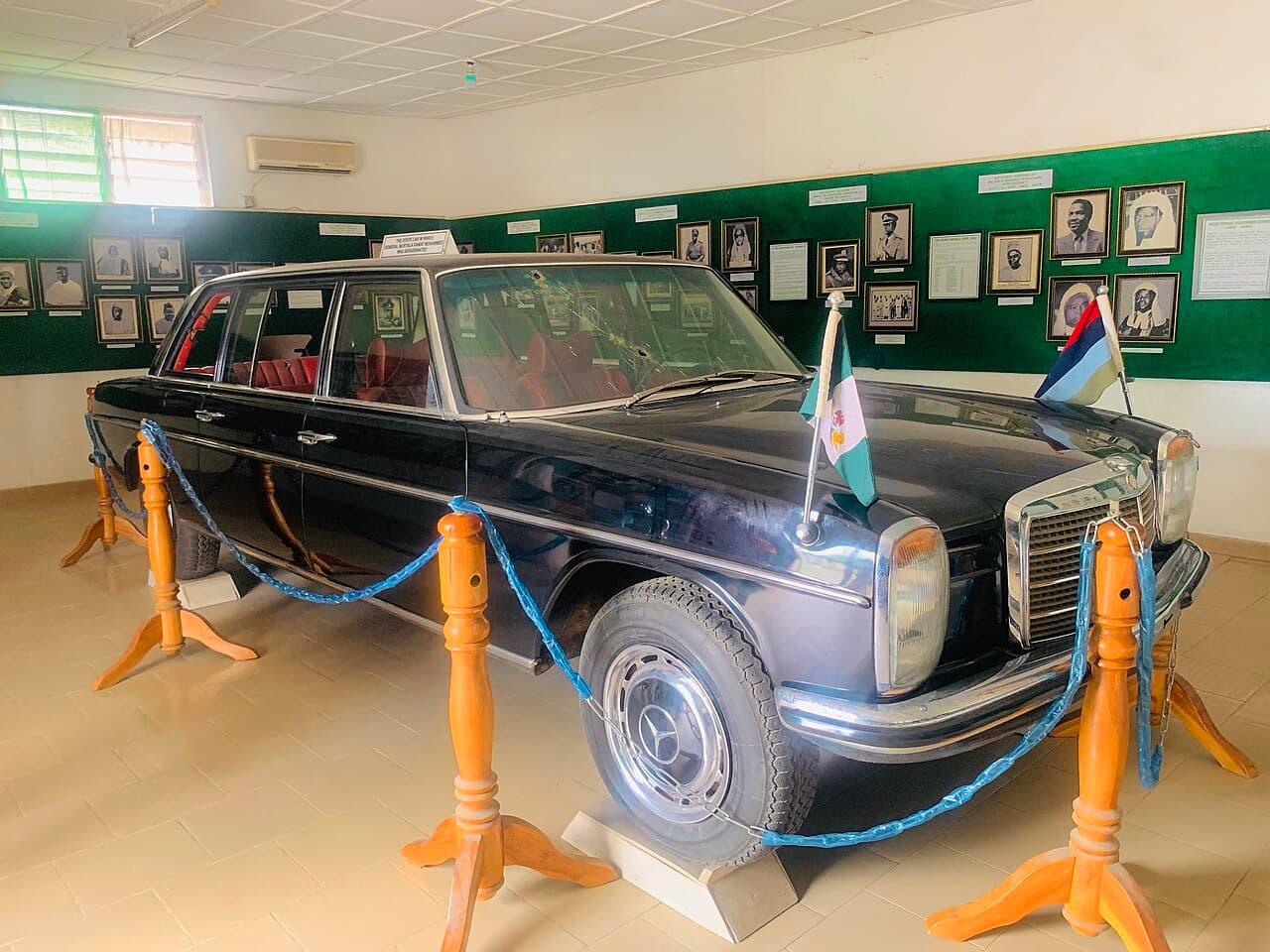
The regime detained many leading politicians and used special tribunals.
Read story →Austerity, border closures, and import restrictions bite
Buhari's government tightened imports, closed borders for a time, and pursued austerity.
Supreme Military Council resumes central authority
Buhari's regime governed through military councils and decrees rather than elected institutions.
Tunde Idiagbon becomes the regime's disciplinarian face
Chief of Staff Supreme Headquarters Tunde Idiagbon was central to the Buhari regime's austere style.
Decree 2 authorizes detention without trial
State Security Detention of Persons Decree No. 2 allowed detention of people deemed security risks.
Decree 4 targets press reports embarrassing officials
Public Officers Protection Against False Accusation Decree No. 4 criminalized certain publications about officials.
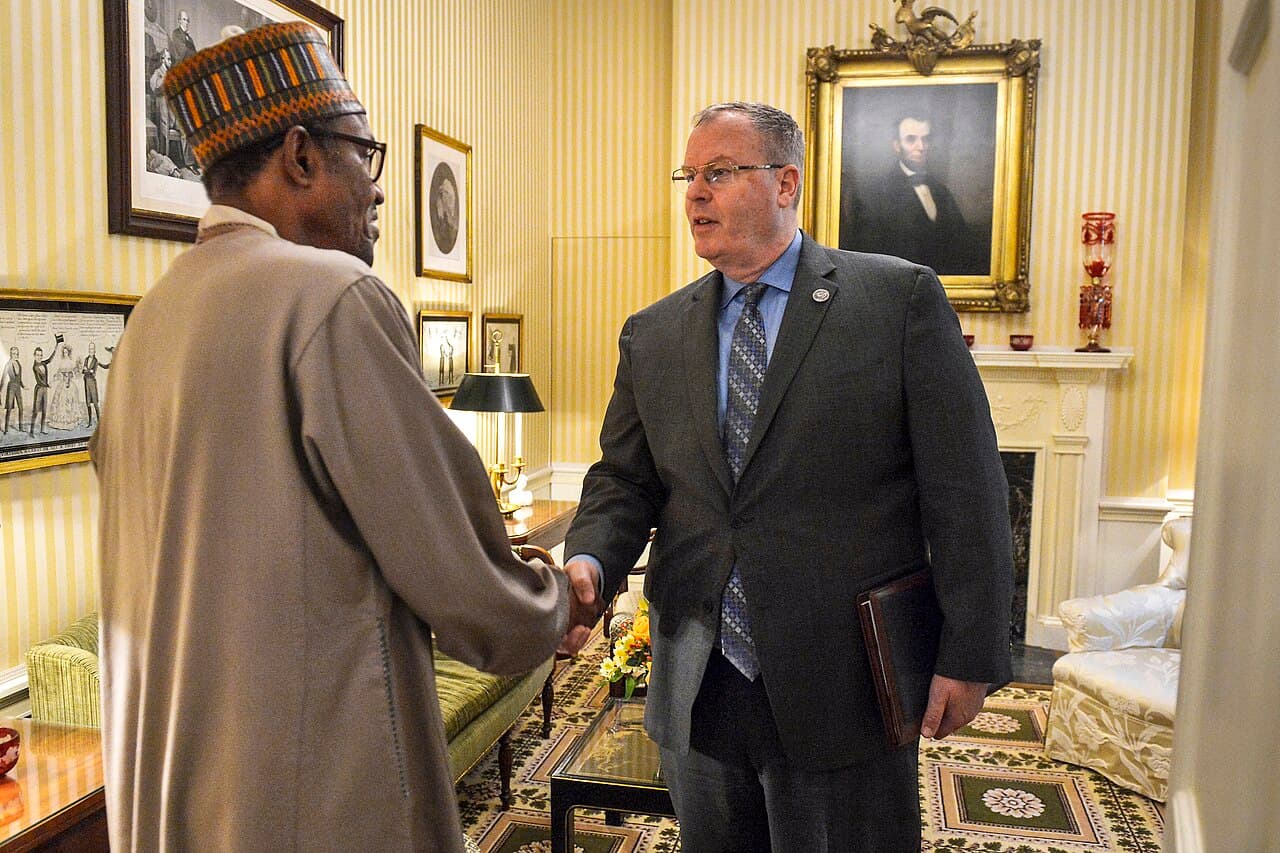
Buhari's government detained and tried many Second Republic politicians through special procedures.
Read story →War Against Indiscipline begins
The regime launched WAI to enforce public order, queue discipline, sanitation, and patriotic conduct.
Border closures and import controls deepen austerity
Buhari's government restricted imports and closed borders as part of economic rescue efforts.
Currency exchange exercise disrupts cash holdings
The regime used monetary controls as part of its campaign against smuggling and illicit wealth.
Umaru Dikko crate affair ruptures Nigeria-UK relations
Former minister Umaru Dikko was discovered in a crate at Stansted Airport during an attempted abduction from Britain.
Human rights lawyers challenge military detentions
Decree-based detention and press controls pushed lawyers and civil-society actors into rights advocacy.
War Against Indiscipline launched
The Buhari military government introduced a public-order campaign targeting queues, sanitation, and civic discipline.
Decree No. 4 restricts press freedom
The Public Officers Protection Against False Accusation Decree criminalized reporting deemed embarrassing to officials.
Gbolahan Mudasiru
Gbolahan Mudasiru — office-holder linked to Lagos State; promoted from per-state audit for network legibility.
Jeremiah Useni
(if retained as Edo node) Briefly Military Governor of Bendel State, January 1984; better known as Lt-Gen, FCT Minist…
Babangida overthrows Buhari
Ibrahim Babangida removed Buhari in a palace coup.
Babangida presents a softer face while retaining coercive laws
Babangida released many detainees and appeared consultative, but Decree 2 and detention powers remained.
Buhari rejects an IMF loan package
Buhari resisted IMF loan conditions even as the economy deteriorated.
Babangida overthrows Buhari
General Ibrahim Babangida removed Buhari in a palace coup.
Babangida styles himself president, not head of state
Babangida adopted the title of president and reorganized the governing style of military rule.
Buhari-era detainees and press restrictions are selectively eased
Babangida initially released some detainees and courted public opinion after Buhari's rigidity.
National debate on IMF conditionality expands
Babangida opened public debate on whether Nigeria should accept an IMF loan and its conditions.
Structural Adjustment Programme begins
Babangida adopted a Structural Adjustment Programme, reshaping exchange rates, public spending, imports, and living s…
Nigeria joins the Organization of the Islamic Conference
Babangida's government converted Nigeria's observer status in the Organization of the Islamic Conference into members…
Dele Giwa killed by parcel bomb
Journalist Dele Giwa was killed by a parcel bomb, becoming one of Nigeria's most famous unresolved attacks on the press.
Political Bureau and two-party experiment begin
Babangida created a Political Bureau to collect ideas and propose a transition program, then dissolved political asso…
National Economic Emergency and the IMF debate
Babangida framed the crisis as a choice between an IMF loan and severe domestic adjustment.
Structural Adjustment Programme is launched
Babangida introduced SAP, including devaluation, trade liberalization, and public-spending restraint.
Second-tier foreign-exchange market begins
The Babangida government introduced a market-oriented foreign-exchange system as part of SAP.
Naira devaluation raises import costs
SAP's exchange-rate changes made imported inputs and consumer goods more expensive.
Privatization and commercialization enter policy vocabulary
SAP promoted reduced state ownership and greater commercial discipline in public enterprises.
Nigeria joins the Organization of the Islamic Conference
Nigeria's OIC membership generated controversy in a religiously mixed federation.
Political Bureau gathers views on a new order
Babangida established a Political Bureau to consult Nigerians on political reform and transition.
Dele Giwa is killed by a parcel bomb
Newswatch editor Dele Giwa was killed by a parcel bomb in Lagos.
Newswatch case chills investigative journalism
Giwa's murder followed tensions between security agencies and critical journalism.
Structural Adjustment Programme begins
Nigeria adopted an IMF-influenced structural adjustment program involving currency devaluation, trade liberalization,…
Second-tier foreign exchange market introduced
The government introduced a market-based foreign exchange mechanism as part of SAP.
Stephen Anthony Ukpo
Brigadier Stephen Anthony Ukpo served as Military Governor of Rivers State (1986–1988) under Babangida after roles as…
Department of State Services (DSS)
Department of State Services — Nigeria's principal domestic intelligence and counter-terrorism agency, established un…
State creation expands the federation
The Babangida regime created additional states, eventually bringing Nigeria to thirty states by 1991.
Akwa Ibom and Katsina states are created
Babangida created Akwa Ibom and Katsina, increasing the state count before the larger 1991 wave.
Akwa Ibom State is created
Babangida created Akwa Ibom as part of a wider restructuring of Nigeria's state map.
Katsina State is created
Katsina was separated from Kaduna State during Babangida's restructuring.
Directorate of Food, Roads and Rural Infrastructure expands rural-policy machinery
Babangida-era rural programmes sought to respond to poverty and infrastructure deficits during adjustment.
MAMSER begins political education under military supervision
The Mass Mobilization for Self-Reliance, Social Justice, and Economic Recovery promoted civic education and adjustmen…
SAP hardship fuels labor and student unrest
Adjustment policies raised prices and reduced purchasing power, provoking strikes and demonstrations.
Two new states created: Akwa Ibom and Katsina
The military government increased the number of states from nineteen to twenty-one.
Akwa Ibom State Government
Akwa Ibom State — one of the 36 constituent states of the Federal Republic of Nigeria, created in 1987.
Katsina State Government
Katsina State — one of the 36 constituent states of the Federal Republic of Nigeria, created in 1987.
Local governments begin receiving direct federal funding
The federal government began funding local governments directly.
Local governments receive direct federal allocations
Babangida-era reforms strengthened local governments within the federal allocation system.
Constituent Assembly works under military limits
Babangida convened constitutional processes for the planned Third Republic while reserving final authority to the mil…
Fuel and price protests expose SAP's social costs
Adjustment measures translated into higher living costs for urban residents.
Federal Road Safety Corps established
The Federal Road Safety Corps was created to reduce road crashes and regulate road safety.
Okigbo Panel of Inquiry on the Reorganisation and Reform of the Central Bank of Nigeria
Federal panel of inquiry chaired by economist Pius Okigbo, established to investigate management of Nigeria's Central…
Babangida promulgates a constitution for the planned Third Republic
The Armed Forces Ruling Council promulgated a new constitution by decree after modifying the draft.
MAMSER and "new breed" politics
The transition promoted social mobilization and "new breed" politicians while restricting old political figures.
Babangida promulgates a Third Republic constitution
A new constitution was promulgated for a planned civilian order, though implementation remained staged and controlled.
Political associations are screened and rejected
Babangida's government refused to register the political associations that emerged from civil society and elite netwo…
SDP and NRC are imposed as official parties
The government created the Social Democratic Party and National Republican Convention.
"A little to the left" and "a little to the right" party framing emerges
The SDP and NRC were publicly framed as mild ideological alternatives rather than regionally rooted parties.
Ban on old politicians promotes "new breed" politics
Babangida's transition restricted many old political figures while promoting a new political class.
Transition timetable becomes a moving target
Babangida repeatedly adjusted the schedule for return to civilian rule.
1989 Constitution prepared but never fully used
A new constitution was drafted for a planned transition to civilian rule.
Caleb Manasseh Mutfwang
Caleb Manasseh Mutfwang has served as Governor of Plateau State since 29 May 2023 on the PDP platform; he is a lawyer…
Financial Action Task Force (FATF)
International AML standards body (est. G-7 1989), blacklisted Nigeria 2001 as non-cooperative; removal in June 2006 t…
UN Security Council ISIL/Daesh and Al-Qaida Sanctions Committee (1267 Committee)
UN Security Council Committee established pursuant to Resolution 1267 (1999), as expanded by 1989 (2011) and 2253 (20…
Writer and activist Ken Saro-Wiwa helped frame Ogoni claims for international audiences.
Read story →Local government elections test the two-party system
Babangida's staged transition began with lower-level contests before national power was transferred.
Vice-Admiral (Rtd) Murtala Hammanyero Nyako
Vice-Admiral (Rtd) Murtala Hammanyero Nyako - former Chief of Naval Staff under General Ibrahim Babangida (1990-1992)…
Abuja replaces Lagos as federal capital
Nigeria's federal capital formally moved from Lagos to Abuja during the Babangida era.
State assembly elections deepen Third Republic structures
State legislative contests formed part of the gradual handover calendar.
Nine new states are created
Babangida created additional states, bringing Nigeria's state count to thirty.
Abia State is created
Abia emerged in the 1991 state-creation exercise.
Anambra and Enugu are separated
The 1991 restructuring divided the old Anambra arrangement and created Enugu State.
Delta State is carved out of Bendel
Delta State was created in the oil-producing Niger Delta region.
Jigawa State is carved out of Kano
Jigawa became one of the new northern states created under Babangida.
Federal capital formally moves to Abuja
Abuja replaced Lagos as Nigeria's federal capital.
State governors are elected under the transition programme
Civilian governors were elected before the presidential stage of Babangida's transition.
Nine new states and Abuja move
Nigeria expanded from twenty-one to thirty states and formally moved the federal capital from Lagos to Abuja.
Abia State Government
Abia State — one of the 36 constituent states of the Federal Republic of Nigeria, created in 1991.
Adamawa State Government
Adamawa State — one of the 36 constituent states of the Federal Republic of Nigeria, created in 1991.
Anambra State Government
Anambra State — one of the 36 constituent states of the Federal Republic of Nigeria, created in 1991.
Senator Alhaji Bukar Abba Ibrahim
Senator Alhaji Bukar Abba Ibrahim (c.1950 - 4 February 2024) was a long-serving Nigerian politician from Yobe State w…
Danladi Mohammed Zakari
Retired Brigadier-General; first Military Administrator of Kogi State (28 August 1991 – 2 January 1992) under the Bab…
Delta State Government
Delta State — one of the 36 constituent states of the Federal Republic of Nigeria, created in 1991.
Edo State Government
Edo State — one of the 36 constituent states of the Federal Republic of Nigeria, created in 1991.
Enugu State Government
Enugu State — one of the 36 constituent states of the Federal Republic of Nigeria, created in 1991.
Jigawa State Government
Jigawa State — one of the 36 constituent states of the Federal Republic of Nigeria, created in 1991.
Kebbi State Government
Kebbi State — one of the 36 constituent states of the Federal Republic of Nigeria, created in 1991.
Kogi State Government
Kogi State — one of the 36 constituent states of the Federal Republic of Nigeria, created in 1991.
Osun State Government
Osun State — one of the 36 constituent states of the Federal Republic of Nigeria, created in 1991.
Taraba State Government
Taraba State — one of the 36 constituent states of the Federal Republic of Nigeria, created in 1991.
Yobe State Government
Yobe State — one of the 36 constituent states of the Federal Republic of Nigeria, created in 1991.
Presidential primaries are voided and candidates banned
Babangida voided presidential primaries and banned candidates before scheduling a new contest.
National Assembly elections proceed before presidential resolution
Federal legislative elections were held as part of the staged transition.
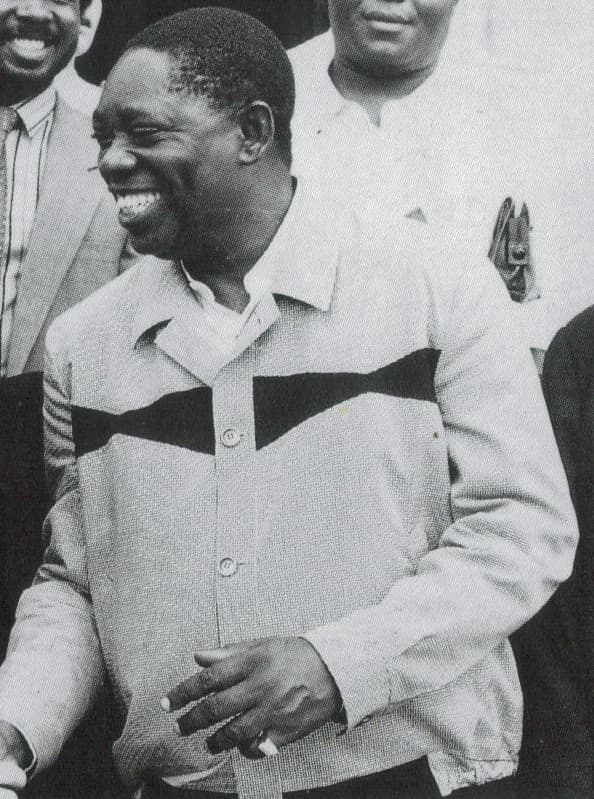
Babangida cancelled presidential primaries after leading aspirants emerged from the official parties.
Read story →Earlier presidential aspirants are banned
The regime barred prominent aspirants from continuing after the failed primary process.
Option A4 open-ballot system enters electoral practice
The transition used an open-ballot system associated with Babangida-era electoral reform.
Humphrey Nwosu's electoral commission gains credibility
The National Electoral Commission under Humphrey Nwosu oversaw the transition elections that culminated in June 12.
Oil Mineral Producing Areas Development Commission created
OMPADEC was created to address development demands in oil-producing communities.
Abubakar Audu
First civilian Governor of Kogi State (January 1992 – November 1993, SDP, Third Republic) and second-time civilian Go…
Senator (Dr.) Muhammad Adamu Aliero
Senator (Dr.) Muhammad Adamu Aliero is one of the most enduring political figures of Nigeria's North-West, with a pub…
Chukwuemeka Ezeife
First civilian Governor of Anambra State in the Third Republic (Jan 1992 – Nov 1993, SDP), Harvard-trained economist…
Evan Enwerem
NRC Governor of Imo State (3 January 1992 – 17 November 1993; tenure cut short by the November 1993 coup); later PDP…
Fidelis Naanmiap Tapgun
Fidelis Naanmiap Tapgun was the elected civilian Governor of Plateau State (2 January 1992 – 17 November 1993) on the…
Senator Isiaka Adetunji Adeleke
Isiaka Adeleke, the first executive Governor of Osun State (January 1992 – November 1993, SDP, Third Republic), Feder…
John Odigie Oyegun
First civilian Governor of Edo State (Jan 1992 – Nov 1993, SDP) during the aborted Third Republic; founding APC Natio…
Michael Otedola
Michael Otedola — office-holder linked to Lagos State; promoted from per-state audit for network legibility.
Moses Adasu
Reverend Father Moses Orshio Adasu (d. 20 November 2005) served as civilian Governor of Benue State from January 1992…
Ogbonnaya Onu
First civilian Governor of Abia State (Jan 1992 – Nov 1993) on the NRC platform during the Third Republic; later Mini…
Brass Engineering & Construction Nigeria Limited
Private company founded 1993 by David Umahi.
Dauda Musa Komo
Colonel Dauda Komo served as Military Administrator of Rivers State (1993–1996) under Abacha and presided over the se…
Hamza al-Mustapha
Abacha-era Chief Security Officer (1993-1998); documented patronage relationship with Ibori since the 1990s.
Dr. Paul Agbai Ogwuma
Central Bank of Nigeria Governor (1993-1999) during Abacha regime.
Next chapter
Interim / Abacha / Abubakar
1993 – 1999
1993 to 1999 · 125 entries
Five years and seven months. Abacha’s dictatorship hanged Ken Saro-Wiwa and the Ogoni Nine in 1995, jailed MKO Abiola and most of the country’s known opposition, and looted billions of dollars in funds that foreign courts spent the next twenty years repatriating. Abiola died in detention in 1998, the same year as Abacha himself. Abdulsalami Abubakar, the next general in line, surprised everyone by committing to a transition timetable, holding elections, and handing over to a civilian on 29 May 1999. That date is now Democracy Day.
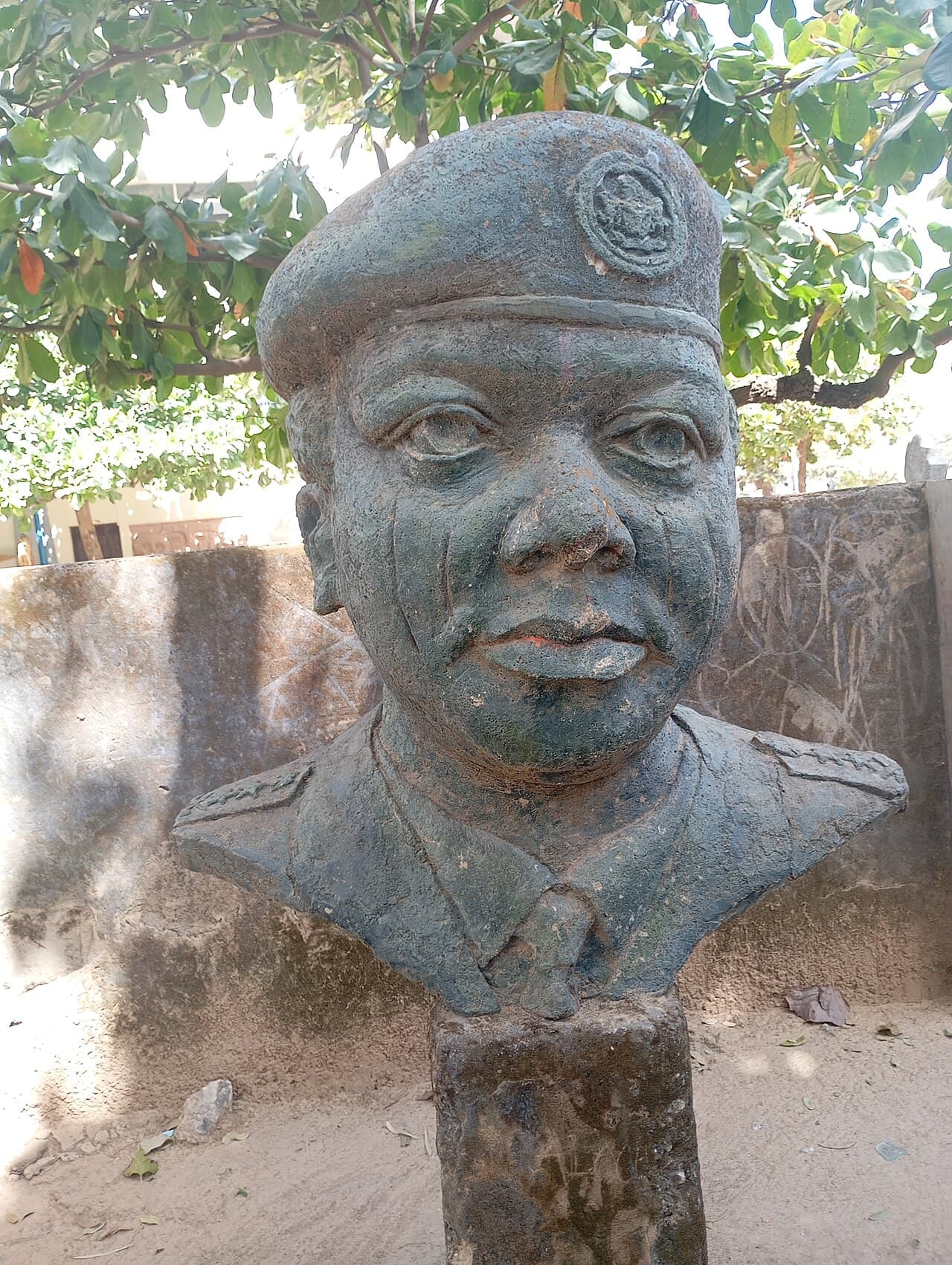
Sani Abacha overthrew the interim government and established one of Nigeria's most repressive military regimes.
Read story →Abiola and Tofa contest the presidential election
Abiola of the SDP and Tofa of the NRC contested an election often remembered as peaceful and cross-regional.
Babangida "steps aside"
Under pressure after the annulment crisis, Babangida left office and installed Ernest Shonekan's Interim National Gov…
Ogoni Day mobilizes mass protest
MOSOP organized large demonstrations to press Ogoni demands over oil pollution and political rights.
Shell suspends operations in Ogoni areas
Conflict and protest in Ogoniland led Shell to halt production in the area.
Presidential voting proceeds peacefully
Nigerians voted in an election later widely described as orderly and credible.
Court orders and security claims cloud result release
Legal maneuvers and official claims interrupted the announcement of final presidential results.
Babangida annuls the election
Babangida's government voided the June 12 presidential election.
Pro-democracy protests face arrests and press closures
HRW reported hundreds of arrests and press repression after the annulment.
Oil workers and labor pressure the regime
Labor organizations became important actors in the anti-annulment struggle.
General Sani Abacha seized power from the Shonekan-led interim government.
Read story →Abacha bans political activity
Abacha dismantled the transition institutions and restricted political organization.
Interim National Government created
After the annulled June 12 election, General Babangida installed an Interim National Government led by Ernest Shonekan.
Abiola declares himself president and is detained
M.K.O.
Abiola declares his mandate
Abiola declared himself president in Lagos, invoking the June 12 mandate, and was arrested.
Ogoni killings trigger military crackdown
After four Ogoni leaders were killed, the Rivers State Internal Security Task Force carried out punitive operations i…
Labour and pro-democracy movements are suppressed
Abacha suspended trade union activity and repressed protests as opposition to military rule grew.
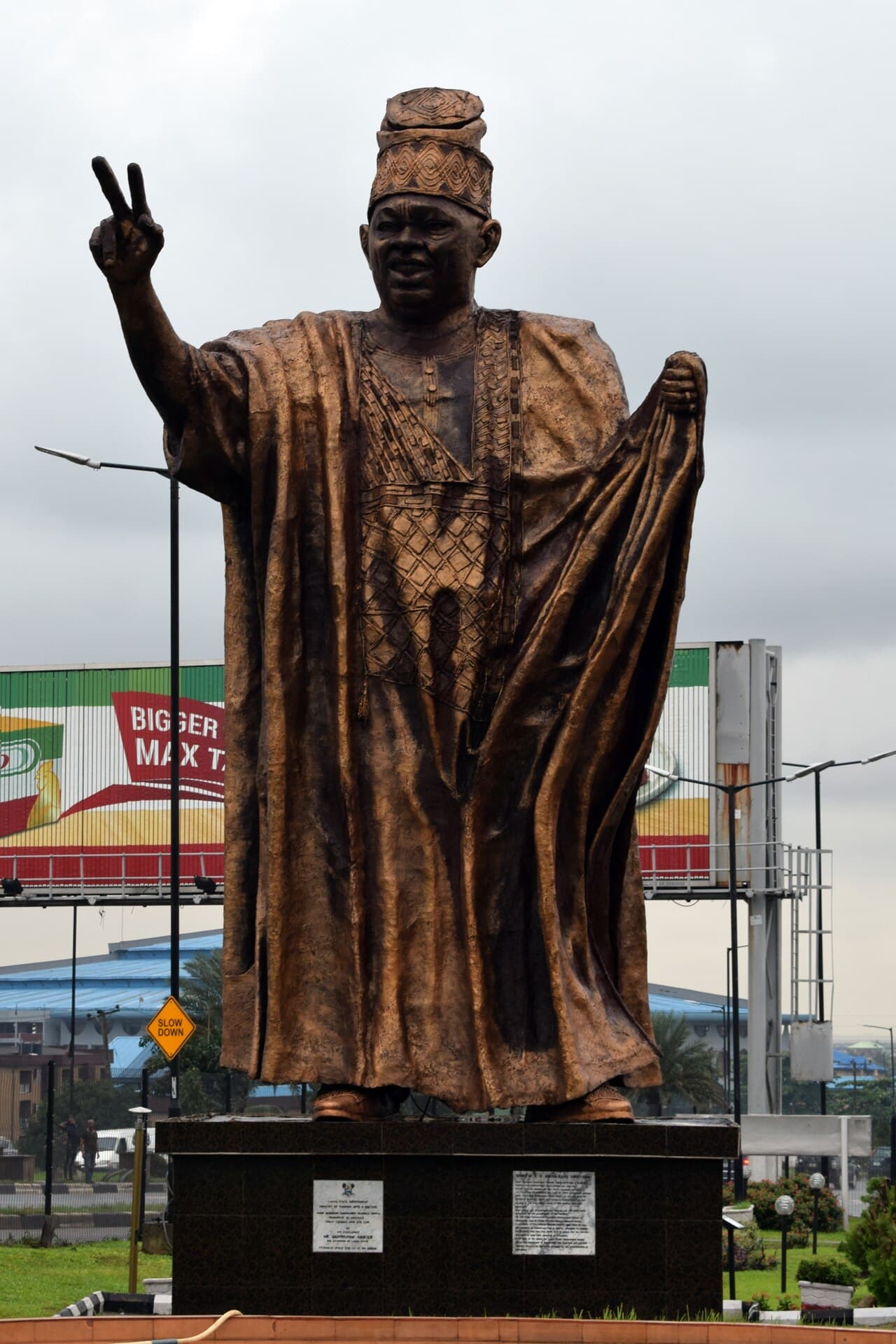
The National Democratic Coalition became a key pro-democracy platform against Abacha's rule.
Read story →Abacha convenes a constitutional conference
Abacha launched another constitutional process while retaining military control.
Abiola declares himself president
Abiola publicly claimed the presidency based on the June 12 election.
Abiola detention becomes an international rights issue
Abiola remained imprisoned after asserting his mandate.
Oil-sector strikes challenge Abacha
Oil workers and organized labor used strikes to protest military rule and the June 12 annulment.
NUPENG and PENGASSAN face state repression
The military government moved against oil unions during pro-democracy strikes.
Four Ogoni leaders are killed
Four Ogoni leaders were murdered in Gokana, creating the case later used against Ken Saro-Wiwa and other MOSOP figures.
Rivers State Internal Security Task Force represses Ogoniland
HRW documented abuses by security forces in Ogoni communities after the May killings.
Saro-Wiwa and other Ogoni activists were arrested after the killing of four Ogoni leaders.
Read story →Abacha shuts and harasses independent publications
Independent media faced closures, arrests, and censorship under Abacha.
Constitutional Conference under Abacha
The Abacha regime convened a constitutional conference amid repression and transition promises.
Ogoni Nine executed
Ken Saro-Wiwa and eight other Ogoni activists were executed after trials widely condemned as unfair by rights groups.
Nigeria suspended from the Commonwealth
After the Ogoni executions, Nigeria faced international condemnation and Commonwealth suspension.
Abacha's government accused former leaders and officers of involvement in a coup plot.
Read story →Secretive military tribunals raise due-process alarms
Coup and security cases under Abacha relied on military tribunals criticized by rights groups.
HRW publishes The Ogoni Crisis
Human Rights Watch documented military repression and rights abuses in Ogoniland.
Ogoni Nine are convicted and sentenced
A special tribunal convicted Saro-Wiwa and eight other Ogoni activists.
Ogoni Nine are executed
Ken Saro-Wiwa and eight other Ogoni activists were hanged despite international appeals.
Nigeria is suspended from the Commonwealth
The Commonwealth suspended Nigeria after the Ogoni executions.
EU arms embargo follows repression concerns
European restrictions targeted arms transfers to Nigeria amid human-rights concerns.
UN scrutiny follows Ogoni executions
International bodies examined the fairness of the Ogoni trials and Nigeria's human-rights situation.
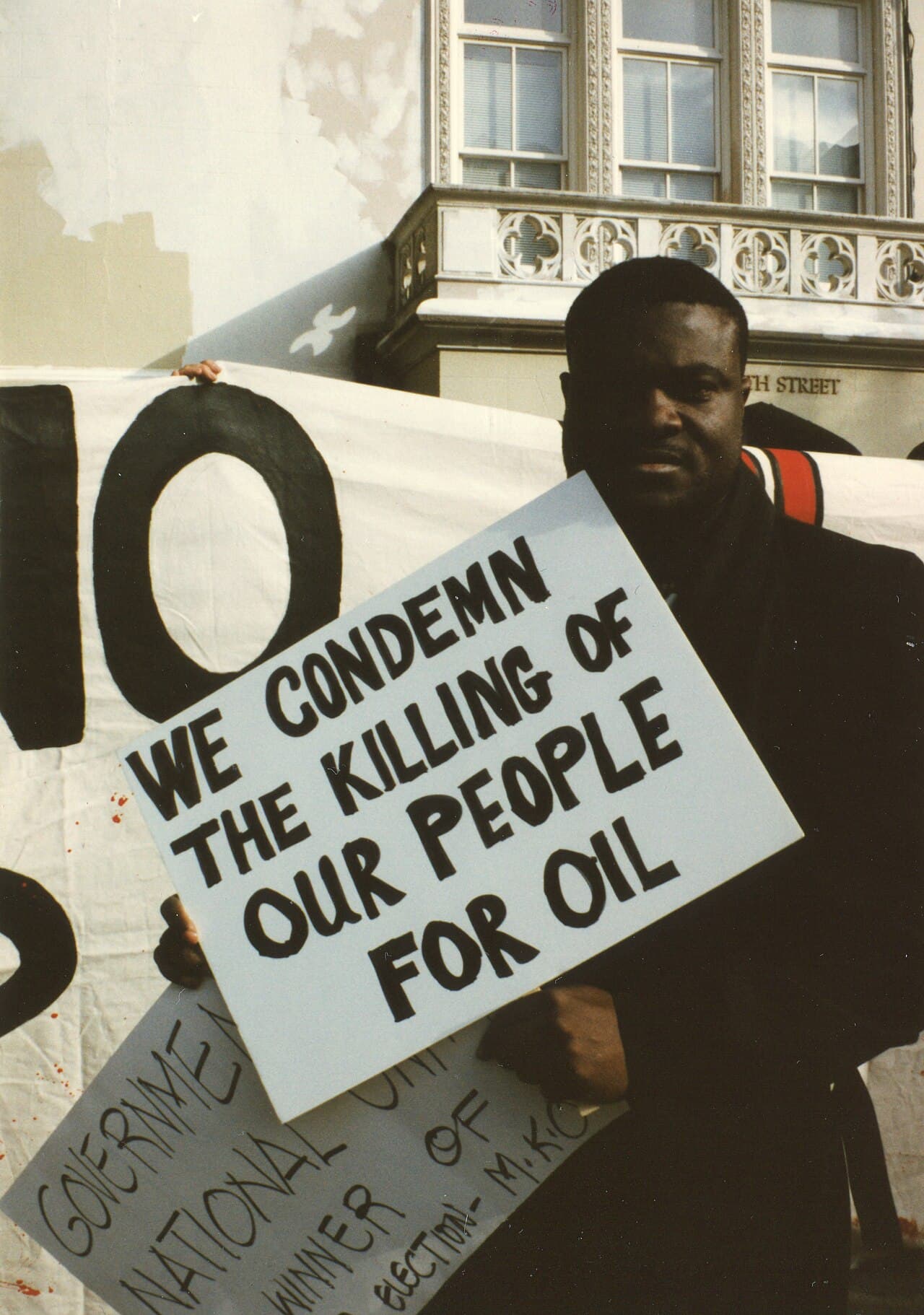
A special tribunal convicted Ken Saro-Wiwa and eight other Ogoni activists, who were executed in November 1995.
Read story →Ferrostaal AG
German engineering company; paid alleged €179M bribe in the 1995 renegotiation of the ALSCON aluminium-smelter contra…
Abacha creates six more states
Abacha added six states, bringing Nigeria to thirty-six states and the Federal Capital Territory.
UN scrutiny follows the Ogoni executions
A UN fact-finding mission identified defects in the Ogoni trial process under international law.
Abacha creates six more states
Abacha increased Nigeria's state count to thirty-six.
Bayelsa State is created in the oil-producing Niger Delta
Bayelsa emerged from the 1996 state-creation exercise.
Ebonyi State is created
Ebonyi became one of the six states added under Abacha.
Ekiti State is created
Ekiti was carved out during the 1996 restructuring.
Gombe State is created
Gombe emerged in the northeast under Abacha's state-creation decree.
Nasarawa State is created
Nasarawa was created in central Nigeria during the 1996 expansion.
Zamfara State is created
Zamfara was separated from Sokoto in the 1996 restructuring.
Abacha transition parties operate under heavy control
Abacha's transition programme allowed party activity only within boundaries set by the regime.
Political prisoners remain central to rights campaigns
Abiola, Obasanjo, Yar'Adua, labor leaders, journalists, and activists remained symbols of Abacha's repression.
Six states added to create thirty-six-state federation
Abacha created Bayelsa, Ebonyi, Ekiti, Gombe, Nasarawa, and Zamfara states.
Bayelsa State Government
Bayelsa State — one of the 36 constituent states of the Federal Republic of Nigeria, created in 1996.
Ebonyi State Government
Ebonyi State — one of the 36 constituent states of the Federal Republic of Nigeria, created in 1996.
Ekiti State Government
Ekiti State — one of the 36 constituent states of the Federal Republic of Nigeria, created in 1996.
Gombe State Government
Gombe State — one of the 36 constituent states of the Federal Republic of Nigeria, created in 1996.
Ibrahim Sani Abacha
Eldest son of General Sani Abacha; died January 1996 in a plane crash.
Moses Fasanya
Retired Army Colonel, Military Administrator of Abia State (1996–1998) under the Abacha regime; later Administrator o…
Nasarawa State Government
Nasarawa State — one of the 36 constituent states of the Federal Republic of Nigeria, created in 1996.
Zamfara State Government
Zamfara State — one of the 36 constituent states of the Federal Republic of Nigeria, created in 1996.
Abacha's self-succession project reaches its peak
By 1998, Abacha's transition process was widely viewed by critics as designed to keep him in power under civilian cover.
Shehu Musa Yar'Adua dies in custody
Yar'Adua died while imprisoned after the 1995 alleged coup case.
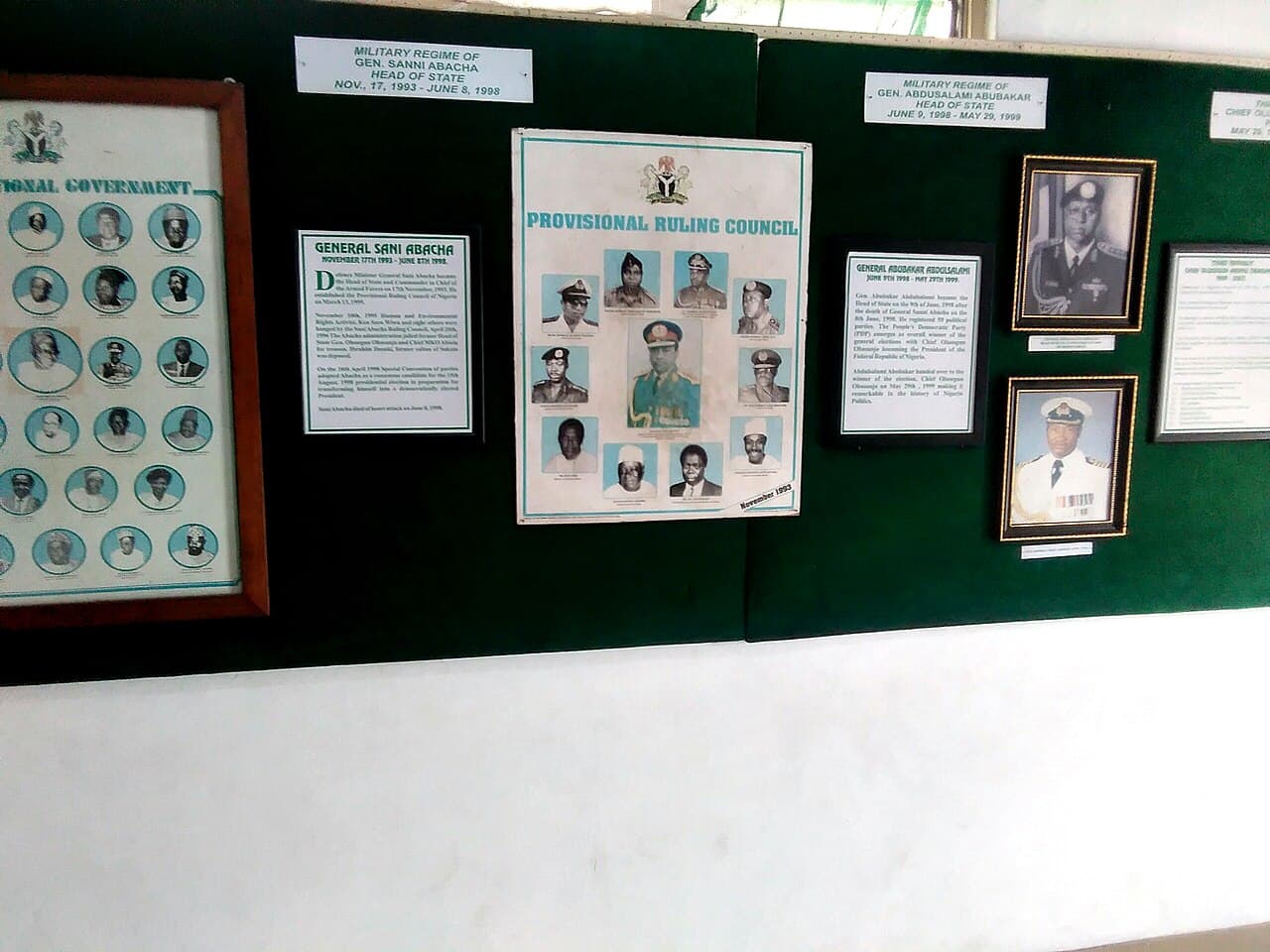
Sani Abacha died suddenly, opening the path to another transition.
Read story →Abiola dies in detention
M.K.O.
Abdulsalami Abubakar transition
General Abdulsalami Abubakar oversaw a rapid transition program that led to elections and military withdrawal.
Abacha loot becomes a global asset-recovery case
After Abacha's death, Nigeria and foreign governments pursued assets allegedly stolen under his regime.
Abdulsalami begins a rapid transition
Abdulsalami Abubakar succeeded Abacha, freed political prisoners, and promised civilian handover.
Local elections open the transition calendar
The 1998-99 transition began with local government elections.
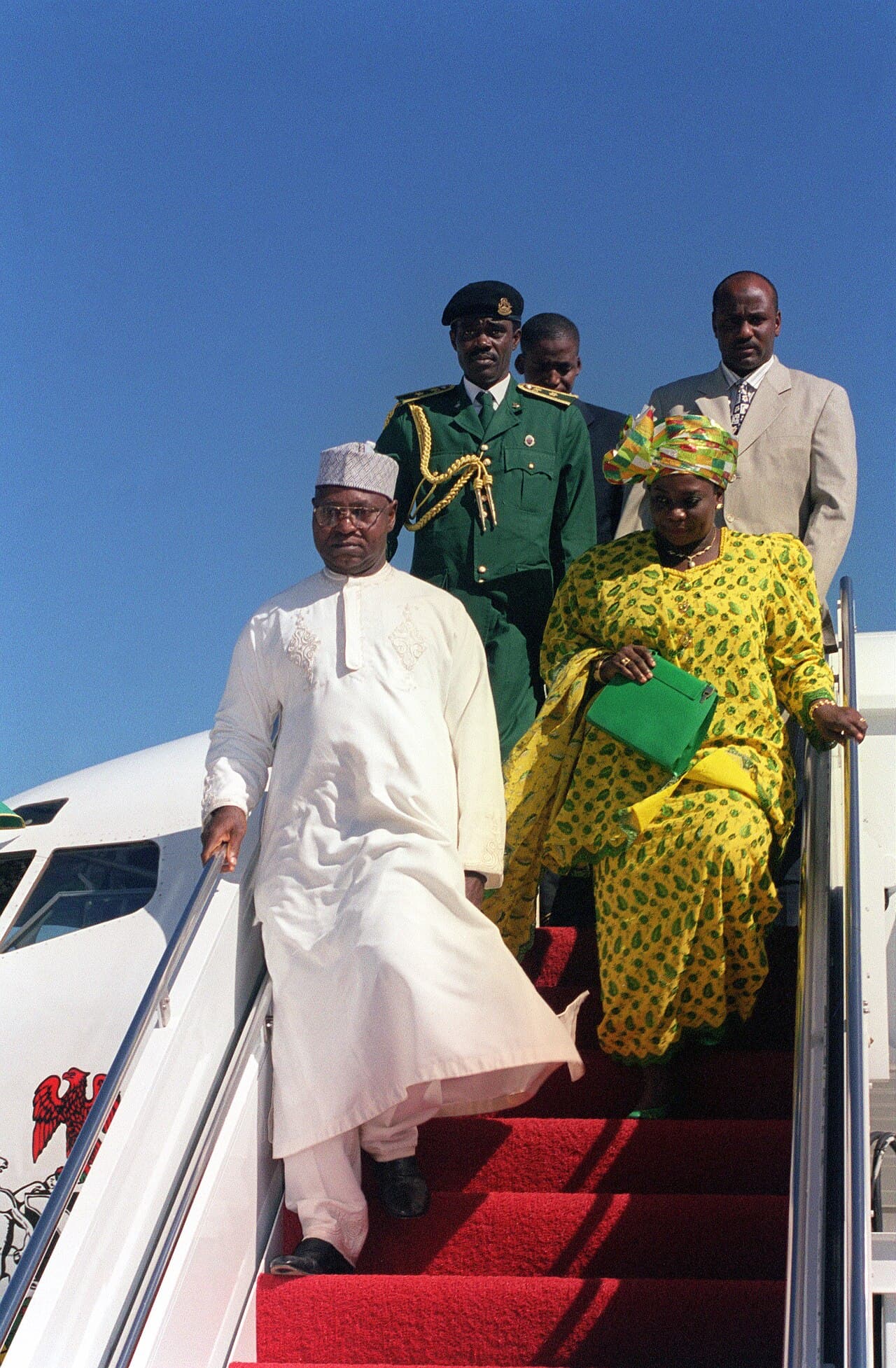
Sani Abacha died while still head of state.
Read story →Abdulsalami Abubakar becomes head of state
General Abdulsalami Abubakar succeeded Abacha and signaled a faster return to civilian rule.
M.K.O. Abiola dies in detention
Abiola died shortly after Abacha and while discussions over his release were underway.
Political prisoners are released
Abdulsalami's government released prominent detainees from the Abacha era.
INEC is established for the transition
The Independent National Electoral Commission administered the 1998-99 transition elections.
New political parties register for the handover
The transition produced three major parties: PDP, APP, and AD.
Local government elections open the transition vote sequence
The first elections in Abdulsalami's programme were local government polls.
Abacha loot investigations begin after regime change
After Abacha's death, Nigerian and foreign authorities began tracing assets linked to his regime.
Carter Center and NDI observe the transition
International observers monitored the election sequence that returned Nigeria to civilian rule.
Independent National Electoral Commission established
INEC was established to organize elections for the transition from military rule.
Abdulazeez Abubakar Yari
Alhaji Abdul-Aziz Abubakar Yari, two-term Governor of Zamfara State (29 May 2011 - 29 May 2019) and Chairman of the N…
Abdulkadir Kure
Third civilian Governor of Niger State (PDP, 1999–2007).
Abdullahi Adamu
Second civilian Governor of Nasarawa State (PDP, 1999–2007).
Achike Udenwa
Two-term PDP Governor of Imo State (1999–2007) and a chartered accountant.
Adamu Muazu
Former Governor of Bauchi State (1999-2007).
Chief Adebayo Adefarati
Adefarati, AD governor of Ondo State 1999–2003, was the subject of an ICPC investigation opened in January 2002 over…
Ahmed Rufai Sani Yerima
First civilian Governor of Zamfara State (1999–2007, ANPP) and the first Nigerian governor to introduce Sharia crimin…
Ahmed Mohammed Makarfi
Two-term Governor of Kaduna State (1999–2007, PDP) and later Senator for Kaduna North and PDP National Caretaker Comm…
Alpha-Beta Consulting Ltd
Private firm awarded the Lagos State internally-generated-revenue (IGR) collection contract during Governor Bola Tinu…
Attahiru Dalhatu Bafarawa
Two-term Governor of Sokoto State (1999–2007).
Charles Soludo
Renowned economist; Governor of the Central Bank of Nigeria (2004–2009), architect of the 2005 banking consolidation;…
Senator Dr. Chimaroke Ogbonnia Nnamani
Senator Dr. Chimaroke Ogbonnia Nnamani, a US-trained obstetrician-gynaecologist and the founding patriarch of Enugu S…
Chinwoke Mbadinuju
Fourth-Republic Governor of Anambra State (29 May 1999 – 29 May 2003, PDP).
Danladi Umar
Justice Danladi Umar, Chairman of Code of Conduct Tribunal.
Chief Diepreye Solomon Peter Alamieyeseigha
Chief Diepreye Solomon Peter Alamieyeseigha, who governed Bayelsa State from 1999 until his impeachment in December 2…
Dora Akunyili
NAFDAC Director-General 1999+; is noted for fighting counterfeit drugs; survived gunman attack 2005 attributed to fak…
Dr. Emmanuel Eweta Uduaghan
Dr. Emmanuel Eweta Uduaghan was Governor of Delta State for two terms (29 May 2007 – 29 May 2015, PDP), a medical-ana…
Federal High Court of Nigeria
Federal High Court of Nigeria — the court of original jurisdiction for federal-revenue, electoral, banking, customs,…
Federal Ministry of Justice / Office of the Attorney-General of the Federation
Federal Ministry of Justice — the cabinet ministry headed by the Attorney-General of the Federation (AGF), Nigeria's…
Hope Odidika Uzodimma
Senator Hope Odidika Uzodimma is the incumbent Governor of Imo State, having been declared winner of the 2019 Imo gov…
Ibrahim Bunu
Architect and career civil servant; designer of the NNPC Towers, Abuja.
Ibrahim Shehu Shema
Lawyer-politician and second civilian Governor of Katsina State (PDP, 2007–2015), succeeding Umaru Musa Yar'Adua afte…
Iyiola Omisore
Former Deputy Governor of Osun State (1999–2003) and Senator for Osun East (2003–2009); 2014 PDP Osun governorship ca…
Kanu Agabi
Senior Advocate of Nigeria (SAN), former Attorney General of the Federation (1999–2003).
Chief Lucky Nosakhare Igbinedion
Chief Lucky Nosakhare Igbinedion, who governed Edo State from 1999 to 2007 on the PDP platform and served briefly as…
Nyesom Ezenwo Wike
Nyesom Ezenwo Wike is one of the most consequential political figures of the Fourth Republic in the South-South: Spea…
People's Democratic Party (PDP)
Ruling party since 1999; is described as a vehicle of corrupt godfatherism; PDP 2003 convention linked to ₦1B+ allege…
Ibrahim Saminu Turaki
Former Governor of Jigawa State (1999-2007).
Olawale Edun
Long-standing Tinubu economic-policy ally.
Yemi Osinbajo
Professor Yemi Osinbajo, SAN, GCON, is a Nigerian lawyer, law professor and former Vice President of the Federal Repu…
Next chapter
Fourth Republic
1999 – 2026
1999 to 2026 · 701 entries
The longest stretch of unbroken civilian rule in Nigerian history. Olusegun Obasanjo restored elections before he rebuilt democratic habits; the PDP machine that grew under him dominated Nigerian politics for sixteen years. Umaru Yar’Adua admitted his own election was flawed and died in office in 2010. Goodluck Jonathan inherited the presidency, lost Chibok, lost the 2015 election to Muhammadu Buhari, and then made a phone call that prevented a war. Buhari brought change, and recession, and the deaths at the Lekki tollgate. Bola Tinubu arrived in 2023 and ended fuel subsidy in one sentence. The chapter is still being written.
1999-2007
Stability in exchange for a strong center. After Abacha and the death of Abiola, elite Nigeria wanted a president who could reassure the military, the international community, northern power brokers, and a wounded southwest. Obasanjo fit that role.
Obasanjo's era is the republic learning to walk again under a constitution written at the end of military rule. The period carries a double meaning: it is both the restoration of civilian government and the transfer of military habits into civilian institutions.
He did not merely inherit a weak state. He inherited a state that had been trained to command. That is why the era can produce GSM liberalization, EFCC, debt relief, and bank consolidation on one side, while also producing Odi, Zaki Biam, sharia violence, third-term politics, and a dominant-party machine on the other.
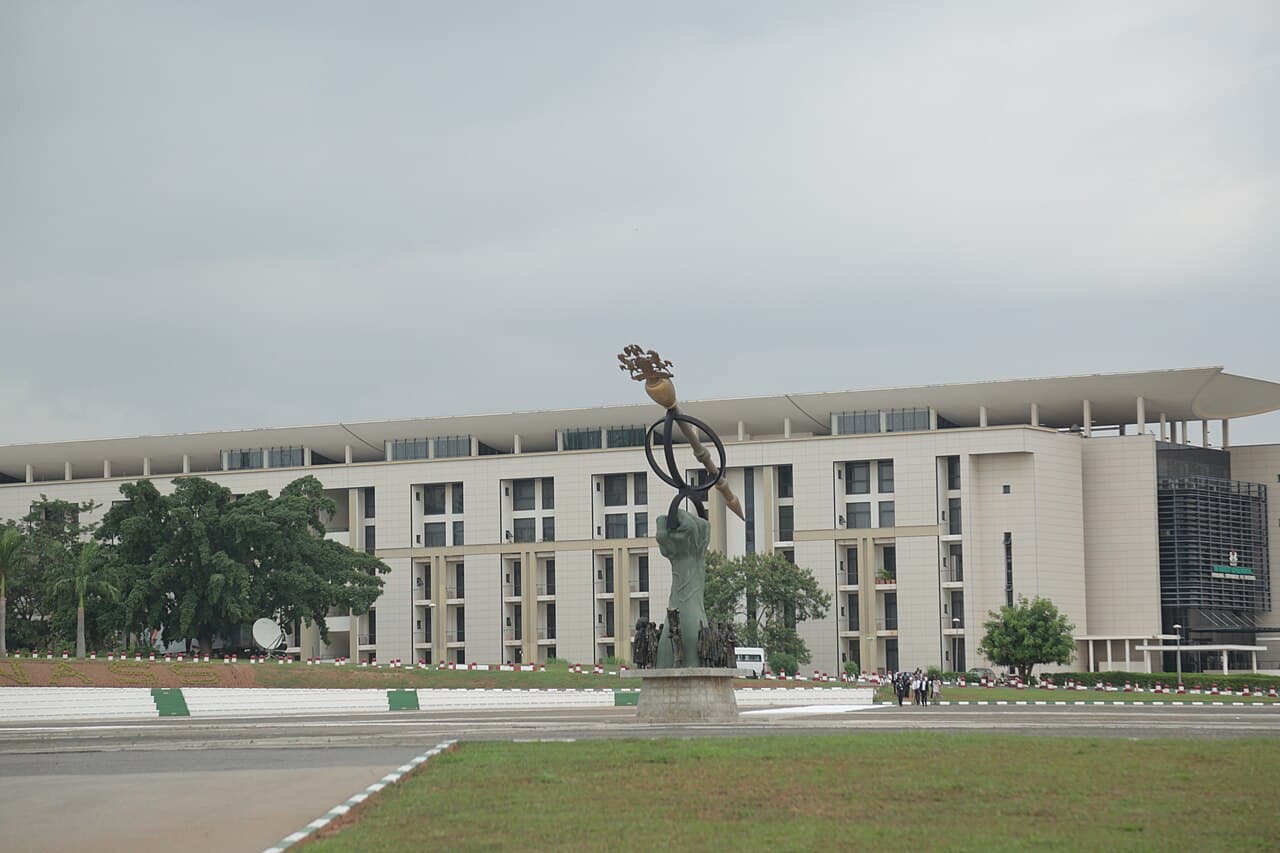
Olusegun Obasanjo became civilian president, ending nearly sixteen years of continuous military rule and almost three decades of military dominance since 1966.
Read story →Civilian rule resumes under PDP dominance
The PDP quickly became the dominant national party, controlling the presidency and many states.
Odi military operation in Bayelsa
After policemen were killed near Odi, federal troops entered the Bayelsa town.
Sharia expands in northern states
Several northern states expanded criminal Sharia law after the return to civilian rule.
State elections and three parties emerge
State-level elections revealed the PDP, AD, and APP as the main platforms of the transition.
National Assembly elections precede the presidential vote
National Assembly elections populated the institutions of civilian rule, but observers raised concerns about irregula…
Obasanjo wins the presidential election
Obasanjo of the PDP defeated Olu Falae, backed by AD/APP.
Governorship and state assembly elections are held
State-level elections selected governors and legislatures for the incoming civilian order.
Alliance for Democracy consolidates southwest strength
AD drew much of its support from the southwest and pro-June 12 political networks.
National Assembly elections precede the presidential vote
Nigerians elected senators and representatives before choosing the president.
PDP nominates Olusegun Obasanjo
The PDP chose former military ruler and recent Abacha-era prisoner Olusegun Obasanjo as its presidential candidate.
APP and AD back Olu Falae
The All People's Party and Alliance for Democracy supported Olu Falae as the main opposition presidential candidate.
Presidential election returns Obasanjo
Obasanjo won the presidential election against Falae.
Election irregularities are documented but do not stop handover
Carter Center and NDI observers reported flaws in the 1998-99 process, including administrative and fraud concerns.
Constitution is promulgated by military decree
The 1999 Constitution took effect through the outgoing military transition rather than a fully sovereign civilian con…
Thirty-six states and the FCT are entrenched constitutionally
The 1999 Constitution listed the thirty-six states created by successive military governments plus the Federal Capita…
Presidential federalism returns with strong executive powers
The 1999 Constitution restored a directly elected president, bicameral National Assembly, governors, and state assemb…
Military rule formally ends
Abdulsalami Abubakar handed power to Obasanjo, ending the 1983-1999 stretch of continuous military rule.
Niger Delta rights crisis carries into civilian rule
HRW's 1999 Price of Oil report documented continuing abuses, environmental grievances, and oil-company/state-security…
Constitution Promulgation Decree published
Military ruler Abdulsalami Abubakar promulgated the 1999 Constitution by Decree No. 24 ahead of the civilian handover.
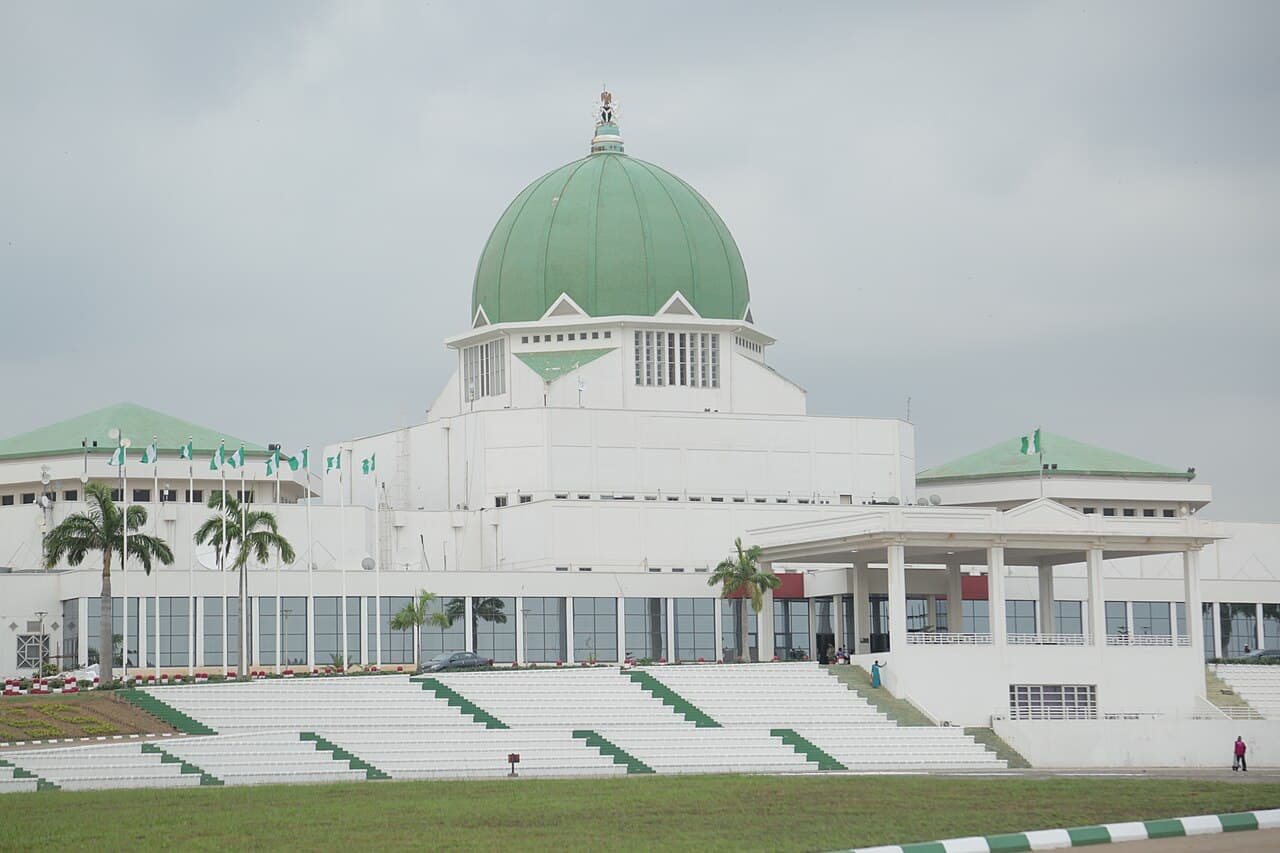
Olusegun Obasanjo was sworn in after the 1999 transition elections, and elected governors and legislatures took office.
Read story →INEC inherits a compressed transition election system
INEC conducted the 1998-1999 transition polls under heavy time pressure after the collapse of earlier military transi…
Odi military operation
Federal troops entered Odi in Bayelsa after police officers were killed, and rights groups documented civilian deaths…
Zamfara criminal sharia rollout
Zamfara enacted and implemented legislation extending sharia into criminal law.
1999 Constitution comes into force
The 1999 Constitution began with the handover to civilian rule on 29 May 1999.
Sharia implementation begins in Zamfara
Zamfara State expanded criminal Sharia after the return to civilian rule, and several northern states followed.
Odi military operation
Federal troops entered Odi in Bayelsa State after security personnel were killed.
Kaduna sharia riots
Debates over the adoption of sharia in Kaduna triggered major Muslim-Christian violence.
Niger Delta Development Commission is created
The Niger Delta Development Commission was established to address development deficits in oil-producing states.
Kaduna sharia violence
Kaduna's debate over sharia triggered large-scale Muslim-Christian violence.
Niger Delta Development Commission starts
The NDDC was created to address development gaps in oil-producing states.
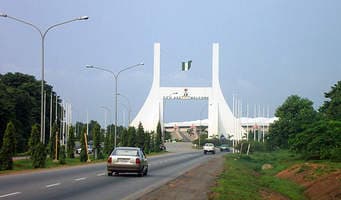
The new federal and state governments began operating under civilian budget politics after years of military allocation.
Read story →Independent Corrupt Practices Commission created
Nigeria established the ICPC under the Corrupt Practices and Other Related Offences Act.
Niger Delta Development Commission established
The NDDC was created to coordinate development projects in oil-producing Niger Delta states.
Universal Basic Education program begins
Nigeria launched UBE to expand free and compulsory basic education.
Danilo Djurovic
Ciba-Geigy representative; convicted in Geneva (December 2000) alongside Chagoury on Abacha-era money-laundering char…
GSM licenses and mobile telephony reshape society
The liberalization of telecommunications and GSM rollout transformed communication, business, media, banking, and pol…
Jos and Kaduna show the volatility of communal violence
Jos experienced deadly communal violence in September 2001, and Kaduna again saw major violence around the Miss World…
GSM auction concluded
The Nigerian Communications Commission auctioned digital mobile licences after years of limited fixed-line access.
Commercial GSM service begins
Operators including MTN and Econet launched commercial GSM services in Nigeria.
Jos crisis
Jos, Plateau State, saw deadly clashes tied to indigene-settler, religious, and political tensions.
Tiv-Jukun violence and Zaki Biam reprisals
Communal violence in Benue and Taraba was followed by military reprisals around Zaki Biam after soldiers were killed.
Political assassinations deepen election fears
High-profile killings, including that of justice minister Bola Ige in December 2001, fed fears about political violen…
Nigerian Communications Commission telecom licensing wave
GSM licensing and telecom liberalization expanded mobile access rapidly.
Jos crisis exposes communal-security fault lines
Major violence in Jos reflected conflicts over indigeneity, religion, political representation, and urban competition.
SAGEM S.A.
French company awarded controversial $214M National Identity Card contract in Nigeria 2001
Transparency International
Anti-corruption watchdog; Nigeria ranked 2nd-to-last in 2001 CPI, improved to 2.
Bakassi judgment and transfer
The International Court of Justice ruled on the Cameroon-Nigeria boundary in 2002, including sovereignty over Bakassi…
EFCC legal establishment begins
The EFCC was established by law in December 2002 before operations began in 2003.
Miss World riots in Kaduna
Violence around the Miss World pageant controversy showed how global media, religion, gender politics, and local grie…
ICJ rules on Bakassi
The International Court of Justice ruled on the Cameroon-Nigeria land and maritime boundary, including sovereignty ov…
Miss World riots in Kaduna
A newspaper article linked to the Miss World pageant sparked deadly violence in Kaduna.
EFCC Act passed
Nigeria established the Economic and Financial Crimes Commission to investigate financial crimes and money laundering.
Miss World riots in Kaduna
Violence erupted after controversy around Nigeria's planned hosting of Miss World.
Bakassi judgment at the International Court of Justice
The ICJ ruled on the land and maritime boundary dispute between Cameroon and Nigeria, including Bakassi.
Boko Haram / JAS (Jama'atu Ahlis Sunna Lidda'awati wal-Jihad)
Boko Haram (formally Jama'atu Ahlis Sunna Lidda'awati wal-Jihad / JAS) is a Salafi-jihadist insurgent group operating…
Olubukola Abubakar Saraki
Two-term Governor of Kwara State (2003-2011); 8th President of the Senate (2015-2019).
Economic and Financial Crimes Commission (EFCC)
Nigeria's primary anti-financial-crime agency, established 2002/enacted 2004; secured 250+ convictions 2003–2007
Jackson Gaius-Obaseki
Former NNPC Group Managing Director; RMAFC report indicated 445,000 barrels of crude oil and ₦302B shortfall not acco…
Musiliu Smith
Predecessor of Tafa Balogun as Inspector-General of Police; handed over the IGP role to Balogun in March 2002.
Robert Chidozie Mbonu
Former Managing Director of Société Générale Bank of Nigeria (family-controlled bank that collapsed 2006).
Obasanjo re-elected
Obasanjo won a second term in elections criticized by opponents and observers.
EFCC established
The Economic and Financial Crimes Commission was created under Obasanjo.
National Assembly elections held
Nigeria held legislative polls in the first re-election cycle of the Fourth Republic.
Obasanjo reelected president
INEC declared Olusegun Obasanjo winner of the presidential election.
State elections complete the 2003 cycle
Governorship and state assembly elections followed the federal polls.
National Economic Empowerment and Development Strategy drafted
The Obasanjo administration advanced NEEDS as a reform framework for macroeconomic stability, privatization, public-s…
NAPEP and poverty-reduction politics expand
Poverty reduction programs became a central civilian-government promise as reform language met mass unemployment and…
Niger Delta militancy escalates around oil bunkering and elections
Armed groups, oil theft networks, and political patrons intensified violence around Warri and other Delta areas.
EFCC established
The Economic and Financial Crimes Commission was established to investigate financial crimes and corruption.
Obasanjo reelection litigated
Opposition candidates challenged the 2003 presidential result after INEC declared President Obasanjo winner.
Aboubakar Hima ('Petit Boubé')
Niger-national arms broker known by the nickname 'Petit Boubé'; son-in-law of former Niger president Ibrahim Baré Maï…
Aminu Bello Masari
Two-term Governor of Katsina State (APC, 2015–2023), and ninth Speaker of the Federal House of Representatives (2003–…
Ayodele Fayose
Two-term Governor of Ekiti State (2003-2006, 2014-2018).
Dr. Chris Nwabueze Ngige
Dr. Chris Ngige, former Governor of Anambra State (2003-2006) and Federal Minister of Labour and Employment under Pre…
Danjuma Goje
Two-term Governor of Gombe State (2003-2011, PDP) arraigned by EFCC in October 2011, along with four others, on charg…
Ibrahim Idris
Civilian Governor of Kogi State 2003–2012 (PDP), a businessman ("Ibro") known for the Grand Ibro Hotels chain and oth…
Ibrahim Shekarau
Two-term governor of Kano (2003–2011) and later Minister of Education and Senator.
Nuhu Ribadu
Is the founding EFCC executive chairman (2003–2007), led 250+ financial crime convictions and recovered $5B+ in asset…
Dr. Olusegun Kokumo Agagu
No cases captured in current corpus — major research gap.
Dr. Rahman Olusegun Mimiko
Dr. Rahman Olusegun Mimiko, who served two terms as Governor of Ondo State (2009-2017) under the Labour Party before…
Pandora Papers
A journalistic disclosure event, not a corruption finding.
Universal Basic Education Commission (UBEC)
Federal agency administering basic education funding to states.
Vincent Ogbulafor
Former Chairman of the PDP (2008-2010) and former federal Minister.
Bank consolidation reforms
Central Bank reforms pushed banks to raise capital, leading to consolidation in the banking sector.
EFCC Act is re-enacted and strengthened
The 2002 EFCC Act was repealed and re-enacted to address legal weaknesses.
EFCC Act reenacted
The 2002 EFCC law was replaced by the Economic and Financial Crimes Commission Establishment Act 2004.
CBN announces bank consolidation
CBN Governor Charles Soludo announced a major recapitalization and consolidation program for banks.
State of emergency in Plateau
President Obasanjo declared emergency rule in Plateau after cycles of communal violence.
Yelwa-Shendam killings expose Plateau crisis
Violence around Yelwa and Shendam produced mass casualties and displacement.
Kano reprisal violence follows Plateau killings
Violence in Kano followed reports of killings of Muslims in Plateau.
Pension Reform Act creates contributory pension system
The Pension Reform Act introduced a contributory pension scheme and created the National Pension Commission.
NEEDS economic reform strategy published
The National Economic Empowerment and Development Strategy framed reforms on privatization, public finance, and pover…
Corruption Hunter Network
Norwegian-initiated global anti-corruption network, founded 2004; Ribadu was a member
Alhaji Mohammed Bulama
CEO of Bank of the North, is alleged to have used depositors' money for personal use and political financing; arreste…
Paris Club debt relief
Nigeria secured major debt relief from the Paris Club, creating fiscal space and becoming a signature Obasanjo-era ec…
Paris Club debt-relief agreement
Nigeria reached a landmark deal with Paris Club creditors involving debt cancellation and buyback.
Due process and public-procurement reform deepen
Federal procurement reform advanced through the Budget Monitoring and Price Intelligence Unit before the later Public…
MEND era begins in the Niger Delta
Militancy in the Niger Delta intensified, with groups later operating under the MEND label.
Paris Club debt relief agreement
Nigeria reached a major debt relief deal with the Paris Club after economic reforms and payments.
Extractive Industries Transparency Initiative lawmaking advances
Nigeria became an early EITI implementer and moved toward statutory backing for NEITI.
Akinsanya Doherty (also known as Akin Doherty)
Current Managing Director of Alpha-Beta Consulting LLP.
Emmanuel Nwude
Is alleged to have defrauded Brazil's Banco Noroeste of $240M posing as CBN governor; convicted November 2005 for mon…
Paris Club
Wrote off $18B of Nigeria's $30B debt in 2005, linked to reform progress
Prof. Maurice Iwu
Former Chairman of the Independent National Electoral Commission (2005-2010).
Tafa Balogun
Inspector General of Police, is alleged to have accumulated ~$150M from police budget diversions and bribes; convicte…
National census counts about 140.4 million people
Nigeria's 2006 census became the baseline for later demographic planning, projections, and political debate.
Third-term bid fails
Obasanjo's allies attempted constitutional changes that would have allowed a third presidential term, but the effort…
Greentree Agreement on Bakassi
Nigeria and Cameroon signed the Greentree Agreement to implement the ICJ ruling over Bakassi.
National census conducted
Nigeria conducted a national population census that produced an official count of about 140.4 million.
Third-term amendment defeated
A constitutional-amendment package associated with a possible third presidential term failed in the National Assembly.
Greentree Agreement signed
Nigeria and Cameroon signed the Greentree Agreement to implement the ICJ Bakassi ruling.
Excess Crude Account becomes a fiscal buffer
Nigeria used oil-price savings in the Excess Crude Account to smooth spending and support macroeconomic stability.
Nigeria Sovereign Investment Authority idea emerges from excess crude debates
Savings from oil revenues were contested through the Excess Crude Account before later sovereign-wealth legislation.
Charles Taylor arrested after flight from Calabar
Former Liberian president Charles Taylor, who had been in Nigerian exile, was arrested and transferred for internatio…
Census records population near 140 million
The 2006 census became Nigeria's official population baseline for planning, representation, and fiscal debates.
Otunba Christopher Adebayo Alao-Akala
Christopher Alao-Akala, PDP governor of Oyo State 2007–2011 (after taking office in January 2006 when his predecessor…
Femi Fani-Kayode
Former Minister of Aviation (2006-2007) and Director of Media for the 2014/2015 PDP Presidential Campaign.
Chief Michael Botmang
Chief Michael Botmang briefly served as Acting Governor of Plateau State from 13 November 2006 to 27 April 2007, betw…
Panama Papers
A journalistic disclosure event, not a corruption finding.
Peter Obi
Two-term Governor of Anambra State (March 2006 – March 2014, APGA), interrupted by a brief 2006–07 impeachment during…
Virginia Etiaba
Deputy Governor under Peter Obi who briefly served as Acting Governor of Anambra State (November 2006 – February 2007…
2007-2010
Humility after overreach. After Obasanjo's third-term controversy and the flawed 2007 election, Yar'Adua's political value was his softer style: rule of law, reform, and restraint. But he lacked time, health, and a clean mandate.
Yar'Adua's era is small in years but large in consequences. It is the era of a president trying to convert a flawed mandate into moral authority through rule of law, only to be overtaken by illness, bank crisis, Niger Delta conflict, and Boko Haram's transformation.
It is also the era where the constitution is stress-tested by presidential absence.
No landmark events from this presidency yet.
2010-2015
Inclusion and transformation. Jonathan's identity as a minority Niger Delta politician mattered because it symbolized access to the center by a region long defined by extraction and grievance. But his rise disrupted PDP zoning, and his presidency quickly became entangled in regional suspicion and security collapse.
Jonathan's era is the era of contradiction: a constitutional rescue that becomes an elected presidency; statistical economic rise beside mass insecurity; a state that contains Ebola but fails Chibok; a president accused of weakness who ends by making one of the strongest democratic gestures of the Fourth Republic.
Bombs exploded near Eagle Square during Nigeria's 50th independence anniversary celebrations.
Read story →Yar'Adua dies; Goodluck Jonathan becomes president
Yar'Adua's illness and death triggered a constitutional crisis resolved through the National Assembly's "doctrine of…
Doctrine of Necessity makes Jonathan acting president
The National Assembly invoked the Doctrine of Necessity to empower Jonathan as acting president.
Doctrine of Necessity makes Jonathan acting president
The National Assembly invoked the Doctrine of Necessity to empower Goodluck Jonathan as acting president.
Jos massacres around Dogo Nahawa
Villages near Jos, including Dogo Nahawa, suffered mass killings in renewed Plateau violence.
Yar'Adua dies in office
President Umaru Musa Yar'Adua died after months of illness and political uncertainty.
AMCON established
Nigeria created the Asset Management Corporation of Nigeria to buy non-performing loans and stabilize banks after the…
INEC leadership changes before 2011 polls
Attahiru Jega became INEC chairman after the 2007 credibility crisis.
Doctrine of Necessity makes Jonathan acting president
The National Assembly invoked a political-constitutional doctrine to empower Vice President Goodluck Jonathan while P…
AMCON established
The Asset Management Corporation of Nigeria was created to buy non-performing loans and stabilize the banking system.
Abacha Loot (multi-jurisdiction asset recovery)
The umbrella scandal cluster covering the alleged siphoning of Nigerian public funds during the Abacha dictatorship (…
Bhadresh Gohil
London solicitor; convicted 2010/2011 at Southwark Crown Court of money laundering for the Ibori cluster; sentenced t…
Christine Ibie-Ibori
Sister of James Ibori.
US DOJ Kleptocracy Asset Recovery Initiative
Initiative within the US Department of Justice that pursues forfeiture of assets traced to foreign-government corrupt…
Doraville Properties Corporation
BVI-incorporated shell company that held Abacha-family-linked funds in Jersey.
Justice Emmanuel Ayoola
Retired Justice of the Supreme Court of Nigeria and international jurist; served as ICPC Chairman until November 2010.
Enrico Monfrini
Swiss lawyer retained by President Obasanjo's government in mid-September 1999 to lead the multi-jurisdictional Abach…
Gilbert Chagoury
Lebanese-Nigerian billionaire described by Nuhu Ribadu as the 'gatekeeper to Abacha's presidency.
Jersey (Channel Islands) Law Officers' Department
Custodian of the Doraville Properties Corporation account that held Abacha-family-linked funds in Jersey.
Mohammed Sani Abacha
Son of General Sani Abacha.
Muhammed Bello Adoke
Former Attorney-General of the Federation and Minister of Justice (2010-2015).
Ngozi Okonjo-Iweala
Two-term Nigerian Finance Minister.
Patience Jonathan
Former First Lady (2010-2015), wife of President Goodluck Jonathan.
Patrick Ziadeke Akpobolokemi
Former Director-General of NIMASA (2010–2015) under President Jonathan.
Patrick Yakowa
Brief Governor of Kaduna State (May 2010 – December 2012, PDP), first Christian governor of Kaduna State (from Southe…
Swiss Federal Office of Justice
Swiss federal authority responsible for mutual legal assistance.
Theresa Ibori
Wife of James Ibori.
Udoamaka Onuigbo
Convicted 2010 alongside the Ibori family at Southwark Crown Court of money laundering; sentenced to 5 years.
Jonathan elected; post-election violence follows
Jonathan won the 2011 presidential election, which observers often rated better than 2007, but violence followed in p…
Nigeria Sovereign Investment Authority is established
The NSIA was established to manage Nigeria's sovereign wealth fund, with stabilization, infrastructure, and intergene…
UN House bombing in Abuja
A car bomb struck the United Nations House in Abuja, killing and injuring UN personnel and others.
Post-election violence kills hundreds
Human Rights Watch reported that violence after the April 2011 presidential election killed more than 800 people in n…
Fresh voter registration exercise
INEC conducted a new voter registration exercise before the 2011 elections.
National Assembly elections rescheduled after logistics failure
INEC postponed National Assembly voting on election day after materials failed to arrive in many areas.
Jonathan wins presidential election
Goodluck Jonathan won the presidential election against Muhammadu Buhari and other candidates.
Post-election violence in northern states
Violence followed the presidential result in several northern states.
UN building bombing in Abuja
A suicide attack struck the UN compound in Abuja.
Madalla Christmas bombing
A bomb attack struck St.
Sovereign wealth fund law creates NSIA
The Nigeria Sovereign Investment Authority was established to manage savings, stabilization, and infrastructure funds.
Jonathan election and post-election violence
Goodluck Jonathan won the 2011 presidential election, which many observers rated improved, but post-election violence…
Freedom of Information Act enacted
Nigeria enacted the FOI Act after years of advocacy by media and civil society groups.
Nigeria Centre for Disease Control formally established
NCDC was established to coordinate public-health surveillance and outbreak response.
Abdul'aziz Abubakar Yari
Two-term Governor of Zamfara State (2011–2019, ANPP/APC) and Chairman of the Nigerian Governors' Forum from 2015.
Umaru Tanko Al-Makura
Governor of Nasarawa State (CPC then APC, 2011–2019).
Alex Otti
Banker-turned-politician (Diamond Bank GMD 2011–2014); Governor of Abia State since 29 May 2023 on the Labour Party p…
Aminu Waziri Tambuwal
Two-term Governor of Sokoto State (2015–2023), former Speaker of the House of Representatives (2011–2015), now Senato…
Atlantic Energy
Energy company whose officers are alleged to have provided bribes and benefits to Diezani Alison-Madueke in exchange…
Farida Waziri
Former EFCC chairman (female), is noted as the source of 2011 statistics tables on convictions and recoveries
Haliru Mohammed Bello
Former PDP Deputy National Chairman; appointed Minister of Defence by President Jonathan in 2011 despite outstanding…
Hosea Agboola
Serving Senator and former Oyo State Commissioner for Local Government and Chieftaincy Matters.
Ibrahim Lamorde
Founding EFCC Director of Operations; appointed Acting Chairman in November 2011 to replace Farida Waziri.
Igho Sanomi
Oil executive whose company was awarded Nigerian state contracts 2011-2015.
Jide Omokore
Nigerian oil executive alleged to have provided bribes/benefits to Diezani 2011-2015.
Kashim Shettima Mustapha
Kashim Shettima Mustapha is the sitting Vice President of Nigeria, having been sworn in on 29 May 2023 alongside Pres…
Kolawole Aluko
Nigerian businessman alleged to have bankrolled Diezani's luxury spending 2011-2015, including £2m+ at Harrods, Londo…
Nigeria Sanctions Committee (NIGSAC)
Nigeria Sanctions Committee — the inter-agency body chaired by the Attorney-General of the Federation that operates N…
Olufemi Babalola
Owner of Pentagon Engineering Service, the vendor entity at the center of the Oyo State contract-conspiracy charges.
Patrick Abba Moro
Former Minister of the Interior (2011-2015).
SPOG Petrochemical
Petrochemical company whose officers are alleged to have provided bribes and benefits to Diezani Alison-Madueke in ex…
Stella Oduah
Former Minister of Aviation (2011-2014); resigned over the BMW procurement scandal.
Zamfara State 'baby on payroll' ghost-employee case
Public-sector payroll-fraud case in Zamfara State surfaced circa 2011 in which a newborn baby was placed on the state…
Occupy Nigeria protests fuel subsidy removal
Jonathan's attempt to remove fuel subsidy triggered nationwide protests and strikes.
Severe flooding exposes climate and emergency-management gaps
Nigeria suffered one of its worst flood disasters in decades.
Fuel subsidy removal triggers Occupy Nigeria
The Jonathan government removed petrol subsidy at the start of 2012, causing pump prices to surge.
Kano coordinated attacks
Coordinated Boko Haram attacks struck police and government targets in Kano.
Floods create national humanitarian emergency
Severe flooding affected many states, destroying homes, farms, and infrastructure.
Boko Haram abuses and security-force abuses documented together
Human Rights Watch's "Spiraling Violence" report documented Boko Haram attacks and abuses by Nigerian security forces.
Power-sector privatization reaches transaction phase
Nigeria advanced privatization of generation and distribution companies carved out of PHCN.
Occupy Nigeria protests against fuel subsidy removal
A fuel-price increase triggered mass protests, strikes, and online organizing across Nigeria.
Worst floods in decades affect millions
Severe flooding displaced large populations and damaged homes, farms, and infrastructure across many states.
Alex Sabundu Badeh
Air Chief Marshal and former Chief of Defence Staff (16 January 2014 – 13 July 2015) under President Jonathan; former…
Chagoury–Baaklini straw-donor scheme
Scheme in which Gilbert Chagoury funnelled approximately $180,000 to four US federal political candidates across thre…
Dauda Lawal Dare
Sitting Governor of Zamfara State since May 2023 (PDP); banker (former First Bank executive director, 2012–2014) and…
Farouk Lawan
Former House of Representatives member who chaired the 2012 fuel-subsidy probe panel.
Garba Umar
Alhaji Garba Umar is a Nigerian politician and businessman who served as Deputy Governor and **Acting Governor of Tar…
Haliru Bello Mohammed
Career civil servant; former Comptroller-General of the Nigerian Customs Service; Minister of Defence under President…
Seriake Henry Dickson
Seriake Henry Dickson was Governor of Bayelsa State from 14 February 2012 to 14 February 2020 (PDP), the first to ser…
Idris Wada
Third civilian Governor of Kogi State (January 2012 – January 2016), retired pilot and founder of EAS Airlines, elect…
Office of the National Security Adviser (ONSA)
Office attached to the Presidency that coordinates national-security policy.
Stephen Oransaye N2 billion Fraud Trial
Former Head of Civil Service of the Federation; led the 2012 Presidential Committee on the Restructuring and Rational…
State of emergency in Borno, Yobe, and Adamawa
Jonathan declared a state of emergency in Borno, Yobe, and Adamawa as Boko Haram violence escalated.
APC is registered
INEC registered the All Progressives Congress, a merger of major opposition forces.
Power-sector privatization handover
Nigeria handed over major PHCN successor generation and distribution companies to private investors.
State of emergency declared in Borno, Yobe, Adamawa
President Jonathan declared emergency rule in three northeastern states amid Boko Haram's insurgency.
Boko Haram targets schools in the northeast
Boko Haram attacks on schools, teachers, and students increased in Borno and neighboring states.
Power assets handed to private operators
The federal government completed handover of successor electricity companies to private owners after PHCN unbundling.
APC registered as opposition merger party
INEC registered the All Progressives Congress after a merger of major opposition parties.
Same Sex Marriage Prohibition Bill moves toward assent
The National Assembly passed legislation prohibiting same-sex marriage and related associations.
State of emergency in Borno, Yobe, and Adamawa
The federal government declared emergency rule in three northeastern states amid escalating Boko Haram violence.
Same-sex marriage prohibition bill advances
Nigeria's legislature passed a bill criminalizing same-sex marriage and related associations; it was signed in Januar…
Agbu Kefas
Agbu Kefas (b. Wukari, Taraba State [then Gongola State]) is a Nigerian politician and **retired Nigerian Army Lieute…
Elias Preko
Ghanaian former Goldman Sachs banker; convicted 2013 of money laundering for the Ibori cluster; sentenced to 4.
John Yakubu
Former civil servant at Ministry of Police Affairs.
U.S. State Department / National Counterterrorism Center (NCTC)
U.
Boko Haram abducted 276 schoolgirls from Chibok, drawing global attention to the insurgency and the vulnerability of children and schools.
Read story →GDP rebasing makes Nigeria Africa's largest economy on paper
Nigeria rebased GDP calculations to better capture sectors such as telecoms, services, and entertainment.
National Conference convenes
Jonathan inaugurated a National Conference to discuss constitutional, federal, political, and social questions.
Ebola contained in Nigeria
Nigeria contained an imported Ebola outbreak through rapid public health response.
GDP rebasing makes Nigeria Africa's largest economy
Nigeria rebased GDP from 1990 to 2010, adding sectors such as telecoms and entertainment more fully.
Boko Haram abducted 276 schoolgirls from Government Girls Secondary School, Chibok, Borno State.
Read story →Nyanya bus-station bombing
A bomb exploded at a crowded bus station in Nyanya, near Abuja.
Patrick Sawyer brings Ebola to Lagos
A traveler from Liberia arrived in Lagos with Ebola virus disease, triggering Nigeria's outbreak response.
Nigeria declared Ebola-free
WHO declared Nigeria free of Ebola transmission after 42 days without new cases.
Boko Haram seizes territory in the northeast
Boko Haram expanded territorial control in parts of Borno, Yobe, and Adamawa.
Boko Haram abducted schoolgirls from Chibok, Borno State, prompting national and global mobilization.
Read story →Nigeria contains Ebola outbreak
Nigeria detected imported Ebola cases and used contact tracing and emergency operations to stop transmission.
National Health Act enacted
The National Health Act provided a legal framework for health-system organization and basic health-care funding.
Acacia Holdings Limited
Shell company owned by former NNPC General Manager Aminu Baba-Kusa; co-defendant (3rd) in FCT/HC/CR/43/2015.
Andrew Yakubu
Former Group Managing Director of the NNPC (2014-2015).
Bashir Yuguda
Career diplomat and former Ambassador; appointed Minister of State for Finance under President Goodluck Jonathan in 2…
Bashir Yuguda and Others -N19.4 Billion Fraud Trial
Former Minister of State for Finance (2014-2015).
Jacob Bola Adigun
Air Vice Marshal and former Chief of Accounts and Budgeting in the Nigerian Air Force; co-defendant (2nd) in the FHC…
Jumoke Akinjide
Former Minister of State for FCT (2014-2015).
Mark Corallo
Former Trump-administration spokesperson; Chagoury's PR agent.
Musiliu Olatunde Obanikoro
Former PDP Senator and Nigerian High Commissioner to Ghana; appointed Minister of State for Defence under President J…
Shuaibu Salisu
Former Director of Finance and Administration in the Office of the National Security Adviser; operated a joint CBN ac…
Société d'Équipements Internationaux Nigeria Limited (SEI)
Nigeria-registered arms-procurement firm incorporated May 2014 (immediately after the Chibok schoolgirls' abduction)…
Sylvan McNamara Limited
Diamond Bank account held by a company whose principal signatory is Ibrahim Babajide Obanikoro — son of former Minist…
Willie Maduaburochukwu Obiano
Two-term Governor of Anambra State under the All Progressives Grand Alliance (APGA), March 2014 to March 2022.
2015-2023
Order. Many voters accepted his austere image because they wanted corruption punished, Boko Haram defeated, and government made serious. The problem: order without trust becomes coercion. That is the arc from anti-corruption hope to Lekki and the Twitter ban.
Buhari's era begins with "change" and ends with exhaustion. The first opposition victory raised expectations of discipline, anti-corruption, and security. Instead, the period became defined by recession, repeated school abductions, farmer-herder violence, banditry, #EndSARS, COVID, Twitter ban, ASUU shutdown, naira redesign, and a deepening youth distrust of the state.
A group of Chibok schoolgirls was released after negotiations involving the government and intermediaries.
Read story →Buhari defeats Jonathan
Muhammadu Buhari defeated Goodluck Jonathan, marking the first opposition presidential victory and peaceful transfer…
Jonathan concedes before full escalation
Jonathan called Buhari to concede, helping prevent a dangerous post-election crisis.
Treasury Single Account implemented
The Buhari administration directed federal MDAs to consolidate revenues into the Treasury Single Account at the CBN.
Election postponed for security operations
INEC postponed the 2015 general elections from February to March and April after security agencies said they could no…
Card readers used in presidential election
INEC deployed permanent voter cards and smart card readers for accreditation in the 2015 elections.
Jonathan concedes to Buhari
Goodluck Jonathan conceded defeat to Muhammadu Buhari before final tensions escalated.
Buhari inaugurated
Muhammadu Buhari took office with promises to fight corruption, defeat Boko Haram, and repair the economy.
Treasury Single Account enforced
The Buhari administration enforced the Treasury Single Account to consolidate federal revenues in central accounts.
Zaria clashes and Shi'a movement crackdown
Nigerian soldiers clashed with members of the Islamic Movement in Nigeria in Zaria.
Nigerian military recaptures several Boko Haram-held towns
Nigerian and regional forces retook several towns from Boko Haram before and after the 2015 elections.
IDP crisis grows in the northeast
Boko Haram violence displaced millions across Borno, Yobe, Adamawa, and neighboring countries.
Buhari wins first opposition presidential transfer
Muhammadu Buhari defeated incumbent Goodluck Jonathan in the 2015 presidential election.
Treasury Single Account implementation expands
The Buhari administration enforced the Treasury Single Account to consolidate federal government revenues.
Nigerian Cybercrime Act enacted
The Cybercrimes Act created offenses and powers for cybercrime enforcement.
Aminu Baba-Kusa
Former General Manager / Executive Director at the Nigerian National Petroleum Corporation.
Abubakar Atiku Bagudu
Currently serves as Minister of Budget and Economic Planning in the Tinubu federal cabinet (appointed August 2023).
Babachir Lawal
Former Secretary to the Government of the Federation (2015-2017); fired by President Buhari following the ₦544.
Mohammed Badaru Abubakar
Two-term APC Governor of Jigawa (2015–2023) and currently Federal Minister of Defence in the Tinubu cabinet (since Au…
Dalhatu Investment Limited
Family company linked to former Sokoto Governor Attahiru Bafarawa and his son Sagir.
Vice Admiral Ibok-Ete Ekwe Ibas
Vice Admiral Ibok-Ete Ibas (retd.) was appointed Sole Administrator of Rivers State on 18 March 2025 by President Tin…
Jonathan Laidlaw KC
Lead defence counsel (King's Counsel) for Diezani Alison-Madueke.
Mrs. Winifred Oyo-Ita
Former Head of the Civil Service of the Federation (2015-2017); resigned after EFCC investigation.
Okezie Ikpeazu
Two-term PDP Governor of Abia State (2015–2023), succeeded by Alex Otti.
Reliance Referral Hospital Limited
Company in which the wife of former NNPC GM Aminu Baba-Kusa is a major shareholder; co-defendant (4th) in FCT/HC/CR/4…
Sagir Attahiru Bafarawa
Son of former Sokoto Governor Attahiru Bafarawa and a director of the family-controlled Dalhatu Investment Ltd.
Tower Assets Management Limited
8th defendant in N29 billion Adamawa fraud case.
Uba Sani
Sitting Governor of Kaduna State (May 2023 – Present, APC), and former Senator for Kaduna Central (2019–2023).
Nigeria enters recession
Nigeria entered recession amid oil price collapse, foreign exchange stress, and policy constraints.
Niger Delta Avengers attack oil infrastructure
The Niger Delta Avengers emerged as a major militant threat, attacking pipelines and reducing oil production.
Farmer-herder violence escalates
Amnesty International reported at least 3,641 deaths from farmer-herder clashes between January 2016 and October 2018…
Nigeria enters recession
Oil-price shocks, production disruptions, and foreign-exchange restrictions pushed Nigeria into recession.
Flexible exchange-rate policy announced
The CBN announced a more flexible foreign-exchange framework after pressure on the naira and dollar shortages.
Niger Delta Avengers attack oil infrastructure
The Niger Delta Avengers and related groups attacked pipelines and export facilities.
Social Investment Programme begins
The federal government launched social-investment programs including N-Power, school feeding, conditional cash transf…
Nigeria enters recession after oil-price shock
Low oil prices, foreign-exchange stress, and production disruptions pushed Nigeria into recession.
Niger Delta Avengers attacks disrupt oil output
Militants attacked pipelines and oil infrastructure in the Niger Delta.
Zaria/Shi'a rights crisis scrutinized
Rights groups investigated the aftermath of the 2015 Zaria clashes between soldiers and the Islamic Movement in Nigeria.
Daniel Obah
Named staff member of the Federal Ministry of Niger Delta Affairs.
Senator Gabriel Torwua Suswam
Senator Gabriel Torwua Suswam (born 15 November 1964, Anyiin, Logo Local Government Area, Benue State) is a Nigerian…
Gbadebo Owodunni Olugbenga
Air Commodore and former Director of Finance and Budget of the Nigerian Air Force; 3rd defendant in FHC Lagos case FH…
Gbenga Makanjuola
Deputy Chief of Staff to Senate President Bukola Saraki.
Heineken Lokpobiri
Former Senator (Bayelsa West 2007-2015); appointed Minister of State for Petroleum (Oil) August 2023.
Islamic State West Africa Province (ISWAP)
Islamic State West Africa Province (ISWAP) is the IS-aligned faction that split from Boko Haram/JAS in August 2016, w…
Kolawole Shittu
Cashier in the Senate President's office under Bukola Saraki.
Mangset Longyl Dickson
Named staff member of the Federal Ministry of Niger Delta Affairs.
Melrose General Services Limited
Shell company registered as alleged conduit for Paris Club refund diversion.
Ronald Chagoury Jr.
Son of Gilbert Chagoury.
Seyi Tinubu
Son of President Bola Tinubu.
Simbi Wabote
Former Executive Secretary, Nigerian Content Development and Monitoring Board (2016-2023).
Yomi Arowosafe
USPF Secretary named in SERAP's May 9, 2026 letter as party responsible for oversight and administration of fund; all…
Economic Recovery and Growth Plan launched
The Buhari administration launched the Economic Recovery and Growth Plan for 2017-2020 after the recession.
Another group of Chibok schoolgirls was released in a negotiated exchange.
Read story →Not Too Young To Run campaign peaks
Youth-led advocacy pushed constitutional age-reduction amendments for elective offices.
Farmer-herder killings intensify in Middle Belt
Violence involving farming communities, herders, armed groups, and reprisals escalated in Benue, Plateau, Kaduna, and…
Not Too Young To Run campaign wins constitutional amendment
Youth-led advocacy reduced age requirements for several elective offices through constitutional amendment.
Nigeria issues diaspora bond
Nigeria raised funds from the diaspora through an international bond.
Whistleblower policy and Ikoyi cash discovery
Nigeria's whistleblower policy encouraged reports of hidden public funds, including a major cash recovery in an Ikoyi…
Abdullahi Maina
Acting Chairman Pension Reform Task Force, is alleged to have mismanaged ₦21B+ in Police Pension Office funds; fled,…
Blue Opal Limited
5th defendant in N29 billion Adamawa fraud case; formed 50/50 partnership between Blue Ribbon Multilinks Limited (Abd…
Senator Ibikunle Amosun
In March 2019 the EFCC announced it had set up investigative teams to probe Amosun and three other outgoing APC gover…
Sheriff Oborevwori
Rt Hon Sheriff Francis Orohwedor Oborevwori has served as the 5th elected Governor of Delta State since 29 May 2023 (…
World Bank
International financial institution overseeing monitoring agreements for Abacha-fund tranche disbursements (notably t…
Not Too Young To Run signed
Buhari signed the constitutional amendment popularly known as Not Too Young To Run, reducing age requirements for ele…
The Buhari government recognized June 12 as Democracy Day and honored M.K.O.
Read story →Dapchi schoolgirls abducted
Boko Haram abducted schoolgirls from Government Girls Science and Technical College in Dapchi, Yobe State.
Leah Sharibu becomes a symbol of unresolved captivity
Leah Sharibu, one of the Dapchi students, remained in captivity after other students were released, according to righ…
Dapchi schoolgirls abducted
Boko Haram factional fighters abducted schoolgirls from Government Girls Science and Technical College, Dapchi, Yobe…
Not Too Young To Run Act signed
President Buhari signed the constitutional amendment reducing age requirements for several elective offices.
Buhari recognized June 12, the date of the annulled 1993 election, as Democracy Day and honored MKO Abiola.
Read story →Executive Order 6 targets suspicious assets
The Buhari administration issued Executive Order 6 on preservation of assets connected with corruption investigations.
Amnesty documents farmer-herder failures
Amnesty International reported that security-force failures worsened farmer-herder violence.
Electoral Act amendment disputes ahead of 2019 polls
Proposed Electoral Act amendments, including sequencing and technology issues, became politically contentious before…
Farmer-herder violence escalates in Middle Belt
Conflicts involving farming communities, herders, armed groups, and reprisal attacks intensified in several states.
Nigeria Data Protection Regulation issued
The National Information Technology Development Agency issued NDPR to regulate personal-data processing.
Dr. Abdullahi Umar Ganduje
Dr. Abdullahi Umar Ganduje, born in 1949 in Ganduje village, Dawakin Tofa Local Government Area of Kano State, served…
Bond Bank Limited
Nigerian bank investigated for asset concealment in the Balogun case; the bank's MD testified about asset concealment…
Crust Energy Limited
9th defendant in N29 billion Adamawa fraud case.
Dapo Apara
Former Managing Director and 30 percent partner in Alpha-Beta Consulting LLP.
Obiora Amobi
Operations Manager of Melrose General Services Limited.
Orji Uzor Kalu
Former Abia State Governor Orji Uzor Kalu was convicted by the Federal High Court Lagos on 5 December 2019 on a 39-co…
Paul Usoro
Former President of the Nigerian Bar Association (2018-2020).
Rotimi Amaechi
Rotimi Amaechi served as Speaker of the Rivers House of Assembly (1999-2007), two-term Governor of Rivers State (2007…
Buhari re-elected
Buhari won a second term against Atiku Abubakar.
Buhari wins reelection with low-turnout concerns
INEC's official result gave Buhari 15,191,847 votes to Atiku Abubakar's 11,262,978.
Legislation made June 12 Nigeria's Democracy Day, replacing May 29 as the official symbolic commemoration.
Read story →INEC postpones elections hours before voting
INEC postponed the 2019 general elections on the morning voting was due to begin, citing logistics and operational ch…
Buhari reelected
INEC declared Buhari winner over Atiku Abubakar.
Supreme Court upholds Buhari's reelection
Nigeria's courts rejected Atiku Abubakar's challenge to Buhari's 2019 victory.
Finance Act revives annual fiscal-law reform
Nigeria enacted a Finance Act linked to the federal budget cycle, changing tax and fiscal provisions.
Closure of land borders
Nigeria closed land borders to curb smuggling and encourage local production.
Islamic Movement protests and state response
IMN protests for Ibrahim El-Zakzaky's release were met with force, arrests, and restrictions.
Buhari reelection upheld by Supreme Court
Atiku Abubakar and the PDP challenged the 2019 presidential election result.
African Continental Free Trade Area signed by Nigeria
Nigeria signed the AfCFTA agreement after domestic consultations.
Finance Act revives annual tax reform cycle
Nigeria enacted a Finance Act to amend tax and fiscal laws alongside the budget.
Senator Isiaka Abiola Adeyemi Ajimobi
After Ajimobi left office in May 2019, his successor Seyi Makinde formally requested the EFCC and ICPC to probe him o…
Babajide Sanwo-Olu
Babajide Sanwo-Olu — office-holder linked to Lagos State; promoted from per-state audit for network legibility.
Dr. Bello Mohammed Matawalle
Dr. Bello Mohammed Matawalle, who governed Zamfara State from May 2019 to May 2023 (defecting from PDP to APC in mid-…
Bob Oshodin Organisation Limited
Benin City-based furniture-manufacturing company owned by the Oshodin family; co-defendant in FHC/ABJ/CR/114/2019.
Douye Diri
Senator Douye Diri has served as the 12th Governor of Bayelsa State since 14 February 2020 (PDP), sworn in after the…
Isabella Mimie Oshodin
Lagos-based businesswoman married to Robert Oshodin; arraigned by EFCC alongside Bob Oshodin Organisation Ltd in 2019…
Nasiru Haladu Danu
APC chieftain and public works contractor.
Olusegun Obasanjo
Olusegun Obasanjo is one of the most consequential and most controversial figures in Nigerian political history, havi…
Security forces shot at protesters at Lekki Toll Gate, according to rights groups and later panel findings.
Read story →COVID-19 pandemic stresses health, livelihoods, and trust
Nigeria faced the COVID-19 pandemic amid weak health systems, lockdown burdens, and economic disruption.
Nigeria confirms first COVID-19 case
NCDC announced Nigeria's first confirmed COVID-19 case on 27 February 2020.
COVID shock pushes Nigeria into another recession
The pandemic and oil shock drove Nigeria into a second recession within five years.
CAMA 2020 signed
The Companies and Allied Matters Act 2020 replaced the 1990 framework and introduced business-registration and govern…
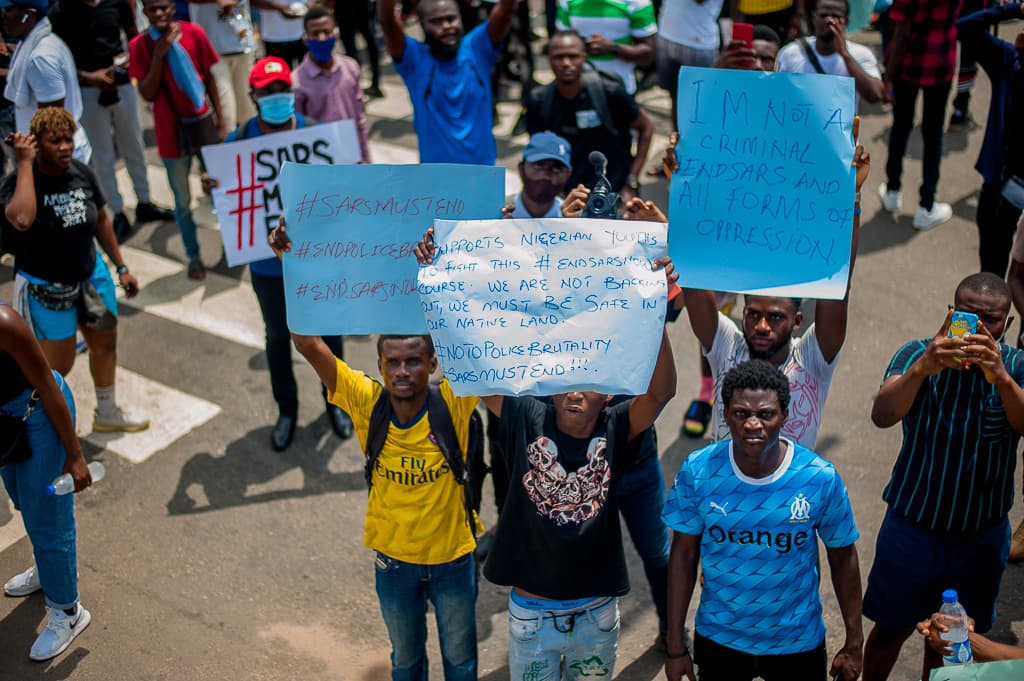
Amnesty's investigation into Lekki became one of the major evidence references for the #EndSARS crackdown.
Read story →Kankara schoolboys abducted in Katsina
Gunmen abducted students from Government Science Secondary School in Kankara, Katsina State.
Nigeria confirms first COVID-19 case
Nigeria confirmed its first COVID-19 case in Lagos, an imported case from Italy.
COVID lockdowns in Lagos, Ogun, and FCT
The federal government imposed lockdowns on Lagos, Ogun, and the FCT as COVID-19 spread.
IMF approves emergency COVID financing
The IMF approved emergency financing for Nigeria under the Rapid Financing Instrument.
Schools close nationwide over COVID-19
COVID-19 restrictions closed schools and disrupted learning for millions of children.
Security forces opened fire during the #EndSARS protest at Lekki Toll Gate in Lagos.
Read story →Kankara schoolboys abducted
Armed men abducted hundreds of boys from Government Science Secondary School, Kankara, Katsina State.
Nigeria enters second recession in five years
COVID-19 and oil-price shocks pushed Nigeria back into recession.
COVID-19 index case and national response
Nigeria confirmed its first COVID-19 case in February 2020 and activated national public-health measures.
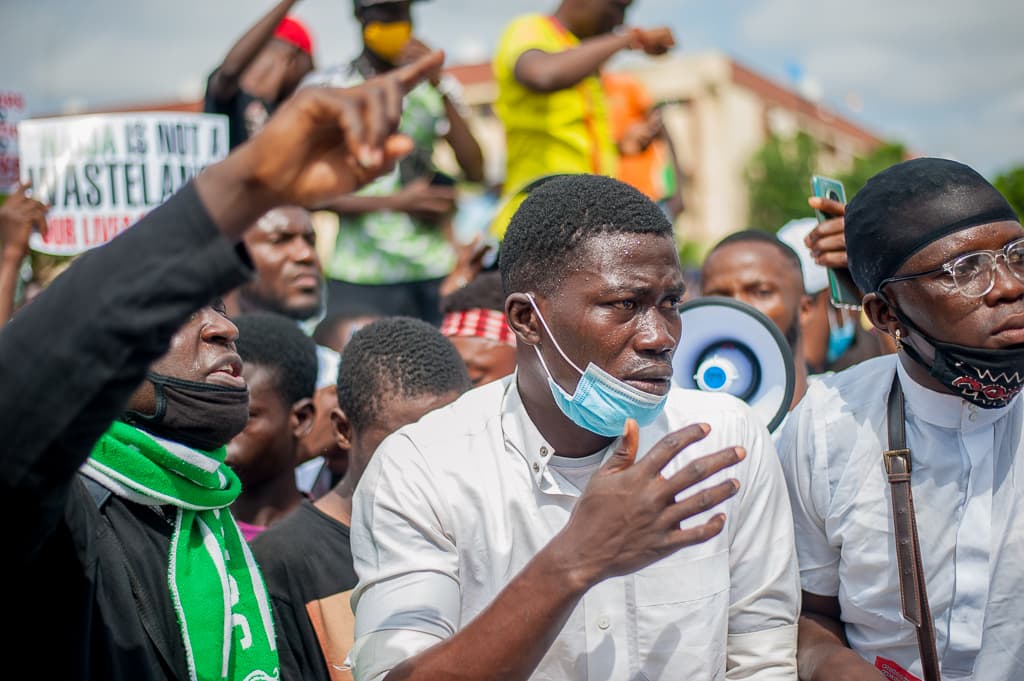
Security forces opened fire during #EndSARS demonstrations at Lekki Toll Gate, according to investigations and rights reports.
Read story →Companies and Allied Matters Act updated
The 2020 CAMA modernized company regulation, insolvency rules, and beneficial ownership provisions.
United States returns Abacha-linked assets for infrastructure
The United States and Jersey repatriated recovered Abacha-linked assets to Nigeria for agreed public projects.
Akinwunmi Ambode
Akinwunmi Ambode served as Governor of Lagos State from 29 May 2015 to 29 May 2019 on the platform of the All Progres…
Corporate Affairs Commission (CAC)
Corporate Affairs Commission — Nigeria's federal company registrar, established by the Companies and Allied Matters A…
Kemebradikumo Pondei
Acting Managing Director of Niger Delta Development Commission (NDDC) appointed February 2020 by President Buhari.
Federal government suspends Twitter
Nigeria announced an indefinite suspension of Twitter after the platform removed a post by President Buhari.
Petroleum Industry Act signed
Nigeria enacted the Petroleum Industry Act after years of delayed oil-sector reform.
eNaira launched
The CBN launched the eNaira, Nigeria's central bank digital currency.
Banditry and mass school abductions expand insecurity
Armed groups in the northwest and north-central regions intensified kidnappings, village attacks, and school abductions.
Kagara school abduction in Niger State
Gunmen attacked Government Science College Kagara, abducting students, staff, and others, according to rights reporting.
Jangebe schoolgirls abducted in Zamfara
Days after Kagara, gunmen abducted hundreds of girls from a government secondary school in Jangebe, Zamfara State.
Bethel Baptist students abducted in Kaduna
The Bethel Baptist High School abduction became part of the wider 2021 wave of school kidnappings.
Safe Schools promise meets repeated attacks
Nigeria is a signatory to the Safe Schools Declaration, but repeated abductions showed a gap between commitment and p…
Kagara students abducted
Armed men abducted students and staff from Government Science College, Kagara, Niger State.
Jangebe schoolgirls abducted
Armed men abducted schoolgirls from Government Girls Secondary School, Jangebe, Zamfara State.
Twitter suspended in Nigeria
The federal government suspended Twitter after the platform deleted a post from President Buhari.
Electoral Act amendment debates intensify over e-transmission
National debate focused on electronic transmission of results, party primaries, and INEC powers.
Petroleum Industry Act signed
President Buhari signed the Petroleum Industry Act after decades of failed reform attempts.
eNaira launched
The CBN launched the eNaira as a central bank digital currency.
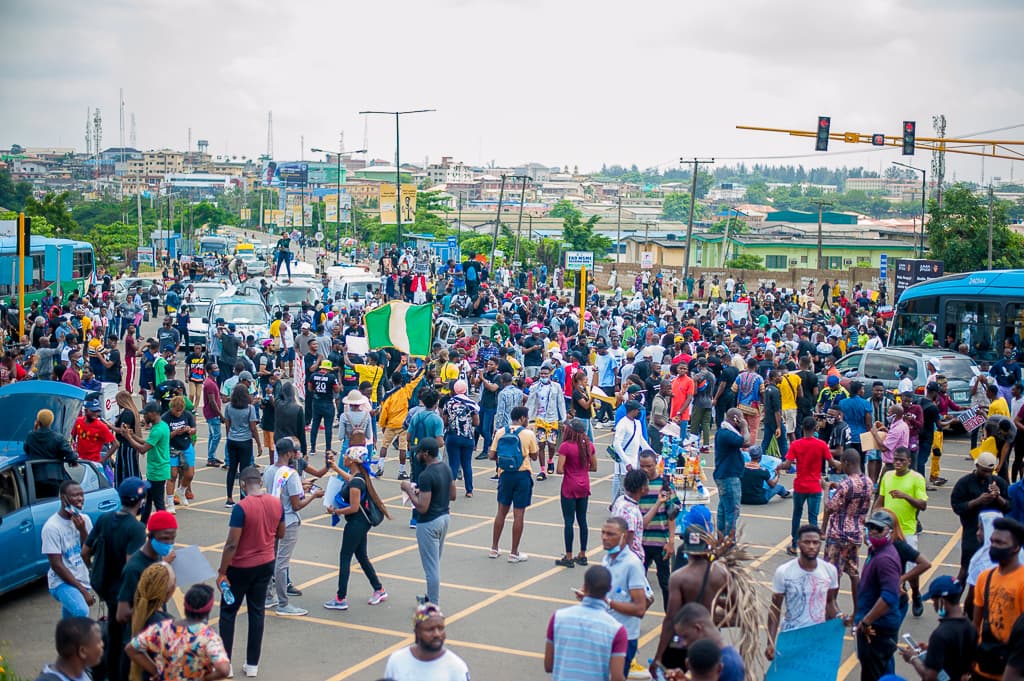
The Lagos judicial panel submitted findings on police abuses and the Lekki shooting.
Read story →Banditry designations and northwest security crisis
Armed groups in the northwest carried out mass kidnappings, village raids, and extortion.
Twitter ban after presidential tweet removal
Nigeria suspended Twitter operations after the platform removed a presidential post.
Petroleum Industry Act enacted
The Petroleum Industry Act overhauled oil and gas governance after years of legislative delay.
eNaira launched
The Central Bank of Nigeria launched the eNaira as a central bank digital currency.
COVID-19 vaccine rollout begins
Nigeria began administering COVID-19 vaccines through COVAX-supported and national channels.
Abayomi Kukoyi
HEDA 2021 Compendium case #84 (p.48): Abayomi Kukoyi & 3 Others - €2.556 Billion Fraud Trial.
Abba Yusuf
HEDA 2021 Compendium case #97 (p.52): Abba Yusuf - N118.3 Million Fraud Trial.
Abdulrasheed Bawa (EFCC Chairman)
Became EFCC Chairman in 2021.
Abdurrahman Ado Musa
Abdurrahman Ado Musa is identified by the Nigeria Sanctions Committee (NIGSAC) and the U.S. Department of the Treasur…
Abidemi Rufai
HEDA 2021 Compendium case #4 (p.13): Abidemi Rufai - $350,000 Fraud Trial.
Abiodun Waheed Hassan
HEDA 2021 Compendium case #60 (p.39): Abiodun Waheed Hassan - N26 Billion PHCN Pension Fraud Trial.
Abubakar Aliyu
4th defendant in EFCC N29 billion fraud case against Murtala Nyako.
Adamu Mustapha Danze
HEDA 2021 Compendium case #59 (p.39): Adamu Mustapha Danze – N10 Million Trial.
Adesola Amosu
HEDA 2021 Compendium case #12 (p.17): Adesola Amosu - N21.4 Billion Fraud Trial.
Ahmadu Umar Fintiri
HEDA 2021 Compendium case #50 (p.35): Ahmadu Umar Fintiri & 1 other- N2.9 billion Scam.
Aishatu Bandado Magaji
HEDA 2021 Compendium case #13 (p.17): Aishatu Bandado Magaji - N1.3 billion Illicit Proceeds Trial.
Ali Modu Sheriff
Senator Ali Modu Sheriff served as Governor of Borno State from May 2003 to May 2011 under the All Nigeria Peoples Pa…
Bashir Ali Yusuf
Bashir Ali Yusuf is identified by the Nigeria Sanctions Committee (NIGSAC) and the U.S. Department of the Treasury Of…
Bayo Somefun
HEDA 2021 Compendium case #24 (p.23): Bayo Somefun - N3.4 billion NSITF Scam.
Bello Hairu, Son & others
HEDA 2021 Compendium case #61 (p.39): Bello Hairu, Son & others - N300 Million Corruption Trial.
Benjamin Dikki
HEDA 2021 Compendium case #29 (p.26): Benjamin Dikki - N26bn Corruption Trial.
Cecilia Osipitan
HEDA 2021 Compendium case #95 (p.51): Cecilia Osipitan - N6 Billion Fraud Trial.
Dr. Abdu Bulama
HEDA 2021 Compendium case #31 (p.26): Dr. Abdu Bulama & 4 others - Fund Misappropriation Trial.
Dr. Doyin Okupe
HEDA 2021 Compendium case #20 (p.21): Dr. Doyin Okupe - N702 Million Money Laundering Trial.
Dr. Ebisintei Awudu
HEDA 2021 Compendium case #17 (p.19): Dr. Ebisintei Awudu - N2.8 billion Fraud Trial.
Dr. Olufemi Martins Thomas and Kabiru Sidi
HEDA 2021 Compendium case #65 (p.41): Dr. Olufemi Martins Thomas and Kabiru Sidi - $2.2 Million Fraud Trial.
Dr. Reuben Olu Obaro & Mrs. Ayodele Obaro
HEDA 2021 Compendium case #76 (p.45): Dr. Reuben Olu Obaro & Mrs. Ayodele Obaro – N233. 6 Million Fraud Trial.
Dr. Saadu Alanamu
HEDA 2021 Compendium case #82 (p.48): Dr. Saadu Alanamu- N182 Million Fraud and N5 Million Bribery Case.
Embelakpo Apere and wife–N200 Million Fraud Trial
HEDA 2021 Compendium case #100 (p.53): Embelakpo Apere and wife–N200 Million Fraud Trial.
Emmanuela Eteta Ita
HEDA 2021 Compendium case #72 (p.43): Emmanuela Eteta Ita - N145.8 Million Fraud Trial.
Fatimah Yusuf
HEDA 2021 Compendium case #66 (p.41): Fatimah Yusuf & 2 Others– N100 Million Fraud Trial.
Gbadegun Isaiah Abiodun
HEDA 2021 Compendium case #77 (p.46): Gbadegun Isaiah Abiodun & 2 Others - N177.3 Million Fraud Trial.
George Ali
HEDA 2021 Compendium case #90 (p.51): George Ali & 3 others – N66 Million Fraud Trial.
Haruna Momoh
HEDA 2021 Compendium case #45 (p.33): Haruna Momoh - $700 Million Fraud Trial.
Hassana Moyi
HEDA 2021 Compendium case #25 (p.23): Hassana Moyi - N553,985,624.10 Misappropriation.
Ibrahim Abdulsalam
HEDA 2021 Compendium case #75 (p.45): Ibrahim Abdulsalam - N2.8 Billion Fraud Trial.
Ibrahim Ali Alhassan
Ibrahim Ali Alhassan is identified by the Nigeria Sanctions Committee (NIGSAC) and the U.S. Department of the Treasur…
Ibrahim Mohammed Umar
HEDA 2021 Compendium case #51 (p.35): Ibrahim Mohammed Umar - N362 Million Fraud Trial.
Ihedi Ohakim
HEDA 2021 Compendium case #37 (p.29): Ihedi Ohakim - $2.2 Million Money Laundering Trial.
Imam Aminu
HEDA 2021 Compendium case #38 (p.29): Imam Aminu - Certificate Forgery Trial.
Chief James Onanefe Ibori
Chief James Onanefe Ibori, who governed Delta State from 29 May 1999 to 29 May 2007, sits at the centre of what UK pr…
Jedua Ahmed Dawud& 3 Others
HEDA 2021 Compendium case #79 (p.46): Jedua Ahmed Dawud& 3 Others - N104.2Million Fraud Trial.
Jennifer Timinipre Turnah
HEDA 2021 Compendium case #64 (p.40): Jennifer Timinipre Turnah - N2.9 Million Fraud Trial.
Joseph Arsan
Physician and personal assistant to Gilbert Chagoury; co-respondent in the 2019-2021 US DOJ DPA on the conduit-contri…
Kabiru Tanimu Turaki, SAN
HEDA 2021 Compendium case #80 (p.47): Kabiru Tanimu Turaki, SAN - N714. 6 Million Fraud Trial.
Kayode Odukayo -Forgery and Corruption Trial
HEDA 2021 Compendium case #46 (p.33): Kayode Odukayo -Forgery and Corruption Trial.
Loko Tersoo Joseph & Others
HEDA 2021 Compendium case #58 (p.38): Loko Tersoo Joseph & Others – N500 Million Fraud Trial.
General Lucky Irabor (Rtd)
General Lucky Eluonye Onyenuchea Irabor (Rtd) is a retired Nigerian Army general who served as Chief of Defence Staff…
Lukumanu Sani Waziri
Subject of ICPC final forfeiture order under suit FHC/ABJ/CS/276/2021.
Mohammed Wakil -N118 Million Bribery Trial
HEDA 2021 Compendium case #48 (p.34): Mohammed Wakil -N118 Million Bribery Trial.
Mr Chima Igwe
HEDA 2021 Compendium case #34 (p.28): Mr Chima Igwe - Certificate Forgery.
Mr. Gimba Kumo
HEDA 2021 Compendium case #36 (p.29): Mr. Gimba Kumo - $65 million Fraud Scandal.
Mrs. Grace Taiga
HEDA 2021 Compendium case #41 (p.31): Mrs. Grace Taiga - $ 5,000 Fraud Trial.
Muhammed Ibrahim Isa
Muhammed Ibrahim Isa is identified by the Nigeria Sanctions Committee (NIGSAC) and the U.S. Department of the Treasur…
Muhammed Kuzachi
HEDA 2021 Compendium case #26 (p.24): Muhammed Kuzachi - Complicit in $9.6 Billion P&ID award.
Mukhtar Ishaq Yakasai
HEDA 2021 Compendium case #55 (p.37): Mukhtar Ishaq Yakasai- N86 Million Corruption Case.
Ngozi Olejeme
HEDA 2021 Compendium case #33 (p.27): Ngozi Olejeme - N69 Billion NSITF Fraud Trial.
Nigeria asset-recovery disbursement gap (2021–2022 ledger)
Aggregate departmental ledger from EFCC's Proceed of Crime (Asset Recovery & Management) Department shows a structura…
Okoi Obono-Obla and 2 others
HEDA 2021 Compendium case #40 (p.30): Okoi Obono-Obla and 2 others - N10.1 Milli Fraud Trial.
Olatunji Oyeyemi Moronfoye
HEDA 2021 Compendium case #32 (p.27): Olatunji Oyeyemi Moronfoye - N371m Contract Scam Trial.
Ope Saraki N220 Million Contract Scam
HEDA 2021 Compendium case #96 (p.52): Ope Saraki N220 Million Contract Scam.
Osagie Ize-Iyamu
HEDA 2021 Compendium case #23 (p.22): Osagie Ize-Iyamu - N700 Million Fraud Trial.
Pagoda Fortunes Limited
7th defendant in N29 billion Adamawa fraud case.
Peter Hena and Others
HEDA 2021 Compendium case #85 (p.49): Peter Hena and Others – N4.5 Billion Fraud.
Prof. Magaji Garba
HEDA 2021 Compendium case #57 (p.38): Prof.
Professor Adewale Musa-Olomu
HEDA 2021 Compendium case #91 (p.50): Professor Adewale Musa-Olomu - Abuse of office.
Professor John Ibu
HEDA 2021 Compendium case #52 (p.36): Professor John Ibu & 2 others - N25 Billion Fraud Trial.
Ray LaHood
Former US Secretary of Transportation (Obama administration); received $50K from Chagoury via Baaklini; paid $40K fin…
Rt. Hon. Adeyemi Ikuforiji
HEDA 2021 Compendium case #42 (p.31): Rt.
Salihu Yusuf Adamu
Salihu Yusuf Adamu is identified by the Nigeria Sanctions Committee (NIGSAC) and the U.S. Department of the Treasury…
Samuel Saleh and Philomena Chieshe
HEDA 2021 Compendium case #69 (p.42): Samuel Saleh and Philomena Chieshe – Missing JAMB N35 million Fraud.
Sanda Jonathan Lamurde: N379 Million Fraud Trial
HEDA 2021 Compendium case #67 (p.41): Sanda Jonathan Lamurde: N379 Million Fraud Trial.
Sarah Ochekpe
HEDA 2021 Compendium case #14 (p.18): Sarah Ochekpe & 3 Others - N450 Million Fraud Trial.
Shamsudeen Bala Mohammed
HEDA 2021 Compendium case #71 (p.43): Shamsudeen Bala Mohammed– N1.2 Billion Fraud Trial.
Stephen Oshinowo: N127 Million Scholarship Fraud Trial
HEDA 2021 Compendium case #68 (p.42): Stephen Oshinowo: N127 Million Scholarship Fraud Trial.
Surajo Abubakar Muhammad
Surajo Abubakar Muhammad is identified by the Nigeria Sanctions Committee (NIGSAC) and the U.S. Department of the Tre…
Toufic Joseph Baaklini
Virginia-based businessman; intermediary in the 2019-2021 US DOJ DPA conduit-contribution scheme; paid $90K fine.
Vote Now '96
US voter-registration group that received $460K from Chagoury in 1996; documented in OpenSecrets coverage of Chagoury…
Waziri Lukman N250 Million Fraud Trial
HEDA 2021 Compendium case #35 (p.28): Waziri Lukman N250 Million Fraud Trial.
Yusuf Ibrahim Gokaru and Muhammed Lele
HEDA 2021 Compendium case #92 (p.50): Yusuf Ibrahim Gokaru and Muhammed Lele - N258 Million Fraud Trial.
Zulkifikk Abba
3rd defendant in EFCC N29 billion fraud case against Murtala Nyako.
Electoral Act signed
Buhari signed the Electoral Act 2022, creating a stronger legal basis for voter accreditation and result-management p…
ASUU strike shuts public universities for months
The Academic Staff Union of Universities suspended an eight-month strike in October 2022 after disputes over pay, fun…
Abuja-Kaduna train attack
Armed men attacked a Kaduna-bound train, killing and abducting passengers.
Severe floods displace millions
Nigeria again faced widespread flooding, described in many accounts as the worst since 2012.
Naira redesign and cash crisis
The CBN's naira redesign policy produced severe cash shortages before the 2023 elections.
Twitter ban is lifted
Nigeria lifted the Twitter ban after months of suspension and conditions imposed on the platform.
CBN announces naira redesign
The CBN announced redesign of the N200, N500, and N1,000 notes with tight implementation deadlines.
ASUU strike becomes a youth timeline event
Beyond education-sector labor politics, the 2022 ASUU strike belongs in the youth history of the Fourth Republic beca…
Electoral Act 2022 signed
President Buhari signed the Electoral Act 2022.
Abuja-Kaduna train attack
Armed attackers bombed and attacked a passenger train between Abuja and Kaduna, killing passengers and abducting others.
Owo church massacre
Gunmen attacked St.
NNPC Limited unveiled
The Nigerian National Petroleum Company Limited was formally unveiled under the Petroleum Industry Act.
Severe floods affect millions
Nigeria experienced devastating floods across many states, with deaths, displacement, and damage to farms and infrast…
CBN announces naira redesign
The CBN announced redesigned N200, N500, and N1,000 notes and a deadline for old notes.
Multidimensional poverty report released
Nigeria's official multidimensional poverty report estimated widespread deprivation across health, education, living…
ASUU strike disrupts public universities
A prolonged Academic Staff Union of Universities strike shut many federal and state universities.
Electoral Act 2022 signed
The Electoral Act 2022 introduced important reforms, including provisions for technology and party processes.
ASUU strike closes federal universities for months
The Academic Staff Union of Universities strike disrupted public university teaching for much of 2022.
National floods cause severe humanitarian losses
Flooding across Nigeria killed hundreds, displaced many more, and damaged farms and infrastructure.
Multidimensional Poverty Index released
Nigeria's national MPI reported widespread multidimensional poverty across health, education, living standards, work,…
Nigeria Air controversy escalates
The proposed national carrier faced procurement, ownership, and legal controversies.
ACP. Abba Kyari
Decorated Nigerian police commissioner indicted by the FBI in February 2022 as a co-conspirator of Ramon Abbas ('Hush…
Ademola Nurudeen Jackson Adeleke
Ademola Adeleke, sitting PDP Governor of Osun State (inaugurated 27 November 2022 after defeating Gboyega Oyetola in…
Jolly Tanko Nyame
Reverend Jolly Tanko Nyame (born 25 December 1955, Zing, Taraba State) is a Nigerian clergyman and politician whose p…
Alhaji Mukhtar Ramalan Yero
Alhaji Mukhtar Ramalan Yero is a former PDP Governor of Kaduna State who served from December 2012 to May 2015, havin…
Chief Olabisi Onabanjo
Victor Olabisi Onabanjo (1927-1990) was the first elected civilian Governor of Ogun State, serving October 1979 to De…
Ramon Abbas Igbalode (Alias Hushpuppi)
Convicted in the US (Central District of California) of money laundering for international cyber-fraud schemes worth…
Siminalayi Fubara
Siminalayi Fubara is included in the archive primarily for network legibility within the Wike-Fubara political disput…
Tukur Muhammad Mamu
Tukur Muhammad Mamu is the publisher of the Kaduna-based newspaper Desert Herald and was, in 2022, a self-styled nego…
2023-present
Competence through hard reform. The argument is that subsidy removal, FX unification, tax reform, and revenue restructuring are necessary corrections. The counterargument from the street is simpler: reform that cannot protect food, school, transport, and safety is not yet reform in lived terms.
Tinubu's era is live history. It begins with a disputed election and immediate economic shock. The presidency is trying to write itself as reform; many households experience it first as hunger, transport shock, school-fee pressure, rent pressure, and insecurity.
The era's central question: can pain become repair before it becomes permanent political anger?
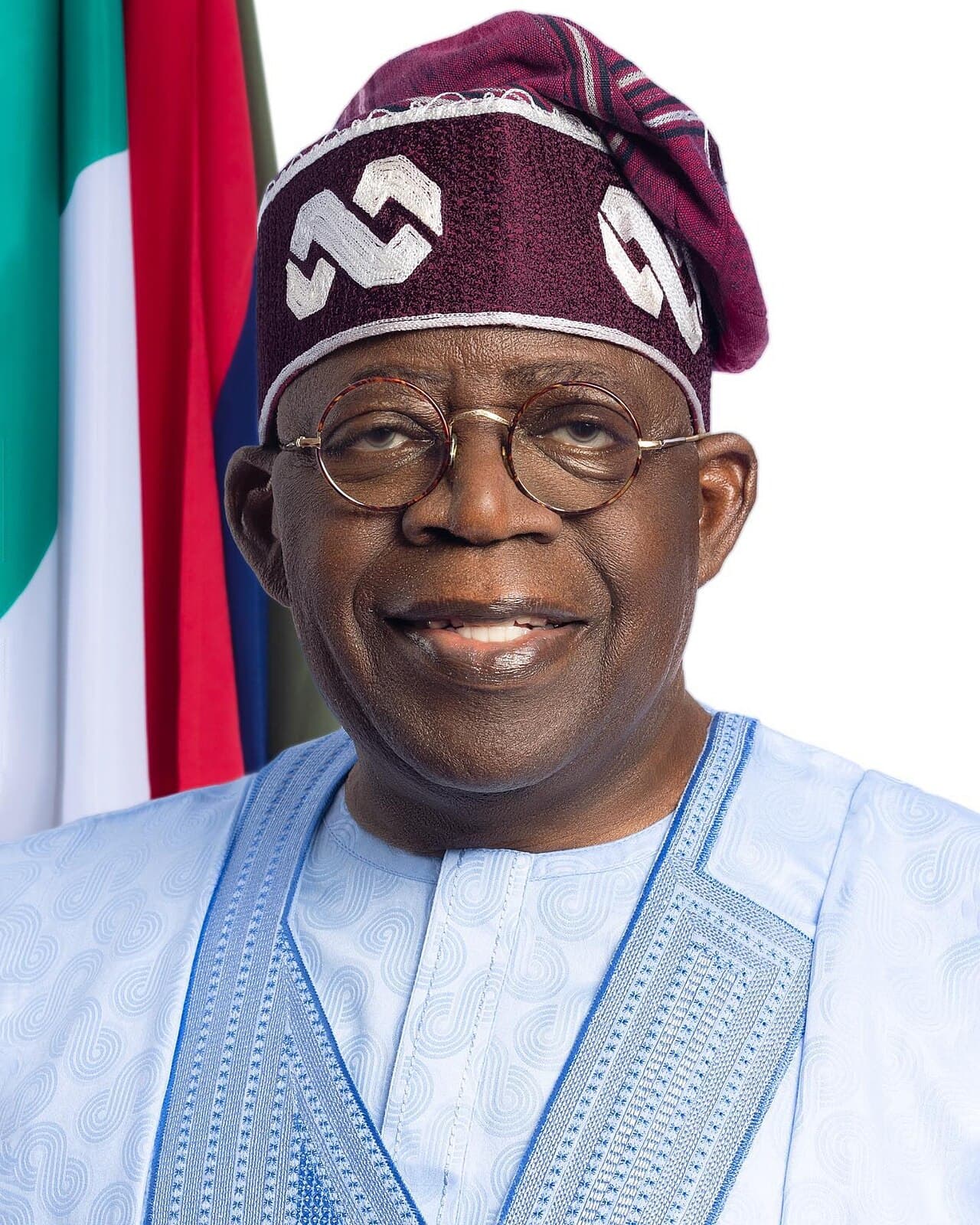
Tinubu was sworn in and announced that the petrol subsidy was gone.
Read story →CBN unifies exchange-rate windows
The Central Bank announced the unification of foreign-exchange market segments.
World Bank says reforms must move from pain to results
The World Bank noted record-high inflation partly driven by subsidy removal and emphasized the need to control inflat…
Supreme Court intervenes in cash crisis
The Supreme Court held that old notes should remain legal tender for longer, and the CBN later complied.
First Student Loan Act signed
Tinubu signed the first Student Loan Act in June 2023 before a revised law replaced it in 2024.
Supreme Court affirms Tinubu's election
The Supreme Court dismissed opposition appeals and affirmed Tinubu's election.
Election technology raises youth expectations
The 2022 Electoral Act and INEC's technology promises raised expectations for transparent 2023 results among younger…
Cash scarcity peaks under naira redesign
Naira redesign deadlines and limited cash availability caused queues, protests, and payment disruptions.
Presidential and National Assembly elections
Nigeria held presidential and legislative elections using BVAS and IReV under the 2022 Electoral Act.
Tinubu declared president-elect
INEC declared Bola Ahmed Tinubu winner of the presidential election.
Governorship and state assembly elections
State elections followed the presidential contest after a postponement.
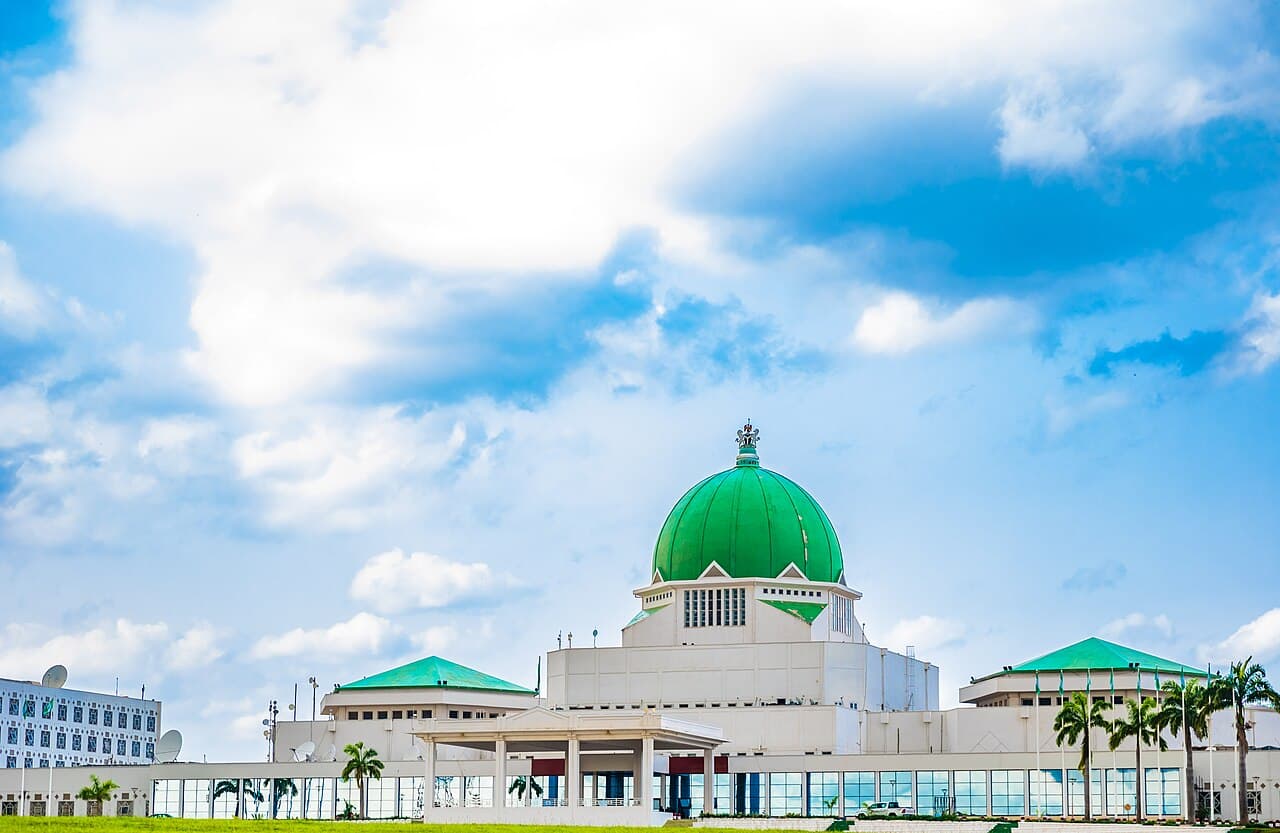
Bola Ahmed Tinubu was sworn in and declared that fuel subsidy was gone.
Read story →CBN unifies foreign-exchange windows
The CBN announced changes to collapse multiple FX windows and move toward a market-reflective rate.
Student Loan Act signed
Tinubu signed student-loan legislation to create a federal loan scheme for higher education.
New service chiefs appointed
Tinubu replaced the service chiefs early in his presidency.
Presidential election tribunal dismisses petitions
The Presidential Election Petition Court dismissed challenges filed by Atiku Abubakar, Peter Obi, and allied parties.
Supreme Court affirms Tinubu's election
The Supreme Court dismissed opposition appeals and affirmed Tinubu's election.
Inflation accelerates after subsidy and FX reforms
Fuel and exchange-rate reforms pushed transport, food, and import costs higher.
Plateau Christmas attacks
Armed attacks hit communities in Plateau State around Christmas, killing many residents and displacing others.
Presidential election decided under new technology framework
INEC conducted the 2023 presidential election under the Electoral Act 2022 and used BVAS and the IReV framework.
Tinubu victory upheld by Supreme Court
Presidential candidates challenged Bola Tinubu's declared victory after the 2023 election.
Fuel subsidy removal announced
President Tinubu announced that petrol subsidy was gone at inauguration, triggering price increases and adjustment me…
Foreign-exchange market unification attempted
Nigerian authorities moved toward exchange-rate unification and market pricing in 2023.
Student Loans Act signed
The federal government enacted a student loan law to support higher-education financing.
Nigeria Data Protection Act signed
The Data Protection Act established a stronger statutory framework for personal-data governance and the Nigeria Data…
Diphtheria outbreak response expands
Nigeria faced a major diphtheria outbreak requiring vaccination, surveillance, and treatment response across affected…
West African coups reshape Nigeria's ECOWAS role
After the Niger coup, Nigeria led ECOWAS diplomacy and sanctions debates as regional chair.
Atiku Abubakar
Atiku Abubakar, former Vice President of Nigeria (29 May 1999 - 29 May 2007) under President Olusegun Obasanjo, is am…
Bosun Tijani
Tech-sector figure; appointed Minister of Communications August 2023.
Dele Alake
Long-time Tinubu political and media adviser dating to the Lagos State governorship; appointed Minister of Solid Mine…
Festus Keyamo
Long-time Tinubu-aligned litigator; SAN.
Lateef Fagbemi
Senior Advocate of Nigeria (SAN); appointed Attorney-General of the Federation and Minister of Justice August 2023 in…
Lucky Orimisan Aiyedatiwa
No substantiated corruption cases against Lucky Aiyedatiwa in current corpus.
Monday Okpebholo
Sitting Governor of Edo State (sworn in 12 November 2024, APC).
Rochas Anayo Okorocha
Rochas Okorocha is a two-term former Governor of Imo State (2011-2019) and former Senator for Imo West (2019-2023) wh…
Wale Tinubu (Oando Plc GCEO)
Nephew of President Bola Tinubu.
Zainab (American citizen, surname redacted)
American woman of Yemeni and Congolese-Ugandan heritage who met Minister Keyamo at UN event in New York on September…
Tinubu signs revised Student Loan Act
Tinubu signed the Student Loans (Access to Higher Education) Act 2024, replacing the 2023 version and establishing NE…
Kuriga school abduction
Armed men abducted schoolchildren from Kuriga, Kaduna State.
Old national anthem restored
Tinubu signed the National Anthem Bill 2024, restoring "Nigeria, We Hail Thee" as the national anthem.
Supreme Court affirms local government financial autonomy
The Supreme Court ruled in favor of direct financial autonomy for Nigeria's 774 local governments.
N70,000 minimum wage signed
Tinubu signed a new national minimum wage bill into law after negotiations with labor.
#EndBadGovernance protests
Nigerians protested economic hardship, hunger, and governance failures under the #EndBadGovernance banner.
World Bank approves $2.25 billion reform support
The World Bank approved financing tied to Nigeria's economic stabilization and resource-mobilization reforms.
Poverty and food inflation remain widespread
The World Bank reports that poverty remains widespread, with food inflation heavily affecting poor households that sp…
IMF says reform gains coexist with poverty and food insecurity
The IMF's 2025 Article IV consultation said Nigerian authorities had implemented major reforms, including subsidy rem…
Kuriga brought the mass-abduction story back into Children's Day politics a decade after Chibok.
Read story →#EndBadGovernance minors become a rights issue
Amnesty reported that minors were among more than 1,200 people detained after the #EndBadGovernance protests.
Kidnapping wave around Abuja and Kaduna
High-profile abductions around the FCT, Kaduna, and other areas intensified public pressure on the Tinubu administrat…
Kuriga schoolchildren abducted
Armed men abducted more than 100 children from Kuriga, Kaduna State.
Revised Student Loans Act signed
Tinubu signed a revised student-loan law after implementation concerns with the 2023 framework.
Student loan applications open
NELFUND opened applications for the federal student-loan scheme, initially focusing on public tertiary institutions.
Supreme Court grants financial autonomy to local governments
The Supreme Court ruled in favor of federal claims seeking direct allocation to local governments and limits on state…
New national minimum wage signed
Tinubu signed the new National Minimum Wage Act setting the wage at N70,000 after negotiations with labor.
#EndBadGovernance protests
Nigerians protested economic hardship, hunger, corruption, and governance failures under the #EndBadGovernance banner.
Tinubu addresses protesters
Tinubu delivered a national broadcast during the #EndBadGovernance protests, defending reforms and promising relief m…
Petrol price rises after partial subsidy exit
Petrol prices rose again as subsidy costs and supply arrangements shifted.
Dangote refinery begins producing petroleum products
Dangote refinery operations moved from commissioning toward product supply, with major implications for import depend…
Cybercrime levy controversy
CBN implementation guidance on a cybersecurity levy generated public backlash over banking costs.
Binance and crypto enforcement dispute
Nigerian authorities intensified enforcement against cryptocurrency platforms amid FX pressure and allegations of mar…
Northeast humanitarian needs persist
UN agencies continued to report major humanitarian needs in Borno, Adamawa, and Yobe from conflict, displacement, foo…
Cholera outbreaks pressure public health systems
NCDC tracked cholera outbreaks affecting multiple states.
Food inflation becomes a political crisis
NBS data showed very high food inflation amid currency depreciation, fuel costs, insecurity, and supply constraints.
Oronsaye report implementation revived
The federal government announced renewed implementation of recommendations to merge, scrap, or restructure agencies.
Cybersecurity levy controversy
A proposed cybersecurity levy on electronic transactions triggered public criticism and policy suspension or review s…
Samoa Agreement debate
Nigeria's signing of the Samoa Agreement with the EU, OACPS members, and partners generated public controversy over a…
National minimum wage renegotiated
Government, labor, and employers negotiated a new national minimum wage amid inflation and post-subsidy cost pressures.
Emmanuel Atewe
Retired Major-General and former Commander of Joint Task Force Operation Pulo Shield (the Niger Delta anti-oil-theft…
Alhaji Hadi Abubakar Sirika
Former Minister of Aviation (2015–2023, Buhari administration).
Nenadi Usman
Director of Finance, Goodluck Jonathan Campaign Organisation (2015).
Olisa Metuh
National publicity secretary, People's Democratic Party (PDP).
Rabiu Musa Kwankwaso
Rabiu Musa Kwankwaso served two terms as Governor of Kano State (1999-2003, 2011-2015), as Federal Minister of Defenc…
Usman Ahmed Ododo
Current Governor of Kogi State; political successor and ally of Yahaya Bello.
Ogoni Nine receive posthumous pardon, criticized as insufficient
Tinubu's government posthumously pardoned the Ogoni Nine, but Amnesty and activists argued that pardon did not equal…
Rivers State emergency tests federal power
Tinubu declared a state of emergency in Rivers State amid political crisis and oil-pipeline insecurity, suspending th…
Tax reform bills signed
Tinubu signed a package of tax reform bills covering tax law, tax administration, revenue-service institutions, and j…
Renewed school kidnappings and security emergency
A new wave of school kidnappings hit northern Nigeria, including incidents in Kebbi and Niger states.
CPI rebasing resets inflation measurement
NBS rebased the Consumer Price Index, changing the consumption basket and inflation signals.
School kidnappings revive emergency-security politics
The 2025 school-kidnapping wave, including Kebbi and Niger State cases, pushed school safety back to the center of na…
Tax reform bills dominate fiscal federalism debate
Tinubu's tax reform bills triggered debate over VAT derivation, revenue sharing, and northern-state concerns.
Rivers state of emergency declared
Tinubu declared a state of emergency in Rivers State amid a political crisis, suspending Governor Siminalayi Fubara,…
Sole administrator appointed in Rivers
The federal government appointed a sole administrator to run Rivers during the emergency period.
Ogoni Nine pardon criticized as incomplete justice
Nigerian authorities granted posthumous pardon connected to the Ogoni Nine case.
Tax reform acts signed
Tinubu signed major tax reform legislation after months of debate.
Nigeria Revenue Service transition begins
The tax reforms provided for a new revenue-service framework replacing or transforming FIRS functions.
Student-loan disbursement scale-up
NELFUND continued publishing application and disbursement updates as the student-loan scheme expanded.
Rivers emergency period ends
The six-month emergency period in Rivers reached its expected end point, with national attention on restoration of el…
Local government autonomy implementation fights continue
After the 2024 Supreme Court ruling, federal, state, and local actors disputed implementation, council elections, and…
INEC prepares for off-cycle governorship elections
INEC continued managing off-cycle governorship contests and litigation-heavy state election calendars.
Inflation and poverty remain core reform risks
World Bank and IMF assessments continued to tie Nigeria's reform gains to inflation control, targeted transfers, exch…
Security emergency declared nationwide
Tinubu announced a national security emergency and directed expanded recruitment and deployments to confront banditry…
Recruitment surge ordered for police and armed forces
As part of the security emergency, the presidency ordered large-scale recruitment into security services.
2026 budget presented
Tinubu presented the 2026 federal budget proposals to the National Assembly, framing them around security, growth, in…
Adams Aliyu Oshiomhole
Adams Aliyu Oshiomhole is a former labour leader (NLC President, 1999-2007) who became Governor of Edo State from Nov…
Muhammadu Buhari
Major General Muhammadu Buhari, GCFR (17 December 1942 - 13 July 2025) was a Nigerian military officer and politician…
Mohammed Namadi Sambo
Architect Mohammed Namadi Sambo (born 2 August 1954) is a Nigerian politician who served as Governor of Kaduna State…
Peter Odili
Peter Odili, governor of Rivers State for two terms under the Obasanjo era, became the subject of an EFCC investigati…
General Sani Abacha
General Sani Abacha (20 September 1943 - 8 June 1998) was Nigeria's military Head of State from 17 November 1993 unti…
Reform gains remain contested
As of 2026, the Tinubu-era reform story is still unresolved: fiscal and FX reforms have changed macroeconomic incenti…
NELFUND scale becomes a youth-policy metric
Early 2026 reporting on NELFUND gave rapidly changing figures for student-loan beneficiaries and disbursements.
IMF outlook frames reform as unfinished
The IMF's 2025 Article IV materials projected modest medium-term growth and emphasized disinflation, social protectio…
Federal budget becomes a reform-era test
The 2026 budget is a fiscal expression of the post-subsidy, post-tax-reform Tinubu state.
NELFUND figures require date-stamped treatment
Early 2026 student-loan figures changed quickly across reports.
Tax reforms enter implementation year
The 2025 tax acts moved toward implementation, requiring new rules, taxpayer education, and administrative coordination.
Nigeria tracks toward 2027 election preparations
INEC's post-2023 lessons, party primaries, litigation reforms, and voter-register maintenance shaped early preparatio…
Humanitarian funding gap remains a live northeast risk
UN humanitarian planning for Nigeria continued to flag displacement, malnutrition, protection, and food-security need…
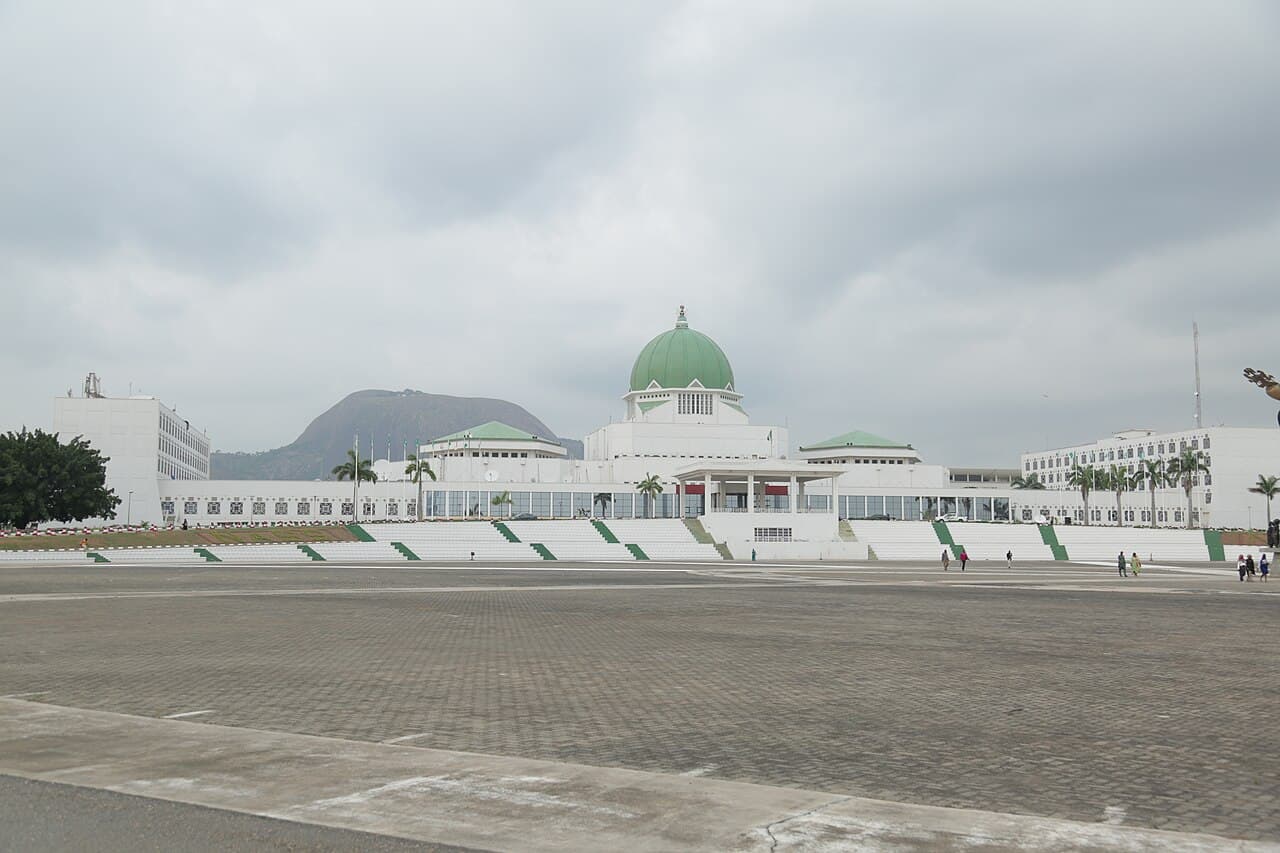
By May 2026, Nigeria's Fourth Republic had survived alternation, insurgency, mass protest, recession, pandemic, and sharp Tinubu-era reforms.
Read story →Abdulfatah Ahmed
Alhaji Dr. Abdulfatah Ahmed served as Governor of Kwara State from 29 May 2011 to 29 May 2019, succeeding his politic…
Addax Petroleum
Switzerland-based oil-and-gas subsidiary of Chinese state-owned Sinopec.
Alexandra Healy KC
Lead prosecutor (King's Counsel) for UK Crown Prosecution Service in R v Alison-Madueke et al.
Bashir Nura Alkali
Permanent Secretary in the Ministry of Humanitarian Affairs and second defendant in the EFCC's 21-count charge agains…
Chukwunyere Nwabuoku
Convicted in March 2026 on nine counts of money laundering and sentenced to 72 years without option of fine for offen…
Diezani Alison-Madueke
Petroleum minister 2010–2015 under President Goodluck Jonathan; first female president of OPEC.
Economic and Financial Crimes Commission
Nigeria's principal anti-corruption agency.
Emmanuel Ibe Kachikwu
Former Managing Director of Nigerian National Petroleum Corporation (NNPC).
Energy Commission of Nigeria
Federal agency responsible for coordinating Nigeria's energy policy.
Federal Ministry of Power (Nigeria)
Ministry whose budget for the Mambilla and Zungeru hydroelectric projects was diverted under Minister Saleh Mamman pe…
Gboyega Oyetola
Adegboyega Isiaka Oyetola (born 29 September 1954 in Iragbiji, Boripe LGA, Osun State) is a former insurance executiv…
Hitech Construction
Chagoury Group subsidiary; awarded the $13B Lagos-Calabar Coastal Highway contract under President Tinubu's administr…
Ibrahim Gaidam
Alhaji Ibrahim Liman Gaidam (also spelled Geidam, born 15 September 1956 in Bukarti, Yunusari LGA, Yobe State) is a N…
Independent Corrupt Practices and Other Related Offences Commission
Nigeria's other anti-corruption agency.
ITB Construction
Chagoury Group subsidiary; contracted for Snake Island port terminal (2026).
Olajimi Shakiru Adebisi Lawal
Long-standing El-Rufai aide and senior counsellor on investment in Kaduna State (2015–2023).
Justice Justine Thornton
Presiding judge at Southwark Crown Court in R v Alison-Madueke et al.
Kaduna State CCTV Security Project
Project to install a state-wide CCTV security network in Kaduna under the El-Rufai administration.
Mambilla Hydroelectric Power Project
Proposed 3,050MW hydroelectric plant in Taraba State, designed to be Nigeria's largest power facility.
Federal Ministry of Humanitarian Affairs, Disaster Management and Social Development
Buhari-era ministry created in 2019 to oversee Nigeria's social-protection portfolio (NSIP, CCT, NSSNCO, Rapid Respon…
Misa Limited
Recipient entity named in count 3 of the EFCC's 17-count charge against Tunde Ayeni.
Muazu Babangida Aliyu
Two-term Governor of Niger State (2007–2015), once styled 'Chief Servant'.
Mustapha Abdullahi
Tinubu-appointed DG of the Energy Commission of Nigeria (appointed 24 October 2023).
Nasir Ahmad El-Rufai
Two-term former Governor of Kaduna State (2015–2023), now a chieftain of the African Democratic Congress.
National Social Safety Net Coordinating Office
Federal social-protection programme office that ran the Rapid Response Register beneficiary-validation effort.
Nigerian National Petroleum Corporation
State-owned oil and gas corporation.
Okoronkwo Law Firm IOLTA (Los Angeles)
An Interest on Lawyers' Trust Account (IOLTA) at Okoronkwo's Los Angeles law firm, used to receive the October 2015 w…
Major-General (Rtd) Prince Olagunsoye Oyinlola
Major-General (Rtd) Prince Olagunsoye Oyinlola (b. 3 Feb 1951, Okuku, Osun State) is a retired Nigerian Army officer…
Paulinus Iheanacho Okoronkwo
Former General Manager of NNPC's Upstream Division.
Sadiya Umar Farouq
Inaugural Minister of Humanitarian Affairs under Buhari (2019–2023).
Saleh Mamman
Former Minister of Power under Buhari (Aug 2019–Sep 2021).
Singularity Network Security Limited
Recipient of the December 2015 ₦8.
Sinopec (China Petroleum & Chemical Corporation)
Chinese state-owned petroleum, gas, and petrochemical conglomerate.
Skye Bank Plc Depositor-Funds Misappropriation
Scandal cluster surrounding the collapse of the defunct Skye Bank Plc (subsumed into Polaris Bank in 2018).
Tunde Ayeni
Tunde Ayeni, former Chairman of the defunct Skye Bank Plc, was arraigned by the EFCC on 4 May 2026 before Justice Jud…
UK National Crime Agency — International Corruption Unit
Led the decade-long investigation into Diezani Alison-Madueke.
US Attorney's Office, Central District of California
US federal prosecutorial office.
Zungeru Hydroelectric Power Project
700MW hydroelectric project in Niger State.